2026 Nuffield NZ Farming Scholarship. Apply by 17 August 2025. Read More...

Apply for 2026 Nuffield NZ Farming Scholarship by 17 August 2025. More details...

Barriers to Genetic Potential Through Sire Selection in New Zealand Sheep Farms

Executive summary

Agriculture contributes to 50% of New Zealand’s gross greenhouse gas emissions, an industry that is largely dominated by ruminants producing methane (Ministry for the Environment, 2022).

The Climate Change Response Act 2002 has set a target to reduce biogenic methane emissions to 24–47 per cent below 2017 levels by 2050. Therefore, the reduction of methane emissions from livestock is of significant environmental and economic importance.

It has been demonstrated that there is repeatable, individual variation in the methane emissions of sheep and that part of that variation is genetically heritable. There is now a breeding value that allows commercial farmers to rank, select and purchase lower methane emitting sires. This is currently the only tangible and proven mitigation farmers can start implementing on their farms right now.

In a time where our consumers are more discerning than ever before about how their food is produced, it is vital that commercial farmers utilise resources and technologies wherever possible to further our competitive advantage through sustainable practices.

However – regardless of personal views on climate change or political policies – do commercial farmers have the capacity and capability to understand the opportunity that these low methane-emitting genetics bring?

This research focuses on understanding the barriers to genetic potential through sire selection on New Zealand sheep farms.

To gather information on the barriers for farmers in relation to breeding decisions a literature review was undertaken to understand the gap in knowledge of farmers with regards to genetics, along with establishing factors in commercial farmer behavioural change and understanding of complex decision-making in relation to animal breeding decisions.
This was followed by an unstructured interview process with four farmers from three different farming enterprises, to establish a journey map to understand each farmer’s experiences, by creating a map of their interactions with sire selection. Farmers were selected to represent different types of farming enterprises and perspectives within the sector.

This process also helped to establish a picture of their current level of understanding, perceptions and preferences in genetic decision-making and identification of barriers to genetic potential through sire selection within the farm systems.

Key Findings

Given the significant advances in genetic and recording technologies over the past 20-30 years, it could be assumed that sire selection decisions should have become simpler. However, though these technological advances may provide more information, the complexity and scope of the information may also overwhelm farmers.

Martin-Collado, et al. (2018) describes that when people are faced with complex decisions and/or are exposed to information overload, this leads to either impulsive often suboptimal decision-making or they use simplification strategies (i.e. heuristics).
In terms of effecting meaningful change through genetic decision-making, the ability to effectively compare a farmer’s system with that of others appears to be an instigator to change.

There is a significant educational role to fill with regard to sire selection and genetic decision-making. Whilst we have sheep which are genetically lower methane emitting or significantly more tolerant to facial eczema available for purchase now, there is much to be done to assist the commercial farmer to realise the opportunities available to them when it comes to genetics.

Recommendations

Beef + Lamb NZ should aim to develop a number of tools and resources aimed towards genetics education and extension for both commercial farmers and breeders.

The development of these tools and resources should:

  • consider the individualism of farmers and their systems, the behaviour of change and complex decision heuristics,

  • be developed in collaboration with subject matter experts and farmers to be relatable for the intended audience,

  • share the success stories of farmers who have successfully harnessed the opportunity of genetics,

  • be created for a range of delivery mechanisms to cover a range of learning styles.

    • These should be developed in collaboration with industry partners to facilitate the uptake of these resources by these parties to assist in the dissemination and delivery of the resources.

Organic, Regenerative and Sustainable.

Executive summary

To answer the question, this report considers if these methods can be defined, it explores the main principles and drivers based on a comprehensive literature review; the baseline is conventional farming, and the research shows sustainable farming is usually regenerative and organic and often conventional.

Organic, regenerative, and sustainable are all buzz words; they are methods of farming, growing, and processing; also used in marketing for recognition and financial advantage. This report found that a farmer may align their identity with their chosen method and a consumer’s decision to purchase may be based on their understanding of these terms and an alignment of their values, particularly where there is a premium paid. This report found consumers use the terms loosely and the complexities of farming methods are not understood by non-farmers.

There are no definitive definitions of organic, regenerative agriculture (RA), sustainable or conventional farming in New Zealand (NZ). Each method is guided by principles, and the report finds there are few differences between these, and this means that farmers can use principles from any method. Sustainable practices guide each of the methods and much conventional farming.

NZ farming already has a clean green advantage, and many farmers are leaders in best practice which can be explored further. This report considers the new term, regenerative organic and found its meaning and the relationship with organic farming is not yet established in NZ.

The quick and simple answer is yes, a farmer may be across all these methods, but if claiming to be organic, must be certified.

Organics has had enormous success in becoming well established with stable export markets; legislation is imminent providing credibility and consumer protection; it is odd that organics received little mention in the RA research projects or in strategic planning for the food and fibre sector. It is unclear where it fits into the bigger picture for food and fibre.

Progress on RA is at an impasse waiting for industry and or government leadership; however, the journey has started, and recent announcements of research projects will provide much needed evidence and guidance on the extent that existing farm methods are already aligned with RA.

Some leading NZ scientists claim this task has already been done and there is nothing more to be gained. If RA is to gain traction, time is of the essence. NZ needs a strategy, purpose, and an agreed direction. There is an opportunity for NZ to lead the direction of RA.

The report briefly considers if there is a premium to be gained from these farming methods and how this is reflected in the export markets. This matters for NZ because, “our economic security depends on the primary sector, which this year earned us a record $53.3bn in exports” announced Minister Damien O’Connor1. In July 2022, red meat sales reached $1.1 billion according to the Meat Industry Association (Red meat exports reach $1.1b., 2022), NZ needs to continue to add value to its exports, rather than rely on volume of production by identifying its advantage, guaranteeing the quality of its farming systems, and marketing its story.


The food and fibre sector must act quickly, otherwise another nation will lead in regenerative and sustainable farming and the potential market advantage to NZ is lost.

Recommendations

The project provided clarity that there needs to be a collaborative way forward, the following actions are recommended to achieve a unified direction:

Strategy to establish the role and future of New Zealand farming methods

  • The Government to facilitate a collaborative effort from industry organisations, the Ministry for Primary Industries (MPI) and research organisations to establish a representative leadership group (the Group).

  • The Group to deliver a Strategy for organic, regenerative, and sustainable farming for the short and long term; this should align with, other sector specific strategies and address sustainable practices across New Zealand farming.

Research

  • The Group should develop a methodology across all farming systems linking production, product quality, livestock, health, and well-being, adopt a holistic view, including evaluation of environmental, social and health impacts. This work must align with existing research programmes.

  • The Group will distinguish between organic and regenerative farming, address the meaning of organic regenerative and sustainable, and include the outcomes in the overarching strategy.

Trade and Export

  • The Group will develop the New Zealand story for consumers, investigate new markets, grow existing ones, and optimise what New Zealand does well.

Māori in Governance of Agricultural Co-operatives in Aotearoa New Zealand.

Executive summary

Māori are significant and substantial long-term participants in the primary sector of Aotearoa New Zealand.

They are kaitiaki of significant tracts of land for future generations, just as previous generations were kaitiaki for them. This concept of stakeholders’ past and stakeholders’ future links Māori to the whenua through whakapapa and means that they will never sell their land assets.

The Māori economic engine is significant in terms of both asset holding and in generating activity for the economy of Aotearoa New Zealand. Despite this Māori have almost no presence in the governance of the Agricultural cooperatives, despite these being businesses that they are significant suppliers and customers of and hold equity in.

The purpose of this report is to understand the reasons behind this, identify ways to re-engage Māori at governance levels with the cooperatives and understand the benefits and costs to each from doing so.

The methodology used within this report included literature reviews of Māori economic performance and how contemporary corporate governance models fail to meet the needs of Māori governance.

In the context of this research topic, it is important to determine the contribution made by Māori to the economic activity of Aotearoa New Zealand generally and to the primary sector specifically as this project investigates the premise that it is reasonable to achieve representation if there is a contribution.

The review of Māori governance included discussion around the kaupapa and tikanga that provide a framework to Te Ao Māori and how this influences the decision-making of Māori governance entities.

Semi-structured interviews were conducted with eight Māori governors including participants in cooperative director elections. These were conducted to understand the view of Māori who had experience with governance in both Māori and non-Māori entities and in a cooperative election process.

The answers were then critically analysed with themes developing from the analysis.

A structured survey was supplied to members of Cooperative Business New Zealand. It was important to assess the view held by cooperatives around levels of Māori engagement at a governance level.

These were analysed with themes developing from the analysis.

The results from the structured survey and the semi-structured interviews were then analysed together to identify areas of commonality or divergence.

KEY FINDINGS

MĀORI MAKE SIGNIFICANT CONTRIBUTIONS TO THE PRIMARY SECTOR AND AOTEAROA NEW ZEALAND

The scale of Te Ohanga Māori (The Māori Economy) is significant, contributing 6.5% of the GDP of Aotearoa New Zealand in 2018. This is on par with the primary sector which also contributed 6.5% of the 2018 GDP with Māori contributing NZD 2.700 billion dollars (or 14%) to the primary sector GDP.

Further in 2017 10% of dairy production and 30% of meat and fibre production were sourced from assets owned by Māori.

These statistics are important as they prove that Māori is significant contributors to the economy and primary sector of this country. The lack of Māori representation in cooperative governance seems incongruent with the level of contribution made by Māori.

MĀORI HAVE LOW TRUST IN COOPERATIVES AND ELECTIONS

Lack of engagement by Māori with the cooperatives appears to be seated in a level of distrust by Māori in the cooperatives (although the Institution of the Cooperative may be acting as a proxy for its Pākeha shareholding base) This is a result of (real or perceived) racial bias over time with a
general feeling in the interviews with Māori agribusiness leaders that the cooperatives are Pākehacentric institutions with a low understanding of the needs of Māori.

There was a general feeling that the Māori would struggle in an election process as the Pākeha majority would favour other Pākeha over Māori no matter the skills Māori may offer.

COOPERATIVES RECOGNISE THAT MĀORI ARE  UNDERREPRESENTED IN GOVERNANCE

Cooperatives are generally aware that their existing governance fails to adequately represent the contribution made by their Māori stakeholders to their businesses.

They generally believe it is important that there is Māori representation in their governance bodies, however, the responses indicate that no cooperative has established a strategy to change this.

OPPORTUNITY EXISTS FOR BOTH PARTIES IF RELATIONSHIPS CAN BE STRENGTHENED

  • For the cooperatives, the opportunities are twofold:

    Operationally they partner with Māori to secure long-term multigeneration supply relationships at a time when production is falling in response to climate change initiatives and land use change.

    Strategically they gain insight into what appears to be a shift away from laissez-faire and liberal market theory to a growing ESG investment paradigm that is more rooted in equitable returns to social and natural capital as well as real (economic) capital. This is due to ESG concepts largely mirroring the pou or drivers of Māori governance models.

  • For Māori, the opportunity lies in attaining influence in an industry they already participate in and in a business in which they may already hold equity.

    Influence is important to ensure that Māori maintains a level of control over the use of Tikanga, Kaupapa, Te Reo, and Matauranga Māori – those things that make Māori unique in the world and are effectively the Intellectual Property of Māori.

    Māori are afforded the opportunity to bring Te Ao Māori into the dominant mainstream so that it is valued and practised in an authentic way.

RECOMMENDATIONS FOR COOPERATIVES

Cooperatives face distinct challenges to overcome the lack of trust that Māori have expressed in the election process and in the cooperatives. This will require rebuilding trust levels and relationships.

  • Decide if the organisation believes the lack of Māori representation is an issue that requires addressing.
  • Develop strategies to effect cultural change so that all shareholders perceive their treatment to be equal with clear and demonstrable intolerance of intolerant.
  • Build manaakitanga with Māori by being institutionally intolerant of any form of racial bias.
  • Organise wananga with Māori stakeholders so they can learn who you are, and you learn who they are.
  • Engage in whakawhanaungatanga. This will facilitate discovery and understanding as the first step in relationship building (whanaungatanga).
  • Learn and understand Te Ao Māori, Mātauranga Māori, Tikanga and Kaupapa – these are the things that will guide relationship building with Māori.
  • Develop methods to provide governance opportunities for Māori within your organisation – training options and assistant/future director opportunities.
  • Use a Māori lens in decision-making – a celebration milestone for Pākeha could have been at the expense of Māori interests for example. This is also important when using taonga in
    commercial ways.
  • Ensure that the cooperatives are not structurally racist – for example, check to see if election rules could exclude Māori from standing in a director election. This is important given the unique nature of some Māori ownership structures.

RECOMMENDATIONS FOR MĀORI

  • Practice rangatiratanga by using the voting powers that come with ownership.
  • Be open to building whanaungatanga with cooperatives – maintain a focus on attaining influence by taking roles in the governance of these businesses.
  • Show kohtahitanga and manaakitanga by voting for rangatira who stand for election to these boards.
  • Māori voting for Māori in elections dominated by Pākeha demonstrates rangatiratanga.
  • Continue to develop governance skills in Rangitahi.

Owhaoko B&D land block.

Suzanne Hepi Kellogg report image

Executive summary

Māori land plays a critical part of Aotearoa and its history. Understanding the dynamics of Māori land ownership and the role they play to ensure their whenua is taking care of, is not as straight forward as people assume.

Māori landlocked land has influenced a change in the Te Ture Whenua Māori Act to lessen multiple barriers for Māori. This research has been conducted through a kaupapa Māori approach, for Māori by Māori.

This case study is concerned with understanding the land block, its isolated location, the barriers of access and how the trust can initiate a sustainable involvement for the owners. The report is based on semi structured interviews and analysis of secondary data.

Purpose

The aim of this report is to discuss the landlock block Owhaoko B & D with trustees and beneficiary owners. Overall, I am gathering data to build an understanding of what is occurring on this land block, trust developments and what the future aspirations could potentially be.

Key Findings

The key findings of this report have been grouped into themes and are a general understanding of the narrative around the story of the land block. It is supported by quotations from interview participants and is raw information that they have voiced.

Recommendations

  • Data – Embark on further research of this land block and internships conducted by beneficiaries or owners of this whenua with support from the trust and tertiary institutions.

  • Transformation – develop and deliver environmental programmes to help educate whānau about the importance of being kaitiaki for the land.

  • Collaboration – form a partnership with a Māori tech and digital business that could showcase the land blocks history and whakapapa digitally, to owners of the land that cannot experience it first-hand.

  • Capability development – Provide opportunities for owners to participate in projects associated on the block such as seed banking, wild game monitoring etc.

  • Leadership – Government to help support a leadership programme that is delivered partially out of the land block, informing this cohort about the change in legislation and how the land can contribute to this.

  • New initiatives – Establish other incentives for owners wanting to visit the block such as high-end accommodation, events, or annual activities etc.

  • Mātauranga Māori – Produce or deliver a wānanga based on traditional Māori practices such as rongoa, identifying native trees, land use etc.

Happy and Healthy at Work.

Executive summary

Labour and its shortage remain a critical issue that needs addressing, with the growth of horticulture predicted, coupled with on-orchard automation look ing closer to 2030. With low unemployment in New Zealand, engaging the Recognised Seasonal Employer (RSE) workforce is vital to remaining successful as an industry.

The purpose of this report is to understand and provide recommendations for the key attributes of a successful team within the seasonal RSE workforce, focusing on the kiwifruit industry. The methodology includes a literature review on the characteristics of a seasonal workforce and breaking down what a successful team looks like, followed by semi-structured interviews with ten orchard owners and pastoral care managers to gain insights from their experience with RSE teams. Themes were generated through thematic analysis to provide conclusions and recommendations.

Key findings

A family culture with a village mentality is key to the success of an RSE team and results in a team that is both happy and healthy at work. Team building and a homely living environment add to this. RSE employees’ purpose of making money to send home to their families, needs to be kept front of mind.

The RSE team needs to be well-formed with the right mix of skills, experience, and personalities with a clear and well-understood leadership structure. The team leader must be trusted and respected, creating productivity and success. Peer mentoring also adds to team success with team members supporting and encouraging one another.

The mindset of continuous improvement is essential to the success of the RSE team. Highly engaged RSE employees need development opportunities beyond their day-to-day tasks.

The relationship is symbiotic, with New Zealand employers needing to be willing to learn more about the values and culture of the Pacific Islands. All parties working together need to have a strong cultural understanding of similarities and differences, which improves team performance. Planning for continuity and succession is vital.

Recommendations

The following recommendations are made to orchardists looking to build a successful RSE team:

  • Develop a family culture, cultivating the village mentality. This is developed through having an inclusive living environment and creating a home away from home by their New Zealand employers.

  • Ensure all permanent employees have a good understanding of the similarities and differences of the Pacific Islander culture. This can be developed through developing a cultural training programme for all permanent staff.

  • Ensure RSE employees understand their purpose and motivation for being in New Zealand which is sending money home to their families. Checking in on this regularly to keep them reminded of their purpose is important to retain engagement.

  • Put in place an RSE team leader that is trusted and well-respected.
    • Create a culture of empowerment amongst the team to allow peer mentoring across team members.

  • Put in place regular team-building activities and be in regular communication with the RSE team.

  • The New Zealand employer needs to have a mindset of continuity and succession. The key to this is building a strong referral system.

  • Ensure RSE employees have access to development opportunities. The main provider of this is Vakameasina.

  • Be open to learning about the values and culture of the Pacific Islands.

What Goes In Must Come Out.

Executive summary

Social licence to operate (SLO), also known as just social licence, is an unwritten agreement between stakeholders and a business/industry on the impact that they can have on the environment and community.

As the values of the community change our SLO is going to come under increasing pressure. Stakeholders are increasingly scrutinising water usage, agrichemical and fertiliser applications, worker welfare, noise pollution and visual impacts. They want to see justification of use of the products and tangible outputs (saleable product).

The aims and objectives of this project is to investigate whether growing cherries in an intensive, indoor growing system will protect our social licence to operate. Social licence will be defined, the aspects that are important to different stakeholders explored and how we can enhance our social licence with forward thinking growing systems explained.

A literature review was conducted to gather some insight to the origins of the social licence to operate concept, define social licence, identify stakeholders and examine what businesses can do to maintain social licence.

Three levels of stakeholders were identified as being significant to cherry production operations. These were seasonal workers, the general public and regulators. Semi-structured interviews were carried out with each stakeholder group to ascertain what aspects of cherry growing operations they perceived to be most important to the social licence to operate and what of these operations put the social licence to operate most at risk. These factors were then compared through a case study between a traditional open field cherry growing system and cherries grown intensive indoor growing system.

Conclusions

  • The practices of a cherry growing operation are likely to come under the spotlight. When questioned about operational practices and use of natural resources it is important that growers can provide quantitative data on the inputs involved and demonstrate attempts to increase efficiency.
  • Industry needs to be more open to sharing the positive aspects of their operations on the environment and community. We need to get better at promoting the good stories and letting people know all the good stuff we do. This way the industry has control over the information that is shared.

  • Education and communication are key to maintaining social licence to operate. Stakeholders are more likely to accept practices if they know why they need to occur, when they will occur, justification for the practice and what measures have been put in place to minimise any risk.

  • An intensive indoor growing system will protect the social licence of cherry growing operations. It will do this by decreasing the amount of water, fertiliser and agrichemical required to grow a kilogram of cherries while minimising the amount of waste product that is produced.

Recommendations

  • An industry-led research program needs to be set up to actively identify the stakeholders of cherry production and engage with them to find out their perceptions of positive and negative aspects of production and identify the strengths and weaknesses of each part production cycle. It will also identify practices that are deemed to be acceptable and unacceptable.

  • Embark on an information sharing and education program with stakeholders. Keep them up to date with orchard activities, invite them to the orchard and use social media as an information sharing platform.

  • Investment is required by industry to implement growing systems that are more efficient, that is have higher yields, less waste and use the natural resources and synthetic inputs more efficiently.

Ka Tipu Ka Ora – A Whanganui Regenerative and Resilient Sustainable Food System.

Executive summary

Te Tiriti o Waitangi as a Founding document

The research report is committed to being responsive to Māori as Tangata Whenua and recognises the Tiriti o Waitangi as Aotearoa New Zealand’s founding document. The principles of Te Tiriti o Waitangi as articulated by the Waitangi Tribunal, and the New Zealand Courts provides a framework for how we are to fulfil our obligations under the Te Tiriti daily.

More recently as outlined by the Ministry of Health, in 2019, “The Hauora Report” 1articulated five principles for primary care that are applicable to not only the wider health care system, but also to any person, organisation or Crown Agency working with Māori in our communities.

These principles are articulated as:

  • Tino Rangatiratanga: The guarantee of tino rangatiratanga, which provides for Māori self-determination and mana Motuhake in the design, deliver and monitoring of community services.

  • Equity: The principle of equity, which requires the Crown to commit to achieving equitable outcomes for Māori. This is achieved though breaking down barriers and enabling equity of access to ensure quality of outcomes.

  • Active protection: The principle of active protection, which requires the Crown to act, to the fullest extent practicable to achieve equitable outcomes for Māori. This includes that it, its agents, and its Treaty partner are well informed on the extent and nature of both Māori wellbeing outcomes and efforts to achieve Māori wellbeing equity.

  • Options: The principle of options which requires the Crown to provide for and properly resource kaupapa Māori services such as Ka Tipu Ka Ora. Also, the Crown is obliged to ensure that all services are provided in a culturally appropriate manner that recognises and supports the expression of Te Ao Māori models of service delivery.

  • Partnership: The principle of Partnership which requires the Crown and Māori to work in partnership in the governance, design, delivery, and monitoring of community services. This includes enabling Māori to express tino rangatiratanga over participation in governance, design, delivery, and monitoring of community services.

For this research project and to understand the importance for Māori, it was important for me as the writer to enable the principles to guide my mahi.

It was also important to provide community level and grassroots level insights and intelligence to enable communities to partner on the development of services to create positive impacts for people throughout the community.

These services should focus on addressing equity of access to services in a manner that is consistent with tino rangatiratanga, active protection in the co-design, provide options to ensure culturally appropriate services and developed through a solutions focussed community led partnership approach with the Treaty always at the forefront.

Executive Summary

Everyone should have access to affordable, healthy food. However, across Aotearoa New Zealand a rapidly growing number of people are experiencing severe food insecurity – which means that they don’t know where their next meal is coming from, or if it will be nutritious enough to lead a healthy, active life.

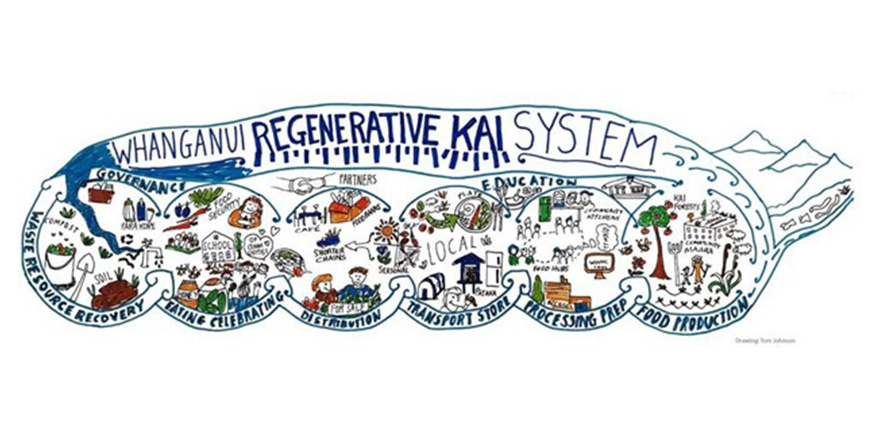
This research report will focus on answering the question of; How everyone, through a kaupapa Māori lens can move toward Sustainable Food Systems which are regenerative and resilient; prioritise locally grown and affordable kai; and uphold mātauranga (indigenous knowledge), kaitiakitanga (guardianship) and rangatiratanga (leadership) within this system.

This research also aims to help develop and establish sustainable local food systems, so all individuals and whānau have access to good food to improve community health and wellbeing; where “sustainable local food system” is a collaborative network that integrates sustainable food production, processing, distribution, consumption, and waste management to enhance the environmental, economic, and social health of a place, ensuring food security and nutrition.

This research supports the vision that everyone in Aotearoa New Zealand should be able to access good food at all times; where “good food” is food and beverages that are affordable, nourishing, appetising, sustainable, locally produced and culturally appropriate.

Key Findings

  • Kai (food) is all about whakapapa (genealogy). It is the great connector that joins us to our tupuna (ancestors), our mokopuna (descendants), our whānau (families), te taiao (environment), and each other. Through kai we are connected to the plants, the animals, the waterways, the oceans, the forests, and the atua (deities). The recipes of our ancestors get pulled out in modern kitchens, linking us across time and bringing us together around the table to love and learn.

  • Kai is central to Māori concepts of wellness and for generations it has brought whānau, hapū and iwi together. Kai is medicinal. When it is nutritionally dense and healthy, it feeds and heals our body and mind. When it is grown by our people, in our place, it feeds and heals our spirit. When it is prepared and eaten together, full of love, it feeds and heals our families and communities.

  • Kai is the glue that holds so many of our communities together, and it is the sustenance that keeps our people well in body, mind, and spirit. However, for most people today our food system is not medicinal. Our current food system negatively affects our physical wellbeing, mental health, and community resilience. At the same time, the food system is causing environmental damage and degrading mana atua (spiritual integrity).

  • Māori have solutions to regenerative and resilient food systems based on Mātauranga Māori.

  • Many suburbs in Whanganui are food swamps and/or food deserts. This means residents and their population have good access to bad food and bad access to good food.

  • Individuals and whānau in Whanganui are suffering from diet-related chronic diseases.

  • One in five deaths can be associated with a bad diet. The leading diseases associated with diet-related deaths in New Zealand are coronary heart disease, stroke, colon, and rectum cancer.

  • Those who live with diet-related diseases are more likely to experience poorer mental, social, and educational outcomes.

  • Community, non-governmental, and non-profit organisations deliver several initiatives tackling the food system, particularly around urban production, and food environments. However, many of these initiatives face obstacles including policy constraints, funding constraints and lack of influence or access to decision-makers.

  • There are also significant and complex underlying systemic issues that cannot be addressed by the community alone e.g., loss of productive land, unsustainable business practices, waste reduction, regulations that can lead to commercial interests favoured over community wellbeing, fragmented approaches to addressing the food system e.g., multiple stakeholders with shared interests working independently.

  • The COVID-19 pandemic has seen growing discussion around the critical resource of food. And while New Zealand has an abundance of food produced from its land and seas, like many nations it still struggles with food security within its communities. The lockdown period had highlighted the need for resilient local food systems that can deliver food security and food sovereignty back to our communities.

Supporting older farmers to adapt to the rapidly changing food and fibre sector.

Executive summary

To this day New Zealand’s food and fibre sector continues to lead economic recovery through the Covid-19 response. This sector thrives on challenges and makes the most of opportunities to further develop.

With an increase in success, there is also an increase in challenges. Some of these challenges are supply chain disruptions, rising costs of fuel and fertiliser, workforce challenges, floods, drought, and the increase in new regulations.

This report aims to better understand how the food and fibre sector can better support older farmers. I aim to better understand the changes and challenges older farmers are currently facing.

To produce recommendations, this report will further research into adopting change, farmer mindset, reverse mentoring, learning preferences, key drivers, and challenges they face as older farmers.

Older farmers enjoy the farming lifestyle and make their systems work for them. As farmers age, they start to show less desire and ability to be as productive and innovative as they were at mid-age. They focus on looking after their health by adopting new smarter ways of working.

Older farmers are feeling frustrated and confused about the new policy that is being brought out with little consultation and feedback opportunities.

From my findings, there is a great opportunity to further educate older farmers through a reverse mentoring model. This system provides an opportunity for both older farmers and younger farmers to communicate through generations.

This system will increase the sharing of perspectives and skill sets. And it can also promote more innovative and act as a cost-effective professional development tool that capitalizes on building bridges between generations.

Recommendations:

  • Establish a reverse mentoring system where younger farmers help educate older farmers on the usage of technology or other methods on farm.
    This method will help to increase the level of communication between different generations to help increase the level of change.
    There is great potential for the food and fibre sector to adopt this method into businesses to create more success.

  • Industry support organisations should develop more one-on-one and small-group support workshops. These workshops need to be consistent, as education is never a once-off. Little to no charge for this workshop as older farmers rarely invest in their education. Learning methods should be targeted at the audience.

  • Encourage older farmers to participate in a community catchment group. This is a great chance for older farmers to share knowledge and learn from others. Community catchment groups are local, low cost and farmer led.

  • Close the gap between farmers and the government. Farmers need more trust from the government to implement change that is driven by the government. The government needs to be clearer about its intentions for policy and put more time and effort into the consultation process.
    I recommend that with the consultation process, there should be more time spent going out to farmers in their community.
    This will show more effort from the government and simply give the farmers the best opportunity to attend the consultation process and provide feedback.

  • Improve connectivity of cell phone coverage and faster internet for rural communities. Central government should provide more resources to help achieve this, as poor connectivity to this infrastructure is a barrier to farmers’ uptake of technology and change.

Farming Lessons from Te Ao Māori.

Executive summary

The aim of this report is to provide an understanding of te ao Māori (the Māori world view) and mātauranga Māori (Māori knowledge) in an agricultural context and to explore how some of the concepts within this area can be utilised in a way that benefits both individual farms and the wider industry.

The methodology used to do so includes a literature review on these two areas as well as the key trends and challenges in the agricultural industry.

This is followed by semi-structured interviews with four farming organisations implementing some or all of the concepts reviewed. The interviews explored their core drivers and aims and the benefits and challenges of in incorporating these concepts and practices. Thematic analysis of the responses from interviewees was utilised to assess the qualitative data.

Key Findings:

Utilisation of the “quadruple bottom line” approach (environmental stewardship, social responsibility, intergenerational wealth creation, and cultural revitalisation), taking an intergenerational perspective, Kaitiakitanga (stewardship) and the relationship between whakapapa (genealogy) and whenua (land) are key areas of te ao Māori and mātauranga Māori where great value for agriculture can be achieved.

These areas have particular importance and relevance when used as potential solutions for the key challenges and trends in Aotearoa’s agricultural sector. The most significant of these are agriculture’s environmental impact and the rise of the conscious consumer as well as export market volatility and uncertainty in the current global context.

Within an agricultural context there are numerous practices, knowledge, concepts, and approaches are present in mātauranga Māori and te ao Māori that have significant potential value. There is also a clear alignment as they are all focused on the natural world and society which are the fundamental components of both te ao Māori and agriculture.

The most commonly incorporated aspects of mātauranga Māori were the use of kaupapa (principles and ideas which act as a base or foundation for action) to guide decision making, embracing a wider view of success and a holistic view of farming practices and the importance placed on relationships and connections through whanaungatanga (relationship, kinship, sense of family connection).

Recommendations:

  • Have patience and persistence in understanding the perspectives of Mana Whenua at all levels and involve them in governance and decision-making processes to ensure the best long-term outcomes are achieved on a consistent basis for communities and the environment.

  • Creation of think tanks or collaborative projects focused on the agricultural sector with individuals from diverse backgrounds encouraging open thinking and interpretation of ideas.

  • Encourage the uptake of new and novel approaches within farming and agricultural businesses as well as experimentation and trialling both on-farm and within business models.

  • Cultivate a culture in agriculture of combined and cross-cultural thought processes where utilising western technological advancements within te ao Māori frameworks is celebrated and encouraged.

  • Facilitate the development of kaupapa for farming businesses utilising te ao Māori to embrace wider definitions of success.

  • Create a platform for meaningful and genuine engagement between iwi, hapū and industry to take a collaborative approach to the generation of solutions for the multitude of wicked problems facing both the agricultural industry and the communities it is present in.

Farm System Influence on Dairy Workforce Retention.

Executive summary

There is significant difficulty faced by dairy farmers and the NZ dairy sector, particularly when attracting and retaining quality employees (Rolfe, 2017). The challenge of retaining talent and passion on NZ dairy farms is familiar for many.

A surveyed 49% of farm assistants on NZ dairy farms leave their employment in less than one year from starting (Federated Farmers & Rabobank, 2022). This is not sustainable for the dairy sector moving forward due to the associated financial burden and wellbeing concerns generated from high turnover on NZ dairy farms.

There is an abundance of literature and findings recognising the “soft skills” and human resources (“HR”) that can be altered to improve job satisfaction and retention in the NZ dairy sector. However, there is limited progress made on reducing overall turnover in the dairy sector over the last 10 years.

There is a gap in the literature, for the NZ dairy sector, among other sectors, considering how aspects of a farm system may influence employee job satisfaction and retention, why this may be the case and how valid solutions can be implemented.

This research is important given the current unsustainable turnover in the NZ dairy sector and the lack of progress seen at sector level in improving turnover statistics over the past decade.

To answer these research questions qualitative data was collected via a review of literature and 13 semi structured interviews. Each interviewee was unique as they either had a different role or set of responsibilities.

They were from different nationalities or backgrounds, had a wide range of farming experiences and were working on very different farm systems to one-another. As a farm systems consultant I have also been able to draw on my experience working with a range of farm businesses to inform the development of research questions as well as associated research and solutions.

A thematic analysis was then conducted between the literature review and the interview findings. Common and contrasting themes were evaluated and conclusions were made from these findings. Some of the findings included:

  • Various difficulties within a system build on one another having more of a multiplied, rather than summative, influence on job satisfaction and retention of NZ dairy farm employees.

  • Actual tasks required to be completed are not necessarily what influences an employee’s job satisfaction and retention. There may be more effective improvements in job satisfaction and retention on NZ dairy farms if focusing on the internal task efficiencies, performance factors related to these tasks and ensuring the purpose of tasks are well understood by employees to then be able to include them in successive decision making.

  • Understanding an individual’s strengths and passions before employing, or at the early stage of employment, will guide specific responsibilities best to provide this individual to improve their job satisfaction and chance of staying within the farm team.


Recommendations were then formed from these conclusions for individual farmers and the NZ dairy sector and are as follows:

For Farmers:

  • Consider examining each part of your specific farm system with all team members separately to gain understanding of the potential.

  • Investigate job preferences of your farm team members and specifically any solutions they may have to the difficulties found within the system.

  • Examine each individual’s strengths and passions before employing to guide their most suitable responsibilities and improve their job satisfaction and retention in your farm team.

  • Commit to explaining the purpose (the “why”) of all aspects of the farm system and policies implemented on farm to employees to improve their engagement and satisfaction in the business and improve the chance of retaining them in your business.

  • Complete and understand your specific farm’s total investment return and cash flow implications of any proposed change in your farm system.

For the NZ dairy sector:

  • Showcase the “top performing farmers” as case studies online to inform the rest of the sector what system adjustments have helped, how they have been implemented and how they are continuously managed to improve staff satisfaction and retention.

  • Commit to investigating more independent farm case studies to uncover further solutions and connections between farm systems and employee retention.

  • Investigate the investment return and other benefits of various technologies discussed in this research along with other technologies or procedures available.

  • Develop further farmer decision-support tools to be created to evaluate the economics of adopting new technologies on farms and allow for comparison with other technologies.