2026 Nuffield NZ Farming Scholarship. Apply by 17 August 2025. Read More...

Apply for 2026 Nuffield NZ Farming Scholarship by 17 August 2025. More details...

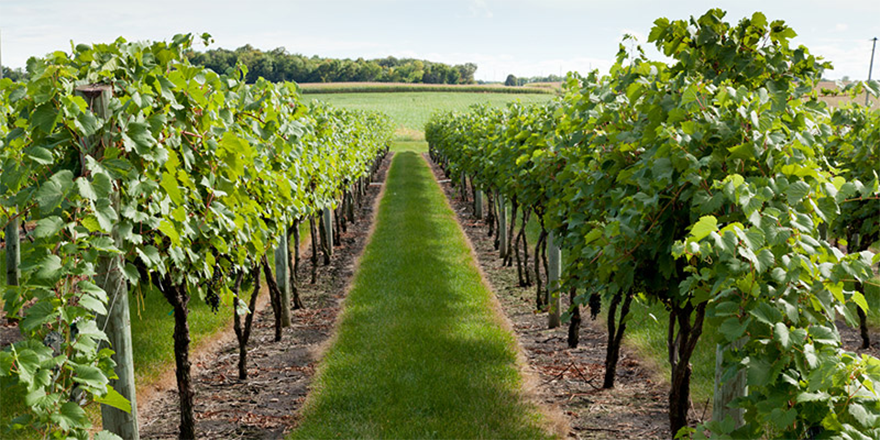
Growing wine grapes in an undercover system

Executive Summary

Thinking outside of the square and challenging the status quo is and will become more and more important as we see challenges to the primary industries. The changing consumer preferences and urbanisation of our communities is and will continue to erode at the traditional way of farming and growing in New Zealand, and the world over. How do we combat this and retain a highly valuable primary production systems in New Zealand.

The simplistic answer is for us to evolve and change in line with consumer preferences and what is accepted by society, we can see this happening all around us. Cage free eggs in all major supermarkets by 2027, Low alcohol wines gaining a market share from relative obscurity only a few years ago, chicken free chicken and artificial proteins becoming available to consumers, that were highly expensive prototypes at the start of the decade. But what do we need to do to evolve?

The question then lies, “how do we keep ahead of the curve” and “how do we maintain relevance in todays society.” The answer to this is complex and not straightforward, but it all starts in one place, asking questions and challenging the status quo, not being content with how things are, or how they are progressing. Always asking why.

I will use the example here of looking to grow wine grapes in a semi-protected or undercover system. I have investigated and continue to evaluate this as part of my professional role as a viticulturalist, and for the Kellogg programme. Also I will try to understand the process of thinking outside of the square, as well as provoke thought about all our systems and processes, and encourage you to always be looking forward for a new and novel solution.

The Agricultural Lure: Understanding the awareness of the red meat sector at high school level.

Executive Summary

Each of the sectors within the primary industry has an ageing population of employees. These people are going to need replaced by 2025 (as Julian Raine spoke about during the panel discussion, phase one of course 36 the Kellogg Rural Leadership Programme). The red meat sector is New Zealand’s largest manufacturing employer and provides jobs for 25,000 people.

This research looks into whether the awareness of careers within the red meat sector at high school is having an impact on the overall employment rate within the sector. Thematic analysis is used to identify different perspectives and answers – to discover the understanding across the education sector. An interview data set of 70 people was used to understand the awareness of the red meat sector at high school level.

Promotion of careers across the sector is constrained due to low overall career awareness and lack of exposure at both a teacher and student level. Awareness of the red meat sector is primarily focused at farm level and not on the big picture, as reflected in the stigma of agriculture and practical occupations. More emphasis on telling our story and pathways through the sector are needed to help clarify awareness and understanding.

As generational change continues, communication methods and resources supplied need to be considered, while continuing to be positive and confident as an industry.

The main findings from this research are

  • More emphasis on telling our story and pathways through the sector are needed to help clarify awareness and understanding.
  • We need to continue embracing changes for positive rewards and take advantage of the skill set of the next generation of workforce.
  • The stigma of agriculture and practical occupations remains. They are not seen as prestigious.

There is a need to rebrand the term ‘red meat sector,’ change the mentality of our industry, and tell our story more effectively. Educating educators and creating clearer career pathways through apprentice programmes is needed for success into the future. Collaboration for more exposure opportunities and simplifying systems and resources are key recommendations.

Is the dairy farm training working?

Executive Summary

Is there an issue with how dairy farm staff are being trained off farm and is this giving the results the farmers need. For the diary sector to continue to farm in New Zealand we need to make sure that our staff are well trained in all aspects of farming not just the day to day work but also financial skills and we now also need to train the soft skills of management as well as the importance of how we are perceived by the Urban sector.

Is it important to have clear roles in a business and why is this and what are the outcomes if we get this right or wrong.

In The Inescapable Laws of Organizational Structure;

  1. Fritz also argues that organizations are structured either to advance or to oscillate . Advancement is a positive move from on state to another that acts as a foundation for further advances. Fundamental to structural advancement is the concept of resolution when an outcome is achieved and a particular problem is resolved. According to Fritz (1996:6), management in an organization that is structured to advance coordinate ‘individual acts into an organizational tapestry of effective strategy.’ When all the individuals in this utopian organization are acting together, the result is synergy, allowing the achievement of ‘enormous feats.’
  2. The alternative is structural oscillation. Fritz (1996:6) explains this: ‘Oscillating behaviour is that which moves from one place to another, but then moves back towards its original position.’ So many organizations set out on some change program, full of enthusiasm and energy. But, six months later, the enthusiasm has evaporated and the program peters out leaving very little changed.

Catchment groups: Fighting the water quality battle.

Executive Summary

There is no denying that New Zealand has a declining water quality issue that needs addressed sooner rather than later, there is no denying that both rural and urban communities are at fault. But what resources are out there to help mitigate the declining water quality?

The Resource Management Act 1991, as our main piece of legislation, oversees how the environment is managed. The idea is sustainable management of New Zealand’s resources and helps manage the natural and physical resources at a national, regional and local level.

The National Policy Statement for Freshwater Management is a policy that encourages New Zealander’s to have discussions about where we, the current generation, want and expect water quality to resemble for the future generations.

The way we use the land differs across New Zealand so the impacts on our fresh water, whether positive or negative, are often specific to a catchment or region. This makes it difficult to paint a national picture. It can also take decades for water (and any contaminants it contains) to cycle from the earth’s surface through the ground to aquifers, and back to surface water systems. This means some effects we see today are legacies of past activities, and the impact of our activities today, both positive and negative, may not be seen in our waters for a long time.

Leaders and organizations are acknowledging that even their best individual efforts can’t stack up against today’s complex and interconnected water quality problems. A diverse group of local leaders are putting aside self-interests and collaborating to challenge conventional wisdom and fix problems that they have a vested interest in. Often, they lack the formal authority to solve the problem and don’t have an obvious ‘plug and play’ solution. A willingness to embrace new ways of working together. This movement is yielding promising results.

Change leadership is the ability to influence and enthuse others through personal advocacy, vision and drive, and to access resources to build a solid platform for change . This is what catchment groups need to be successful.

It’s about engaging with the community; passing on information to farmers and the public about the current water quality situation and monitoring and improving water quality. Catchment management comes down to strong leadership, considering values of New Zealand’s citizens in terms of social, economic, and cultural aspects. Communication and conversations that stay ‘above the line’ creates evolved thinking to the stage of curiosity, learning, problem solving and eventually positive action.

Profitability of the kiwi dream: What are the main drivers of profitability on north island east coast sheep and beef farms.

Executive Summary

Profitability is often a challenge within many businesses. North Island East Coast Sheep and Beef farming businesses are no different, operating in a diverse and ever changing economic and climatic landscape. Currently these businesses are facing a more positive outlook, but for how long? And what are really the key drivers of profitability within these businesses? These are the questions this report has sought to answer.

In addition to identifying the common themes driving profitability from farmers and rural professional’s, answers were also sought in regards to some underlying themes in the industry being “value add”, “collaboration” and some actual hard “financial analysis” of these types of businesses.

In terms of the value add proposition for East Coast sheep and beef farmers this has some real merit. This opinion was based solely on the MPI New Zealand Sheep Industry Transformation Project however, this programme has generated some real successes for all parties involved with much of this thinking easily transferable across and in between industries.

The theme of collaboration was discussed based on the Red Meat Profit Partnership Primary Growth Partnership Programme. The conclusion from this analysis was that while the intentions seem right with the programme, the execution seems lacking in terms of providing a real benefit back to the farmers.

The financial analysis theme was data pulled directly from Beef & Lamb’s economic survey. This is a comprehensive set of data researched every year specifically targeted to regions and land classes within those regions. This set of data lined up well with the target subject of this report. The conclusions from the analysis showed that these businesses did make a financial operating profit. However, there were significant other factors to consider around the financial viability of these businesses. Debt position was a key factor to consider further.

The main successes from this report were the identification of key themes that drove profitability across East Coast sheep and beef farms. These are summarised within the conclusion of this report but can be broken down into the following areas:

  •  What is profitability actually defined as when considering North Island East Coast Sheep and Beef farming businesses? There is more than just the financials.
  • Measure, Monitor, Manage.
  • Use outside skills where appropriate, build a well
  • Rounded advisory team t o fill any knowledge gaps you do have or to explore ideas or concepts further.
  • Adopting new technologies, aids in business enhancement and profitability.
  • Good quality staff are key to business success.
  • Take the time to work on the business rather than in it.
  • Do the basics well!

In addition to identifying the above themes it is also an important part of this research to share the learnings with the target and related communities. The next steps at the end of this report conclude this well, with this likely to involve further one on one discussions and potentially tailored presentations around the content of this report.

Again, profitability is a challenge within many businesses but none are more better placed to achieve it than North Island East Coast sheep and beef farmers.