2026 Nuffield NZ Farming Scholarship. Apply by 17 August 2025. Read More...

Apply for 2026 Nuffield NZ Farming Scholarship by 17 August 2025. More details...

Navigating the unknown: Effective primary sector leadership for the 21st century.

Executive Summary

“The intuitive mind is a sacred gift and the rational mind is a faithful servant. We have created a society that honours the servant and has forgotten the gift” Kasanoff (2017). Although this might be a paraphrase of Albert Einstein’s work, it is a quote that has spread all across the world and is a great example of right brain intuition and left brain rationalisation.

It is no secret that traditional leadership in New Zealand’s primary sector, and many sectors for that matter, have been known to be very logical and analytical. These leaders enjoy familiar, accurate and practical ideas. These attributes stem from the left brain and allow a clear methodology of decision-making to take place. To ‘think big’ or to be creative are common attributes of right brain thinking.
For many, left brain leadership can be seen as a comfortable place. It includes statistics to guide decisions, risks are mitigated at every turn, processes are familiar and the business ticks along in a very orderly fashion. However, businesses today require fast pace changes, decisions made on gut feeling, flexibility and often going down the path of most resistance.

The fourth industrial revolution is upon us and the world stage looks completely different to five years ago. Robotics, AI, quantum computing, 3D printing, the Internet of Things (IoT) and biotechnology are all examples of this revolution. Rural leaders will need to understand, embrace and foster these innovations as they become relative to the businesses in which they lead.

While the world is changing rapidly around us, we are also dealing with a specific issue within the New Zealand primary sector. We export over 90% of our primary production, Rotherham (2016), we have a major environmental issue on our hands, partially due to intensification, our markets are about to see a wave of synthetic products that could replace the need for much of our volume and the only solution I see to this issue is a mass shift to value-add production. So, how do you create added value in this rapidly evolving context? I believe you think differently, you think like your customers and you act fast.

Given this forecast of uncertain things to come, I explore the leadership capabilities that may be needed to manage this complexity in the 21st century.

My research not only explores the ‘why’ and the ‘what’, it also explores the ‘how’ and includes interesting case studies demonstrating what change might look like.

Regional changes in the New Zealand Dairy Industry: 1995-2015

Executive Summary

During the last two decades (1995 to 2015) the New Zealand dairy industry has undergone significant growth. Nationally, cow numbers have increased 70% from 2.9 to 5 million, the area in dairy has increased 45% from 1.2 to 1.75 million hectares and milk production has increased 129% from 8.1 billion to 18.6 billion milksolids (DairyNZ 2016).

There is significant public concern over the water quality of our streams, rivers and lakes. A number of reports indicate dairying contributes a disproportionate amount of nitrogen to waterways relative to other pastoral land uses. In areas with declining water quality it is easy to assume this is a result of increased dairying, given the overall growth. However, it is likely regional variation exists with some regions having static or declining cow numbers, in which case drawing a link between declining water quality and increased dairying may not be justified. Alternatively, water quality may not have changed in some areas where rapid growth has occurred.

The aim of this report was to present industry trends based on objective data for each region. This can be used to help develop effective regional policies and strategies for the dairy industry, including using knowledge of farm systems and farm demographics to increase effectiveness. For example, targeting a particular segment of the industry such as a certain locality or herd size. Due to time constraints it was out of scope to explore what drivers may have led to any regional changes identified.

Data were sourced from the New Zealand Dairy Statistics and the Dairy Industry Good Animal Database.

These data confirm significant changes in the New Zealand dairy industry between 1995 and 2015, which differ by region. Regions were classified into three sizes (by number of cows): large, medium and small; and into four groups by the scale and direction of the change in cow numbers: decreasing, static, slight growth and strong growth. Five regions, Taranaki, Northland, Wellington, Tasman & Nelson and Marlborough have had static cow numbers for a decade or more and some of these regions are now below their peak numbers. Auckland has fewer cows than it did in 1995. The remaining eight regions have had an increase in cow numbers, and are still growing or have been growing until recently. Waikato, Canterbury and Southland have experienced significant growth and are also large dairying regions.

The planned start of calving date has either stayed the same or moved earlier by up to 15 days, depending on region. This is likely to have resulted in increased feed demand on-farm and a shorter winter period, decreasing the time available to increase body condition. Northland had an increase in autumn calving cows in the late 1990s, as has the Waikato since 2013. The percentage of autumn calving cows was relatively constant or declined in other regions.

There has likely been an increase in feed demand on-farm since 1995 due to stocking rate, with biggest increases in stocking rate in the late 1990s and early 2000s. Canterbury has the highest average stocking rate at 3.4 cows/ha in 2015, but the area used in this report does not include the wintering areas used frequently in this region. The West Coast, Northland and Auckland have the lowest stocking rates at 2.2 to 2.3 cows/ha in 2015. The remaining regions all had stocking rates between 2.8 and 3 cows/ha in 2015, the majority of these have been relatively consistent for at least the last decade. There was a decline in the Friesian breed in herds since 1995. Overall, this means a likely decrease in liveweight per cow of between 5-15 kg/cow – thus decreasing on-farm maintenance feed demand per cow.

Increases in milk production per cow (and therefore feed demand per cow) has meant milk production also increased in regions with static cow numbers. In most cases the area in dairy declined (at least since 2003), so it would be important to determine the new land use of areas that have exited the dairy industry and drivers behind the increased milk production per cow to determine whether there has been a net increase or decrease in intensity of land use in the region. In the remaining eight regions the intensity of the dairy industry (cows/ha, milk production/cow) has increased, particularly in Canterbury, Southland and Waikato.

The key recommendations of the report were:

  • Each region should be treated individually; it should not be assumed that due to the national growth in the dairy industry that this has also happened in all areas. This also applies within regions. Blanket approaches are unlikely to achieve a desired outcome effectively or efficiently. Information/packages/policy should be tailored locally to increase effectiveness.
  • This study provides a strong foundation for further research, in particular, linking the regional and sub-regional changes in the dairy industry reported here with changes in water quality.
  • Further research could also explore the implications of the farm system changes reported here. In particular, determining the net effect of stocking rate, breed choice, calving date and milk production per cow on on-farm feed demand.
  • Quality spatial data and the ability to combine different industry data sources together to generate insight is crucial. No national, farm-level, datasets that cover all aspects of the farm system exist (nor can be created by combining different data sources). Without either comprehensive or reasonably representative datasets of farm-level data, the ability to create tailored solutions locally is severely compromised. Industry organisations, such as DairyNZ, could achieve better informed sector and catchment interactions by being able to verify existing, and collecting additional spatial data. This could be aided by negotiating access to data from MPI, and milk, fertiliser and feed companies.

Short term discomfort for long term gain.

Executive Summary

This case study looks at the changes seen over the first eight years post conversion to organic viticulture and covers the first 150 hectares of converted vineyard area on a vineyard in Marlborough, New Zealand. The motivation behind this case study has come wanting to know what changes have happened on the vineyard in question since the conversion to organic management. The best way to understand and examine these changes, is to look back to before conversion and track the changes to see if there have been any trends forming. This case study has focused on the cropping, soil and plant changes for the period of 2002 to 2017 with the process of organic conversion starting in March 2009. Not all information has been available for this length of time, however consistent information was available from before conversion with regards to all of the parameters studied. This report has not gone in to the financials of the business.
 

With continued growth in the organic sector all over the world, and the increasing restrictions on new and existing agrichemicals, the direction towards future proofing vineyards, environmental stewardship and increasing quality go hand in hand with organic production principles. These have all been implemented on the vineyard covered in this study.

Cropping data was available for total yield of each individual block and yield per hectare, from 2003 to 2017. A reduction in yield is one of the most concerning factors for growers wishing to convert to organic production, however there was no decrease in yield on the vineyards studied. The main reason for there being no decrease is that the focus on quality, from conventional to organic management, has not changed. Quality is distinctly influenced by crop load, so crop thinning is carried out in years where there is excessive crop, either by shoot thinning early in the season or bunch thinning later in the season. This has happened in every season covered in this study.

Soil data analysis for some parameters was available from 2002 to 2017, where other parameters data was only available from 2008. Analysis of the biological parameters was not undertaken. There was no change in the pH or the Bulk density over the study period, however increasing trends were observed in the CEC and Organic Matter values, starting from around the time of conversion to organic management. One of the most interesting results was the increasing trend in available K from around the time of conversion, even though no K fertilizers have been applied. Potassium can be a major limiting factor in ripening of grapes later in the season, so this increase is very encouraging. Increasing trends have also been shown in Fe, Mn, Zn, Cu and B, though the data for these results were only available from 2008, one year before the conversion to organic management.

Plant tissue analysis data was consistently available from 2007 to 2017 and shows a definite decreasing trend for petiole Nitrate-N, right down to unreportable levels. This is directly related to the pale green leaves seen across most organic vineyards. However, the pale green leaves and the reduced canopy size has had no effect on the ability of the grape vine to fully ripen the crop retained by the management. Even with the decrease in petiole Nitrate-N, the total nitrogen percentage within the leaf blade remains constant. Increasing trends have been shown in the trace elements Fe, Mn, Zn, Cu and B though results are only from 2008 to 2017.

One of the key out comes from this study does not directly relate to the analysis of the data collected, but comes from the lessons learnt on the journey through conversion to organic management. Many of the techniques used for combating weeds and pests can be used, and have been used, in the areas of the vineyard that are still considered to be under conventional management, which is a major positive outcome for environmental stewardship.

The potential role of trading systems in the allocation of nutrient discharge allowances.

Executive Summary

Trading systems, as a tool to reallocate nutrient emissions are currently underutilised in New Zealand. This is primarily due to the under development of the underlying water management policies and regulations required for a trading system to operate effectively.

Water quality must be more proactively managed if we are to reach the goal of having 90% of New Zealand’s rivers and lakes swimmable by 2040.

As water management policies are developed the use of trading systems to manage discharge allowances is expected to become more prevalent. But a trading system alone is not a viable solution. A trading system can be used as part of a wider structure for managing water quality. It is also not the only solution available to councils, but it is one that is favoured by economist due to its ability to efficient price and allocate scarce resources.

For a trading system to operate efficiently it must be designed in a way that it is fit-for-purpose and is embraced by potential users. Education plays a huge part in the success of any trading system. This education needs to encompass the underlying purpose or problem which the system is attempting to mitigate, as well as the practicalities of how the system itself operates.

Technology use by sheep and beef farmers.

Executive Summary

Farming is increasing in complexity. As such technology is becoming more important in businesses to understand impacts on both financial and physical performance. Top farmers typically lead effective technology adoption. However, this is not always the case. Five Wairarapa farmers along with one Central North Island Farmer were interviewed to determine how and why technology is used in farm businesses, to be a top farmer.

Past research in this area has been minimal, particularly in the sheep and beef sector. The majority of the research has been conducted with dairy industry funding. As such, little is really known about how and why top sheep and beef farmers use technology.

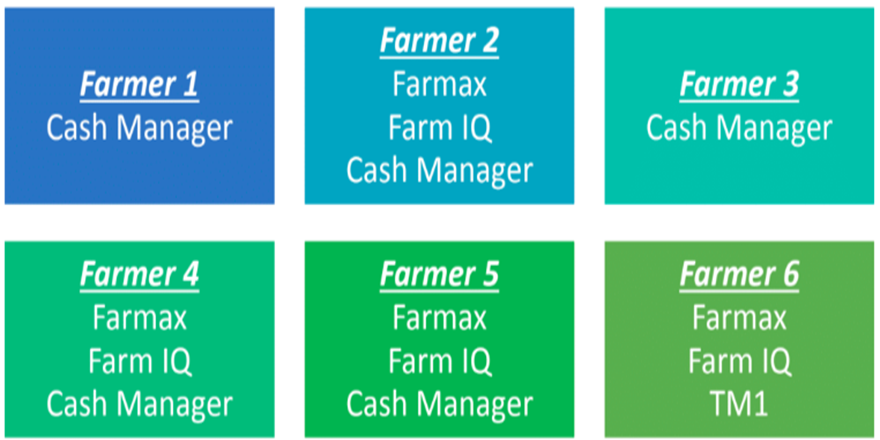
Budgeting technology was a key part of each farm business, and the only technology used by all six farmers. Farmax and Farm IQ were the two other technologies that were utilised in four of these farm businesses and were a key to their success.

Three important findings have emerged from this research. Firstly, top farmers are intrinsically successful. Technology just assists them in knowing their position to make informed decisions. Secondly, ground-truthing the results from technology with the farmers gut-feel and observations in the paddock is critical to effective decision making. Finally, technology provides some level of ‘insurance’ against events that may render the key decision maker unable to perform their duties for an extended period.

Technology use is unique to individuals, but some themes emerge time after time. Therefore, a greater understanding of these will lead to a more successful and resilient sheep and beef industry.

It is hoped this report will stimulate further discussion and investigation into technology-use on farms by farmers and industry professionals alike.

Investigating the impact of social media on the primary industry in New Zealand.

Executive Summary

Social media offers primary sector corporations the opportunity to leverage network effects. Rather than one to one interactions, groups of customers and stakeholders have the opportunity to support each other. Primary industry corporations can use social media platforms to facilitate these interactions. This results in increased efficiency, better brand awareness and improved customer relationships.

The primary industry is constantly in the public eye and put under scrutiny. Therefore, it is important for companies within the industry to have a voice, social media has proven to provide a platform for companies to share their voice.

This report identifies how social media is used both positively and negatively. Firstly, an overview of what social media is, who uses it, and different types of social media.

A literature review researching how social media can be used effectively has been outlined in Chapter 2. This highlights how social media can benefit a business when done right. Social media can be used to build direct relationships with customers, collect feedback, and identify new business opportunities.

Nine interviews were conducted with representatives from companies that are active in social media to evaluate how they use social media, and what their aims are by doing so. Respondents were asked how risk is managed within a team, to ensure that the right information is given and that responses have a positive impact. It was found that companies using social media generally attempt to increase engagement, educate their customers, stakeholders, and the general public. It is important that a company has a risk management strategy, to help manage any negative interactions on their media platforms.

To complement the information gathered through the interviews, a case study was done about a business that has a very low presence on social media. The goal was to see benefits of using a different platform to engage with suppliers. From the learnings found in the interviews with the other companies, it was obvious that there is value in having a social media presence to educate the public. However more resource is needed to manage the social media platforms to make it more effective.

The report concludes with an overview, discussion, and recommendations on how companies can use social media to their advantage, and be an effective tool adding value to their business.

Profitability of the kiwi dream: What are the main drivers of profitability on north island east coast sheep and beef farms.

Executive Summary

Profitability is often a challenge within many businesses. North Island East Coast Sheep and Beef farming businesses are no different, operating in a diverse and ever changing economic and climatic landscape. Currently these businesses are facing a more positive outlook, but for how long? And what are really the key drivers of profitability within these businesses? These are the questions this report has sought to answer.

In addition to identifying the common themes driving profitability from farmers and rural professional’s, answers were also sought in regards to some underlying themes in the industry being “value add”, “collaboration” and some actual hard “financial analysis” of these types of businesses.

In terms of the value add proposition for East Coast sheep and beef farmers this has some real merit. This opinion was based solely on the MPI New Zealand Sheep Industry Transformation Project however, this programme has generated some real successes for all parties involved with much of this thinking easily transferable across and in between industries.

The theme of collaboration was discussed based on the Red Meat Profit Partnership Primary Growth Partnership Programme. The conclusion from this analysis was that while the intentions seem right with the programme, the execution seems lacking in terms of providing a real benefit back to the farmers.

The financial analysis theme was data pulled directly from Beef & Lamb’s economic survey. This is a comprehensive set of data researched every year specifically targeted to regions and land classes within those regions. This set of data lined up well with the target subject of this report. The conclusions from the analysis showed that these businesses did make a financial operating profit. However, there were significant other factors to consider around the financial viability of these businesses. Debt position was a key factor to consider further.

The main successes from this report were the identification of key themes that drove profitability across East Coast sheep and beef farms. These are summarised within the conclusion of this report but can be broken down into the following areas:

  •  What is profitability actually defined as when considering North Island East Coast Sheep and Beef farming businesses? There is more than just the financials.
  • Measure, Monitor, Manage.
  • Use outside skills where appropriate, build a well
  • Rounded advisory team t o fill any knowledge gaps you do have or to explore ideas or concepts further.
  • Adopting new technologies, aids in business enhancement and profitability.
  • Good quality staff are key to business success.
  • Take the time to work on the business rather than in it.
  • Do the basics well!

In addition to identifying the above themes it is also an important part of this research to share the learnings with the target and related communities. The next steps at the end of this report conclude this well, with this likely to involve further one on one discussions and potentially tailored presentations around the content of this report.

Again, profitability is a challenge within many businesses but none are more better placed to achieve it than North Island East Coast sheep and beef farmers.

Deer industry leadership: design thinking for communication and engagement.

Executive Summary

The deer industry in New Zealand is renowned in the primary sector for its innovation and passion. Deer Industry New Zealand and the New Zealand Deer Farmers Association provide leadership and initiatives to grow the deer industry on behalf of their stakeholders. A vital facet of industry leadership is building capability through fostering a culture of continuous improvement. It is this spirit of striving for continuous improvement, coupled with the acknowledgement that the ability of an organisation to communicate effectively with stakeholders affects the achievement of business objectives, that inspired this project.

The aims of this project were to learn about the world of communications, discover what can be learned from other primary sector organisations, find out what farmers’ and other end users’ preferences are for communications from their industry organisation, and to provide a set of recommendations arising from this research.

The key learnings from this project are:

  • Communications both underpins and is overarching of an organisation’s strategic objectives.
  • To get the most benefit, communications needs to be a role within the organisation which sits at a high level and is performed by a professional with specific skillsets and specialist knowledge.
  • Content consumption habits and preferences of farmers are diverse and rapidly changing.
  •  The level of connectedness and engagement amongst the farming population should not be underestimated.
  • It is necessary to provide a suite of platforms for communications to provide choice to the diverse demographic of farmers/stakeholders, but start with a ‘digital first’ mentality, as this is, and will increasingly be, the dominant preference for content consumption.
  • Engagement is not the end goal of communication, but a live, ongoing relationship that needs to be nurtured, with effective communication being the enabler for this.
  • More than ever before, organisations need to understand social stresses and demands on farmers and other stakeholders, and place that forefront of mind, using a design-thinking approach to communications.

Summary and recommendations: Industry-good organisations such as Deer Industry New Zealand need to adopt communication strategies that are designed with the end user in mind. The content consumption habits of farmers and the way they prefer to receive information should be driving the way the deer industry communicates. Commissioning an independent audit of an organisation’s communications is valuable, especially for smaller organisations with a limited budget. In a world experiencing an exponential rate of change, how individuals communicate and consume content is changing rapidly. Focussed attention is needed to ensure organisations stay relevant to their stakeholders and communicate effectively in the future.

The urban rural divide: How can the New Zealand dairy industry better its social licence with New Zealand’s urban populations.

Executive Summary

Dairy farmer’s rights, like those of every member of society are bound by what that society is prepared to defend. This defence is called our social licence and it is the trust that has been built up over time between two parties.

The goal of this report is to identify ways in which dairy farmers can better their social licence and hopefully in doing so build enough trust with the public that allows farmers of the future a form of negotiated autonomy.

This need for a strong social licence has always been there but has come to the fore quickly over the last few years as the rise of digital media has meant people can now quickly share or find information on anything at the click of a button. Sometimes the facts of this media are not always accurate, sometimes they are but it may be taken out of context. Trust can be broken down a lot faster than it is made.

My investigation was done with a literature review on how other industries around the world have handled their situations with diminishing trust from communities and what ways they used to improve that standing. I have also conducted a survey of the community to see if any trends were obvious and used the feedback given to formulate some of my research and conclusions.

What I found from the surveys were a difference of opinions on the state of the environment from farmers to more urbanised people with farmers thinking the environment is better than those outside of farming. I also found that people are becoming more environmentally aware.

Results pointed to farmers not wanting to educate themselves at a field day as they thought they knew enough just working on the farm. I believe this is one of the key reasons we are getting a widening of the rural-urban divide and a weakening of the social licence farmers have with the NZ public.

In my opinion, the dairy industry needs to invest more into promoting its story. Farmers need to be implementing and displaying good on farm practices, principles and values. These actions need to be backed up by Dairy NZ with relatable facts to show what is being achieved on farm nationally and how it relates to the NZ public where possible.

More farmers need to play their part in educating the public. This can be done by hosting open field days, community groups and schools onto their farms to show case what happens on farms and connect the milk in the supermarket to the cow in the paddock.

A unified effort to wards improving farming practices in general needs to be done as a collaborative approach by the primary producer industry bodies. The siloed approached to public perception and social license is not effective and I believe this should be a united voice.

I think using on farm certification schemes is a significant way to encourage farmers to go over and above industry requirements. More promotion and adoption of these initiatives will also go a long way to building trust of the public sector. Examples of these programs are Synlait’s “Lead with Pride” and Miraka’s “Te ara Miraka.”

Although change may be painful and costly for some i  the short term, embracing the requirements of the social licence in a positive way may be the most effective way for farmers to receive continued support from the community.

Deer Farmers attitude towards benchmarking and data recording system requirements.

Executive Summary

Deer Industry New Zealand is currently involved in a Primary Growth Partnership and levy payer funded project called Passion to Profit (P2P). The overall aims are to improve market returns and on-farm productivity for deer farms. One of the contributing projects to P2P is the definition and recording of Key Performance Indicators (KPIs) and industry benchmarks.

Data recording and benchmarking is important for business growth and a feature of higher performing farms. Benchmarking requires real-time management of data within an electronic database. Use of electronic data storage can be considered a “new technology” on farms which have traditionally kept pen and paper records. Adoption of new technologies follows a well described pattern amongst populations.

This study aimed to determine the attitudes of farmers towards data recording and benchmarking and the system requirements to encourage uptake of digital data recording technology.

The study design was an online survey of seventy eight farmers using SurveyMonkey. Of these seventy five responses provided useful data. Questions related to demographic information, current practices, attitudes towards data recording and benchmarking and requirements and impediments to the use of digital data recording systems.

Deer Farmers have a high level of interest in setting targets, recording production and benchmarking. They consider previous performance on their own properties and on farms similar to themselves as the most important factors for determining what their targets are.

Respondents considered that it is not adequate to solely focus on own performance and that comparison with other farms within the same year is also necessary to help them set realistic targets and identify potential areas for improvement.

The level of uptake of digital recording of production is low and manual records using paper and diaries are the most common method. Data are more likely to be formally recorded when there is a mandatory requirement to do so. For example financial accounts for tax return purposes.

There are a wide range of reasons for limited uptake of digital production data recording and benchmarking. These reasons vary between farmers. Relative satisfaction with current systems probably provides inertia for change along with the perception that current systems on offer will not provide a significant level of advantage, are too complicated to use or have other limitations.

The most important factors for achieving a high level of uptake are a simple system that is easy to use with good support. It needs to be reasonably priced, integrate well with other systems and give immediate feedback on the situation on the farm by comparing year on year and generating graphs and printable reports. The system should be accessible to all farmers and thus allow for offline use in situations of poor internet connectivity.

A wide range of privately managed digital recording and management options exist. These are not well integrated with each other, except perhaps for FarmIQ and data is not directly comparable or accessible between the systems. There is a relatively small number of deer farms in New Zealand so a high level of participation in a single platform will be required for adequate benchmarking. The deer industry should investigate whether a nationally managed collectively owned database is appropriate similar to those provided by Beef and Lamb NZ and Dairy NZ.