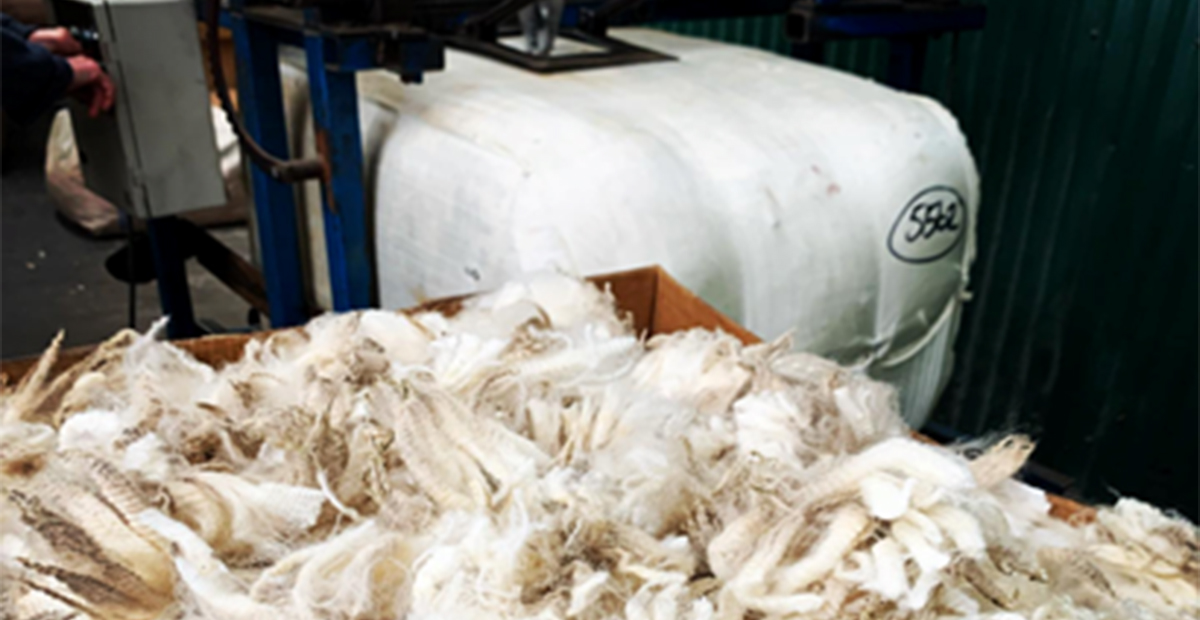

The New Zealand mid-micron wool industry traditionally was a major contributor to the economy. Today, the wool cheque often does not cover the shearing costs. Therefore, most growers are implementing this mainstream income as a yearly farming expense.
With rising competition for cheaper apparel of plastics and synthetics, wool products have become targeted apparel for higher-end users due to price. With all this, it is putting pressure on the New Zealand wool industry, especially mid-micron, and strong wool growers.
The aim of this project is to understand the entire supply chain of mid-micron wool, and how growers adapt their business to suit this chain. The research seeks to establish if there is a premium for a traceable wool clip, and who in the chain absorbs the benefit if there is one.
Having a passion for wool, a byproduct, which is continuously decreasing in value, it seems appropriate to dissect the supply chain and understand it from a grower’s perspective and the impacts on their farming systems (positive and negative).
The literature review focuses on three main points consumer preference, supply chains, and value chains. Consumers are becoming more aware of prices, what products are made of, and where they come from. This is where the demand for traceability comes into place. The supply chain is complex and hard to trace which makes it difficult to give value back to growers.
Icebreaker is used as a case study to provide an example of a supply chain that is creating value for its farmers by meeting consumers’ demands. Interviewing industry leaders across the supply chain provided perceptions of each stage and their thoughts on the wool industry.
The recommendations aim to support farmers capture value from their mid-micron wool through tracing and adapting farm systems.
- Educate, educate, educate! Educating every stage of the supply chain will benefit by adding value back to growers.
- Educating consumers on mid-micron woollen products through wool in schools’ containers (Campaign for Wool), and marketing through social media and television.
- Farmers move out of their comfort zone by embracing technology and meeting consumer demands.
- Capturing the value and distributing it back to growers through meeting consumer demand.
Christie Burn