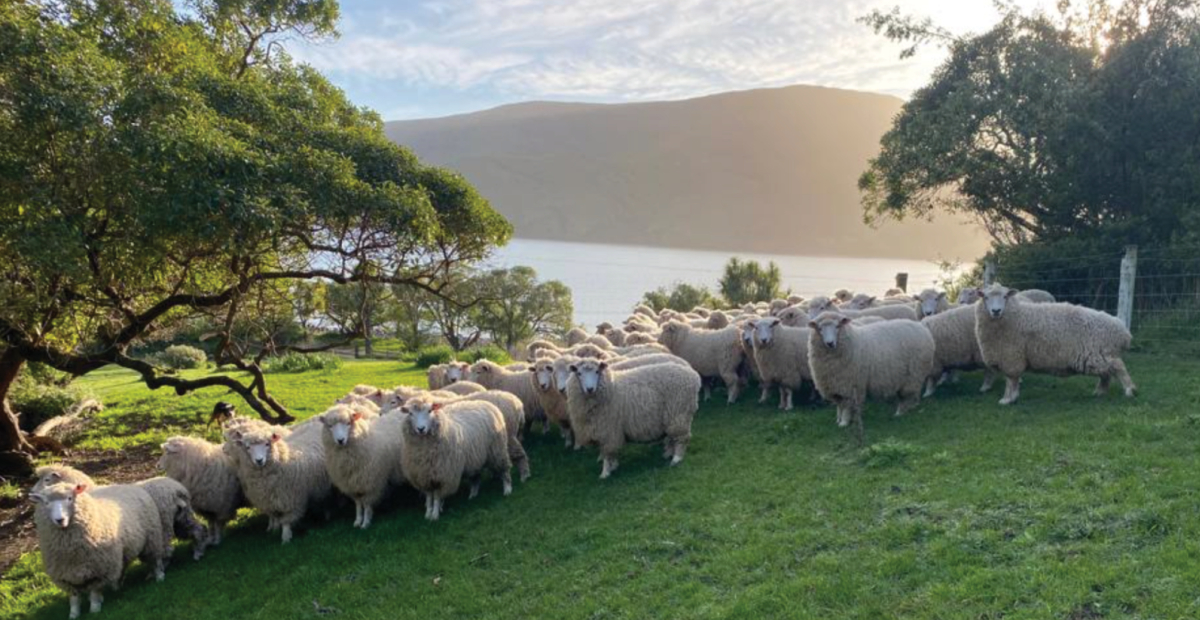

New Zealand farming is synonymous with sheep. Their naturally grown fleece has many unique attributes that make it a “super-fibre”, but competition from synthetic fibres has seen a decline in the popularity of wool over the last fifty years, as synthetics are cheaper to produce and consistently perform well in manufacturing.
Wool used to be the main income stream for sheep and beef farmers and strong wool now is currently a net loss for growers. Sheep still need to be shorn for the health of the animal but considering all the additional costs of doing business these days, removing wool from their business is a choice many are considering.
For generations, New Zealand growers have developed sheep genetics that yield a high quality and quantity of wool and this report highlights the opportunities and markets that still exist and are developing that need their wool clip.
Purpose of report.
The purpose of this report is to understand the structure of the New Zealand strong wool industry. To understand how the market price is determined for strong wool, an industry analysis is conducted, the driving forces influencing the wool market pricing are identified and the opportunities and challenges facing the industry are discussed with a focus on the grower.
This report is aimed at the next generation of decision-makers on sheep and beef farms to inform them of the market opportunities that exist for strong wool and recommend how might the market price improve for strong wool.
Methodology.
A mixed qualitative research approach is used including Content analysis, through a literature review, Semi-structured interviews with fifteen industry stakeholders, and Thematic analysis used to evaluate insights from the interviews. Discussion of the profitability and competitiveness of the New Zealand strong wool industry is completed using Porter’s Five Forces and PESTEL model.
Analysis and Discussion.
Analysis of the themes from interviews and literature found prioritizing quality, collaboration, promotion, environmental sustainability, and global market engagement will pave the way for improved market prices.
- There is a consumer trend towards natural fibre solutions over plastics and synthetics.
- There is a demand for quality New Zealand strong wool, and it is well-suited for carpet manufacturing.
- Competitive rivalry is high within the strong wool industry and profitability is low.
- There are many other uses for strong wool, and these are increasing as growers and businesses innovate by solving problems with natural fibres, none of which are currently consuming a significant volume to influence the market demand.
- Quality strong wool will sell well, but to what degree? that is influenced by the additional value created through collaboration with businesses well connected to the consumer.
Recommendations.
- Growers to ensure a quality clip is produced and well prepared for sale.
- Growers to collaborate with other wool suppliers and supply chain partners. This is key to creating additional value and a unique value proposition with their strong wool clip.
- All stakeholders are responsible for promoting wool and its advantages to consumers.
Annabel Barnett