
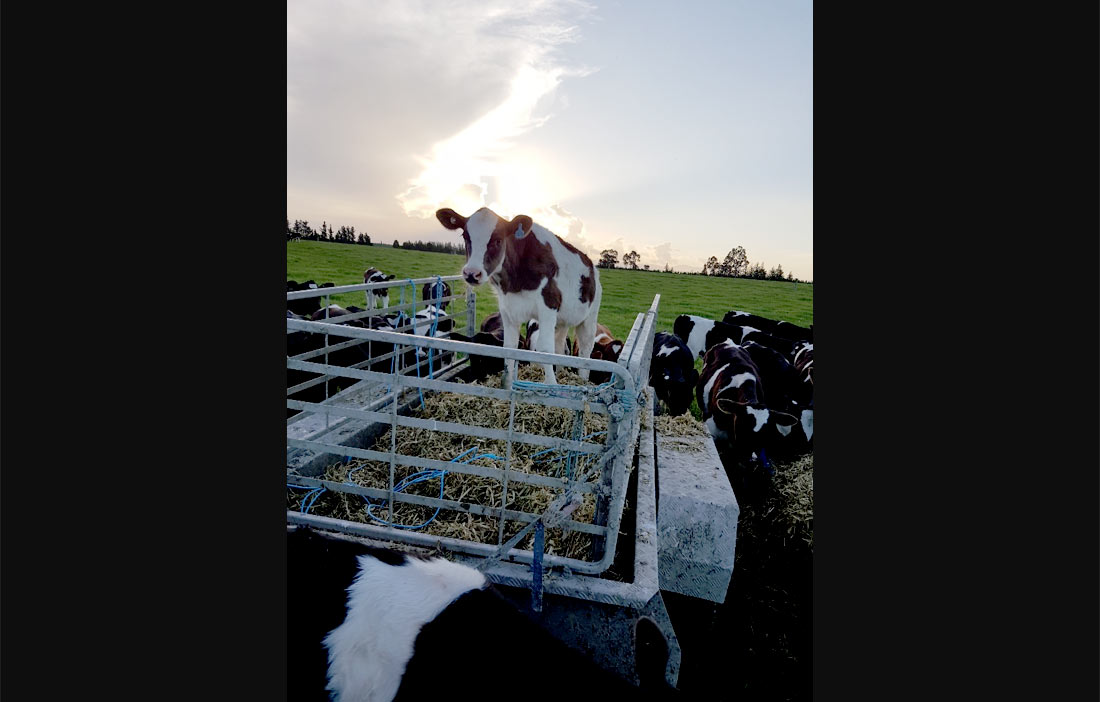

The New Zealand dairy industry remains one of the country’s most significant export sectors and continues to play a major role in supporting regional economies and rural communities. Alongside milk production, the dairy sector also contributes heavily to New Zealand’s beef industry, with a large proportion of beef exports now originating from dairy animals or dairy-beef cross systems.
New Zealand’s international reputation has largely been built around seasonal pasture-based farming systems capable of converting grass into high-value milk and beef products with relatively low levels of confinement feeding compared with many overseas production systems. However, the same seasonal system that underpins this competitive advantage also produces a large number of surplus calves each spring.
Historically, many of these calves have entered the Bobby calf system at approximately 4–5 days of age. For decades this was widely accepted as part of seasonal dairy farming. This traditional system prioritises labour efficiency and operational simplicity but captures limited economic value from surplus calves. Increasing societal expectations around sustainability, animal welfare, and resource-use efficiency, combined with potential opportunities for improved dairy-beef integration, have renewed interest in alternative calf management systems.
This study evaluated the feasibility of retaining non-replacement dairy calves to heavier liveweights within a commercial seasonal dairy system, without compromising cow numbers. A representative irrigated Mid Canterbury dairy farm (1,000 cows, 270 ha, 3.7 cows/ha) was modelled under three calf management scenarios:
- Model 1: Traditional Bobby calf system
- Model 2: Calves reared to 100 kg liveweight
- Model 3: Calves reared to 225 kg liveweight
Results demonstrated a clear trade-off between profitability and operational complexity. The Bobby calf system was the simplest and lowest-risk option but generated the lowest financial return. Retaining calves to 100 kg improved profitability while maintaining manageable system pressure. Retaining calves to 225 kg generated the highest financial return but created substantial increases in feed demand, labour requirements, and exposure to seasonal and market volatility.
The study highlights that while improved calf retention can significantly increase value capture, system viability is strongly constrained by feed availability, labour capacity, and whole-farm operational pressure. The most appropriate system is therefore likely to vary depending on farm resources, management capability, and climatic conditions.
Overall, results indicate genuine potential for improved dairy-beef integration in New Zealand, but only where systems remain operationally practical within seasonal pasture-based dairy farming.
Phil Lowe