

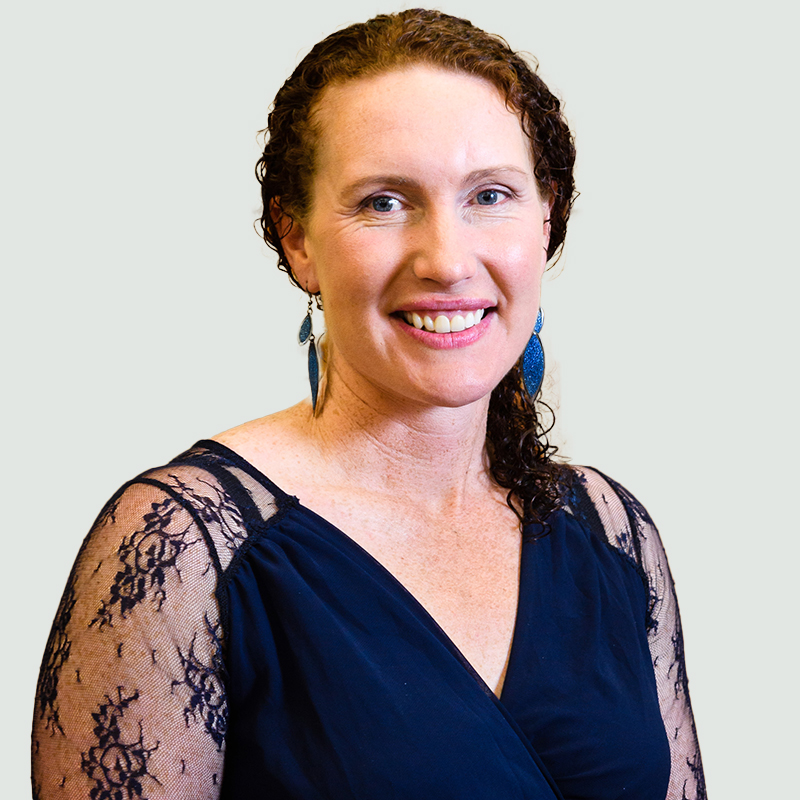
Kerry Worsnop farms Taheke Station in Rere, 36 kilometres west of Gisborne, with her husband Marcus and their three children. Raised on a dairy farm in Horohoro south of Rotorua, she came to the East Coast for a gap year in 2003, met Marcus, and stayed. The couple built their farming business the hard way: contract fencing, shepherding, and leasing before purchasing Taheke in 2013. She studied part-time through Massey while the children were small and the business was growing, completing a Bachelor of Agricultural Commerce in 2016 and picking up the William Gerrish Memorial Award for excellence in farm management along the way.
Her path into policy work started with council. Elected to Gisborne District Council in 2019, Kerry served three years as a Waipaoa Ward councillor and became Vice President of Gisborne/Wairoa Federated Farmers. The experience convinced her that the gap between how policy is designed in Wellington and how it lands on farms was the real problem worth researching, and that she’d hit the limits of what she could change from inside those roles.
She applied for the 2023 Nuffield Scholarship at one minute to midnight on the night applications closed. What followed, cyclones and all, made 2023 a pivotal year. Her research took her through eleven countries, including Washington, Pennsylvania, Canada, the UK and the Netherlands, interviewing policy academics, senators, agriculture ministers, public servants, farmer organisations and farmers.
The report, published in February 2024, argues that New Zealand is close to unique globally in producing food almost entirely without subsidies, and that layering regulatory cost on top of that model without market rewards to offset it undermines the very efficiency that made the sector viable in the first place. The opportunity, she argues, is to design a stable of agricultural policies deliberately built for New Zealand’s unsubsidised system rather than borrowed from countries whose farmers operate under fundamentally different conditions.

