
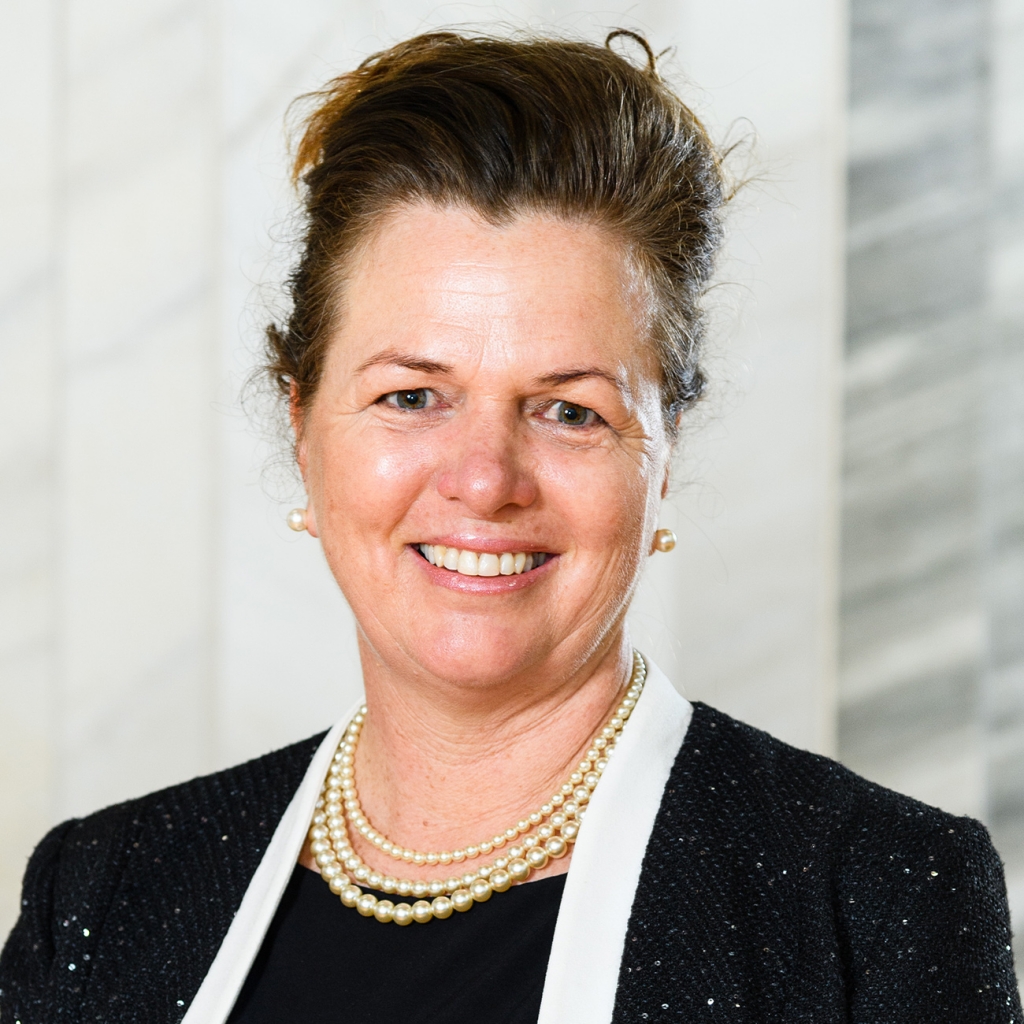
Tracy and her husband Wynn own Tiroroa Farms near Matamata, milking just under 700 cows on 320 hectares. She grew up in Northland and has whakapapa links to Te Rarawa. After an honours degree in agricultural science at Massey, majoring in economics and farm management, she worked as an economist at the Meat and Wool Boards’ Economic Service, then as a training adviser with the Agriculture ITO and in rural banking, and spent a decade raising four children before coming back through the New Zealand Farm Environment Trust. From there she spent ten years leading environmental change in dairy: chairing DairyNZ’s Dairy Environment Leaders programme and the Ballance Farm Environment Awards alumni, sitting as a farmer representative on the group overseeing the Water Accord, and joining the DairyNZ board in 2019. Tiroroa won the Waikato Ballance supreme award in 2010 and the first Fonterra Farm Source Responsible Dairying Award in 2018.
Tracy applied to Nuffield wanting to know what had actually produced environmental change at pace and scale, in other countries and other industries. Covid reduced sixteen weeks of international travel to about a day at a conference on an island off Brisbane. A trans-Tasman bubble tour was the second plan and a New Zealand road trip the third, cancelled when Auckland locked down again. The fourth was more than 200 conversations by phone and video.
Tracy’s report, Adapting Dairy to Thrive in a Constrained World, published in April 2022, is written for people setting sector strategy. Three decades of largely unconstrained growth have ended, she argues, and success is no longer measured in financial terms alone. Science got the sector here and emotional intelligence helped it communicate. What it needs now is social intelligence to connect with stakeholders, and adaptability intelligence to change its systems.