2026 Nuffield NZ Farming Scholarship. Apply by 17 August 2025. Read More...

Apply for 2026 Nuffield NZ Farming Scholarship by 17 August 2025. More details...

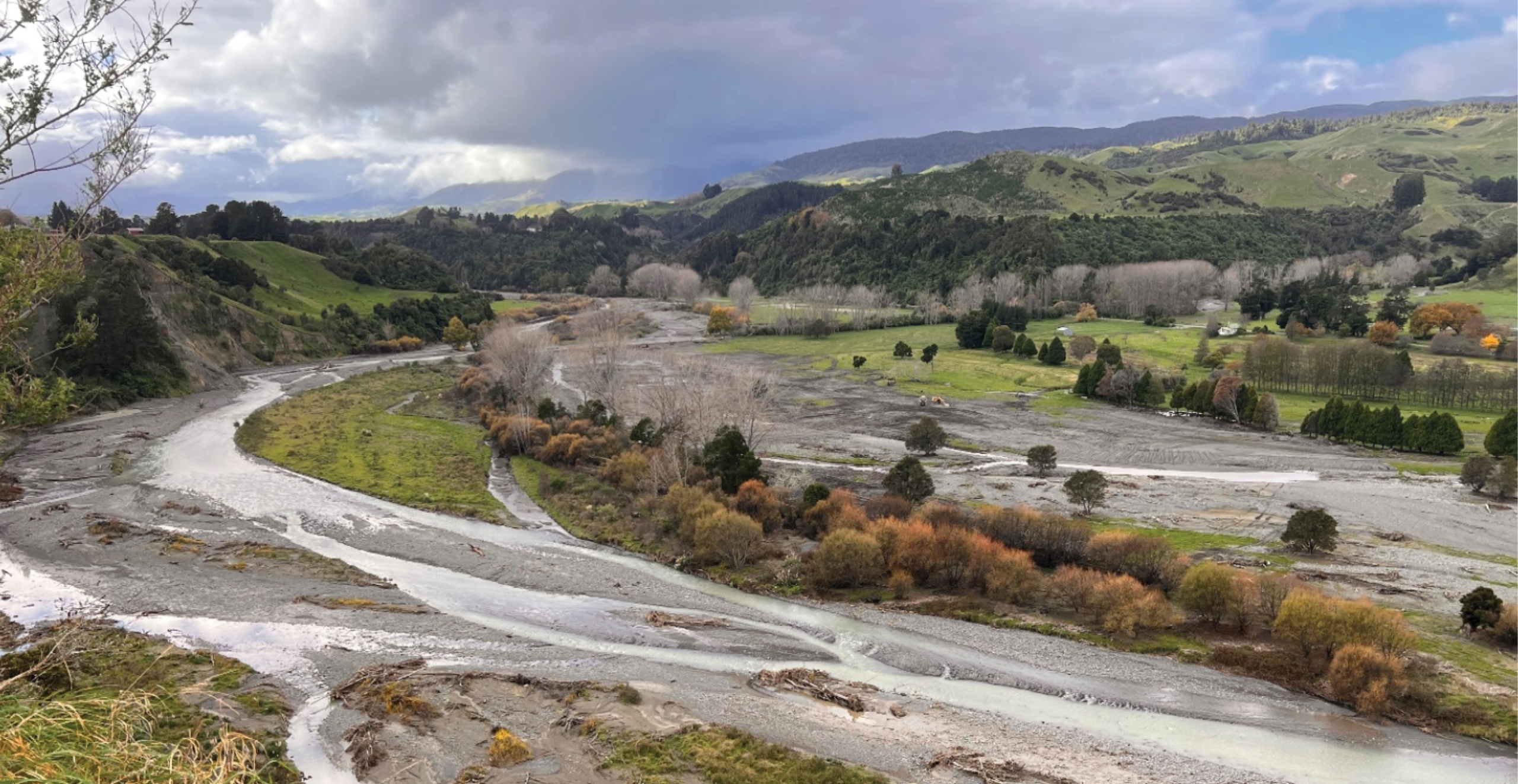
How might Manawatū-Rangitīkei sheep and beef farmers futureproof their land?

Executive summary

Farmers adapt to the weather as part of their everyday decision-making on farm. Evidence suggests that, for New Zealand, the climate will change more significantly in the years between 2040 and 2090. How might Manawatū-Rangitīkei sheep and beef farmers adapt to the changing climate and futureproof their land?

The purpose of this report is to translate scientific climate modelling into practical contexts for Manawatū-Rangitīkei sheep and beef farmers and consultants.

This report aims to provide knowledge of:
1. Climate change predictions within the century.
2. What risks and opportunities are associated with climate change predictions.
3. What practical short to long-term actions could be considered that might future-proof farming businesses?

The methodology involved a literature review, followed by semi-structured interviews which formed qualitative research into futureproofing solutions.

The key findings are four climatic attribute changes to be aware of:
1. The frequency and intensity of drought.
a. By mid-century, a rainfall deficit of 50mm – 75mm per year.
2. The number of ‘hot days’ over 25oC.
a. By mid-century an increase of ‘hot days’ over 25oC, between 40% and 100% per year.
3. The frequency and intensity of adverse and compounding weather events.
a. El Niño and La Niña natural weather cycles exacerbated by climatic changes globally.
b. More severe adverse weather events, their frequency requiring more research.
4. An increase in temperature.
a. By the end of the century, an increase of 0.7oC – 3.1oC under the Representative Concentration Pathway’s (RCP) 2.6 and 8.5.

Recommendations to Manawatū-Rangitīkei sheep and beef farmers and consultants:
1. Use credible, trusted, and up-to-date sources of information to inform opinions about the changing climate.
2. Learn from advisors who collaborate closely with the scientific community and can translate data into meaningful, practical contexts.
3. Assess the current farming system concerning the top four climatic attribute changes and identify relevant, attainable, short to long-term actions, that may futureproof the business.
4. Build financial resiliency to be able to absorb hits and invest in futureproofing mitigation solutions.
5. Identify primary land use resources and their potential alternate use, if the existing system needs to change in the future.

Grace McLeay

Could herbicide resistance reduce the growth potential of our primary industries?

Executive summary

Background: Thanks to our climate, location and innovate farming practices NZ primary producers have become very successful through being highly efficient at producing high quality and trusted foods.

Crop protection products have contributed to the success of New Zealand farmers and growers for many years. Whilst this is likely to continue for the foreseeable future, the rate that plants, insects and diseases are developing resistance to these tools is growing and likely to increasingly cost our industry and country into the future.

This report focuses on herbicide resistance and compares our situation in New Zealand to other OECD countries we often compare ourselves with. This report highlights current knowledge and/or awareness gaps, shares information we might use to influence decision making and propose ideas that we might adopt to tackle this issue.

This report answers two questions;

  1. Could herbicide resistance reduce the growth potential of NZ’s primary industries?

  2. How might NZ mitigate the affects of herbicide resistance to our primary sectors?

Key Findings: Herbicide Resistance is a significant and growing threat to global food production (CropLife Australia). In NZ, the incidence of herbicide resistance has risen significantly over the last two decades (NZ Plant Protection Society). In one recent arable sector survey, completed in the canterbury region, it was reported that 48% of farms tested had some form of herbicide resistance (Buddenhagen 2021).

An overseas example from the UK shows one weed (Black Grass) is costing the UK economy nearly £400 million and 800,000 tonnes of lost harvest yield each year, with potential implications for national food security. The worst-case scenario – where all fields have a high proportion of resistant black-grass – could result in an annual cost of £1 billion, with a wheat yield loss of 3.4 million tonnes per year (Rothamsted 2019).

The majority of herbicide resistance cases have arisen during a time where only one new herbicide mode of action has been introduced, in the last 30 years (Blois 2022). When considering this trend, along with the industries need to replace “old chemistry” products and as certain ingredients become restricted, prohibited or ineffective (APHANZ 2021), it’s clear we need to be doing more to manage this issue to be able to farm effectively into the future.

Recommendations: More detail is discussed in the recommendations section of this report. For this section I have kept this brief and grouped into six key areas;

1, Strategy – Whilst we support those currently managing herbicide resistance issues and those working in this area, we also should develop cohesive strategies. The plural is important, as in conjunction with a national strategy, this should be supported by regional and sector strategies to maximize results.

2, Awareness – To succeed, we will need to lift the level of importance of this issue, such that it receives more ‘band width’ and focus with in each of our farming sectors and on farm. Respected farming leaders could help champion this (similar to rural mental health).

3, Collaborate – We must act together in a structured way. For this to be most effective, we should consider how we can best engage national and regional government, science, sector bodies, rural professionals and applicators, but with farmers and their advisors in mind so that practices are practical.

4, Educate – Our sector is well resourced with experienced people in the following areas; science, extension and industry. With a staged and cohesive approach, we can improve knowledge levels on how to improve outcomes into the future. We are fortunate to have much science to refer to in this area.

5, Support – With the development of national, regional and sector plans, farmers will need support to help them implement these locally. Local groups should be developed and supported so that practices and strategies can be implemented. This will of course need national and local funding to succeed, this should be a mix of government (national and regional), sector and industry.

6, Act – With the benefit of clear, national, regional and sector plans we must implement change, utilizing new, existing and local best management practices to reduce the growth in future incidences of herbicide resistance to improve outcomes for our industry and farmers. This could start with reviewing the NZ Herbicide Resistance Task Force, which is a group of NZ Plant Protection Society members who are actively involved with researching herbicide resistance within New Zealand, to decide if this is fit for purpose and whether further support and investment is needed.

Accessing consumer willingness-to-pay for environmental action on farm.

Rebecca Begg Kellogg report image

Executive summary

As farmers must bear the increasing costs of environmental regulation, social expectation, and consumer demands, it is important that they maximise the value they receive for their food and fibre products. While some farmers can seek added value for their products by trading directly with the consumer, many are operating a business model where they supply processors and rely on them to access and pass on added value from marketing particular credence attributes to consumers.

This research considered the question: Are consumers willing to pay for environmental action on- farm such as fencing and planting of riparian areas, and if so, how can farmers access these premiums?

In preparing this report, a literature review was followed up using semi structured interviews with processors and industry experts. Insights were condensed into themes for analysis and helped inform the discussion and findings.

There were three key findings, or themes that impacted on farmers access to premiums for environmental action on farm. These are:

  1. A ‘ticket to the game’ or farmers putting themselves in the best position to capitalise on premium opportunities,

  2. A ‘right to play’ which was making sure that products met minimum consumer
    expectations-whether there was a financial incentive to do this or not, and lastly,

  3. Disincentives can be used to discourage management actions if they are not desirable for customers or consumers.

Key concepts that underpin accessing premiums include product assurance, communication between suppliers and consumers, relationships with processors and demonstrating continuous improvement of farming practices to encourage trust in brands and credence attribute claims.

For farmers to maximise their returns and capitalise on environmental and sustainability premiums, it is recommended that farmers:

  • Engage with their processors to understand consumer trends, find opportunities for added value and to access advice on sustainability requirements,
  • Participate in farm assurance schemes and work towards extended or premium
    programmes with your processor,
  • Future proof their business by being initiative-taking in adopting environmental management practices and aim for continuous improvement in systems,
  • Share their stories from behind the farm gate,
  • Embrace technology for data sharing to reduce reporting and verification burdens,
  • Investigate a collective approach to productising attributes of local produce to
    generate a premium.

And that processors will be able to facilitate increased premiums for farmers by:

  • Communicating with their suppliers to understand the attributes that are marketable so farmers can plan accordingly and amend practices,
  • Being transparent about added value, including where those premiums are coming from and how they are being shared with suppliers,
  • Rewarding or incentivising environmental or sustainability action on-farm,
  • Connecting animal welfare and food safety attributes to environmental sustainability which may generate a premium from those attributes,
  • Articulating New Zealand’s environmental credence attributes to promote added value, and
  • Investigating how to ease reporting burden for farmers.

From knowing to implementing.

Nicki Davies Kellogg report image

Executive summary

The New Zealand Forestry Industry has witnessed an exponential growth in Environmental Regulation in the last five years and this will only but continue. The implementation of regulation however has been challenging to the current workforce as there is a lack of support, education, understanding, decision making and leadership across all levels of the industry and government.

Most of the challenges we face are not old, but we now have to consider them through a different lens. What has been done in the past is now obsolete and the next generation of foresters will be key to the industries success. The industry needs to embrace diversity, nurture change, innovate, try new ways of engaging people and build talent for the future.

Nothing will change if nothing changes.

This research report attempts to answer the question “how to support and achieve environmental compliance in a world of change? This was done by looking at the environmental culture of a production forestry company, exploring leadership styles, motivation towards change, understanding of individual environmental responsibility and performance expectations. Then, to analyze gaps and barriers to deliver on meeting environmental performance standards and make recommendations on how we can effectively support a movement towards a high level of environmental compliance at both a company and industry level.

Key findings:

The forestry industry needs to lift the quality and capacity of workers in the industry. Higher levels of education, understanding, decision making and leadership is required across all levels of the industry.

There is an aging workforce with both contractors and forest mangers across all aspects of the forestry industry. Effort is required to attract, support and grow the next generation in the industry.

More credible and functional relationships need to be formed between the forestry industry, central and local government. Significant investment is required in promoting forestry as a sustainable and viable industry in New Zealand.

Recommendations

  • Individuals who regulate and work within the industry need to get better support and gain the training and skills required to understand and be confident in knowing what regulation requires and how to achieve that on the ground. Known and proved change management techniques should be followed to assist individuals on the journey at a political, industry and company level.

  • New Zealand Forest Owners Association (NZFOA) need to be promoting for a greater number of students to enter the forestry degree programmes.

  • NZFOA and wood councils need to strengthen regional environmental working groups and work together, alongside regulators, to address the most  environmentally challenging areas of rule implementation of the industry.

  • Action the development of spatial tools and guidance to determine high risk land areas to give better clarity to all stakeholders of where the real environmental risks are. Determine land classes and land forms where production forestry as a land use is not suitable.

  • Those writing and amending regulation need to better describe measurable standards and targets that can implemented and complied with on the ground.

  • Rules and regulation need to have a clear purpose which gives clarity on the values we are protecting.

  • NZFOA need to invest in some real expertise to help address the significant reputational issues the forestry industry has.

Keeping our farmers passionate in challenging times.

Hamish Murray Kellogg report image

Executive summary

A significant component of New Zealand’s sheep, beef and dairy farms involves the
production of winter forage crops. This ensures high yielding crops are available throughout the winter months when there is very little grass growth for continued rotational grazing.

Pasture swards are left to rejuvenate through the winter months ready for spring. New Zealand farmers pride themselves on being custodians of the land and recognise the importance of continually enhancing our environment with sustainable practices. Within the multiple agricultural sectors, New Zealand produces some of the highest quality food and fibre for the global market whilst satisfying regulatory requirements set by our government.

Farmers over the last five years have adopted new practices to better mitigate the on farm environmental impacts regarding intensive winter grazing (IWG).

The target for this report is to answer the research question; how do we keep farmers passionate about farming when they are up against immense amounts of  environmental policy change from our current government but more specifically, intensive winter grazing.

The report identifies key areas to help farmers with their frustrations on the ever-changing IWG policies. These key findings will provide an insight to answering my report question.

Methodology

A Literature review was undertaken to further understand the research topic. Semi structured interviews were conducted with a generational perspective to better understand the outlook amongst the generations.

Key Findings

The research undertaken included a comprehensive overview of the mixed perspectives and mindsets throughout four generation cohorts focused on IWG questions. It is important to highlight the use of generational perspectives when evaluating the current research topic. Although there are many trends from the interview answers, the majority of the IWG policy and regulation will affect the younger generations the most.

Government and industry bodies need to have collaborative approach between industry bodies and farmers to get the best outcome when writing policy. This needs to be with a generational perspective but more specifically, the younger generation in the primary sector. They need to be encouraged to step forward and take leadership roles so that their voice can be heard to help shape the future of our IWG policy and regulations.

From the survey answers, themes were generated using a thematic analysis. These themes are broken down into several subthemes that reflect the underlying topic.

  • Collaboration
  • Education
  • Simplicity
  • People

Recommendations

The following suggestions have been made as a result of the conclusions drawn from this report.

Develop closer collaboration

Farmers understand there needs to be sensible regulation in place around IWG to secure a world class environment for future generations to enjoy. There needs to be further collaboration within sectors and from the government to work with more with our industry bodies.

Plan Long Term

The use of strategic long-term planning towards writing IWG policies can only be seen as beneficial for the agricultural industry. By allowing it to be proactive in its development towards attainable regulation.

Provide Education

Provide beneficial and cost-effective support for farmers around new policy.

Maintain pragmatic approach

Farmers from all sectors need to be more involved and utilised for their extensive knowledge around a pragmatic approach to writing policy. I believe working with the farmers from the ground up when writing policy would deliver a better outcome.

Incentivise Farmers

Due to consumer demand for more robust guarantees of food safety and quality in developed nations, market forces have propelled the development of numerous policies and good management practises (GMPs). Putting incentives in place for farmers to adopt GMPs is relevant to keep farmers passionate and engaged in relation towards regulation.

Voice of the younger generation

Our industry bodies and policy makers need the leaders of tomorrow to be around that table when forming policy ideas. Creating a ‘youth voice’ for the agricultural industry is something that shouldn’t be underestimated.

Owhaoko B&D land block.

Suzanne Hepi Kellogg report image

Executive summary

Māori land plays a critical part of Aotearoa and its history. Understanding the dynamics of Māori land ownership and the role they play to ensure their whenua is taking care of, is not as straight forward as people assume.

Māori landlocked land has influenced a change in the Te Ture Whenua Māori Act to lessen multiple barriers for Māori. This research has been conducted through a kaupapa Māori approach, for Māori by Māori.

This case study is concerned with understanding the land block, its isolated location, the barriers of access and how the trust can initiate a sustainable involvement for the owners. The report is based on semi structured interviews and analysis of secondary data.

Purpose

The aim of this report is to discuss the landlock block Owhaoko B & D with trustees and beneficiary owners. Overall, I am gathering data to build an understanding of what is occurring on this land block, trust developments and what the future aspirations could potentially be.

Key Findings

The key findings of this report have been grouped into themes and are a general understanding of the narrative around the story of the land block. It is supported by quotations from interview participants and is raw information that they have voiced.

Recommendations

  • Data – Embark on further research of this land block and internships conducted by beneficiaries or owners of this whenua with support from the trust and tertiary institutions.

  • Transformation – develop and deliver environmental programmes to help educate whānau about the importance of being kaitiaki for the land.

  • Collaboration – form a partnership with a Māori tech and digital business that could showcase the land blocks history and whakapapa digitally, to owners of the land that cannot experience it first-hand.

  • Capability development – Provide opportunities for owners to participate in projects associated on the block such as seed banking, wild game monitoring etc.

  • Leadership – Government to help support a leadership programme that is delivered partially out of the land block, informing this cohort about the change in legislation and how the land can contribute to this.

  • New initiatives – Establish other incentives for owners wanting to visit the block such as high-end accommodation, events, or annual activities etc.

  • Mātauranga Māori – Produce or deliver a wānanga based on traditional Māori practices such as rongoa, identifying native trees, land use etc.

Happy and Healthy at Work.

Executive summary

Labour and its shortage remain a critical issue that needs addressing, with the growth of horticulture predicted, coupled with on-orchard automation look ing closer to 2030. With low unemployment in New Zealand, engaging the Recognised Seasonal Employer (RSE) workforce is vital to remaining successful as an industry.

The purpose of this report is to understand and provide recommendations for the key attributes of a successful team within the seasonal RSE workforce, focusing on the kiwifruit industry. The methodology includes a literature review on the characteristics of a seasonal workforce and breaking down what a successful team looks like, followed by semi-structured interviews with ten orchard owners and pastoral care managers to gain insights from their experience with RSE teams. Themes were generated through thematic analysis to provide conclusions and recommendations.

Key findings

A family culture with a village mentality is key to the success of an RSE team and results in a team that is both happy and healthy at work. Team building and a homely living environment add to this. RSE employees’ purpose of making money to send home to their families, needs to be kept front of mind.

The RSE team needs to be well-formed with the right mix of skills, experience, and personalities with a clear and well-understood leadership structure. The team leader must be trusted and respected, creating productivity and success. Peer mentoring also adds to team success with team members supporting and encouraging one another.

The mindset of continuous improvement is essential to the success of the RSE team. Highly engaged RSE employees need development opportunities beyond their day-to-day tasks.

The relationship is symbiotic, with New Zealand employers needing to be willing to learn more about the values and culture of the Pacific Islands. All parties working together need to have a strong cultural understanding of similarities and differences, which improves team performance. Planning for continuity and succession is vital.

Recommendations

The following recommendations are made to orchardists looking to build a successful RSE team:

  • Develop a family culture, cultivating the village mentality. This is developed through having an inclusive living environment and creating a home away from home by their New Zealand employers.

  • Ensure all permanent employees have a good understanding of the similarities and differences of the Pacific Islander culture. This can be developed through developing a cultural training programme for all permanent staff.

  • Ensure RSE employees understand their purpose and motivation for being in New Zealand which is sending money home to their families. Checking in on this regularly to keep them reminded of their purpose is important to retain engagement.

  • Put in place an RSE team leader that is trusted and well-respected.
    • Create a culture of empowerment amongst the team to allow peer mentoring across team members.

  • Put in place regular team-building activities and be in regular communication with the RSE team.

  • The New Zealand employer needs to have a mindset of continuity and succession. The key to this is building a strong referral system.

  • Ensure RSE employees have access to development opportunities. The main provider of this is Vakameasina.

  • Be open to learning about the values and culture of the Pacific Islands.

What Goes In Must Come Out.

Executive summary

Social licence to operate (SLO), also known as just social licence, is an unwritten agreement between stakeholders and a business/industry on the impact that they can have on the environment and community.

As the values of the community change our SLO is going to come under increasing pressure. Stakeholders are increasingly scrutinising water usage, agrichemical and fertiliser applications, worker welfare, noise pollution and visual impacts. They want to see justification of use of the products and tangible outputs (saleable product).

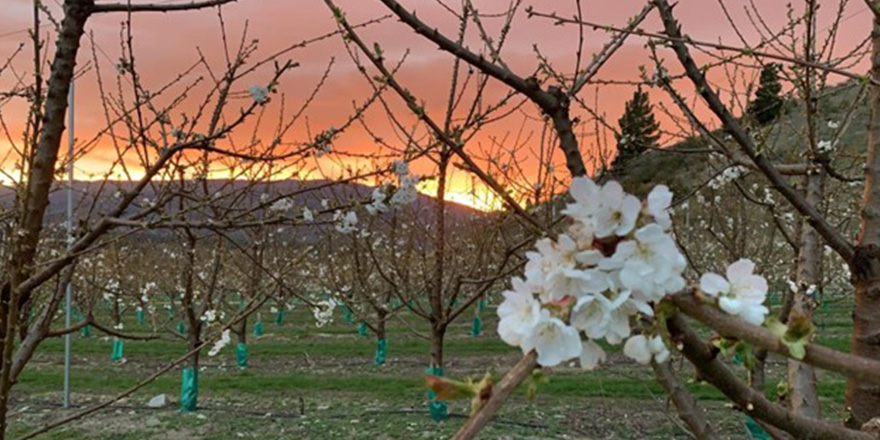
The aims and objectives of this project is to investigate whether growing cherries in an intensive, indoor growing system will protect our social licence to operate. Social licence will be defined, the aspects that are important to different stakeholders explored and how we can enhance our social licence with forward thinking growing systems explained.

A literature review was conducted to gather some insight to the origins of the social licence to operate concept, define social licence, identify stakeholders and examine what businesses can do to maintain social licence.

Three levels of stakeholders were identified as being significant to cherry production operations. These were seasonal workers, the general public and regulators. Semi-structured interviews were carried out with each stakeholder group to ascertain what aspects of cherry growing operations they perceived to be most important to the social licence to operate and what of these operations put the social licence to operate most at risk. These factors were then compared through a case study between a traditional open field cherry growing system and cherries grown intensive indoor growing system.

Conclusions

  • The practices of a cherry growing operation are likely to come under the spotlight. When questioned about operational practices and use of natural resources it is important that growers can provide quantitative data on the inputs involved and demonstrate attempts to increase efficiency.
  • Industry needs to be more open to sharing the positive aspects of their operations on the environment and community. We need to get better at promoting the good stories and letting people know all the good stuff we do. This way the industry has control over the information that is shared.

  • Education and communication are key to maintaining social licence to operate. Stakeholders are more likely to accept practices if they know why they need to occur, when they will occur, justification for the practice and what measures have been put in place to minimise any risk.

  • An intensive indoor growing system will protect the social licence of cherry growing operations. It will do this by decreasing the amount of water, fertiliser and agrichemical required to grow a kilogram of cherries while minimising the amount of waste product that is produced.

Recommendations

  • An industry-led research program needs to be set up to actively identify the stakeholders of cherry production and engage with them to find out their perceptions of positive and negative aspects of production and identify the strengths and weaknesses of each part production cycle. It will also identify practices that are deemed to be acceptable and unacceptable.

  • Embark on an information sharing and education program with stakeholders. Keep them up to date with orchard activities, invite them to the orchard and use social media as an information sharing platform.

  • Investment is required by industry to implement growing systems that are more efficient, that is have higher yields, less waste and use the natural resources and synthetic inputs more efficiently.

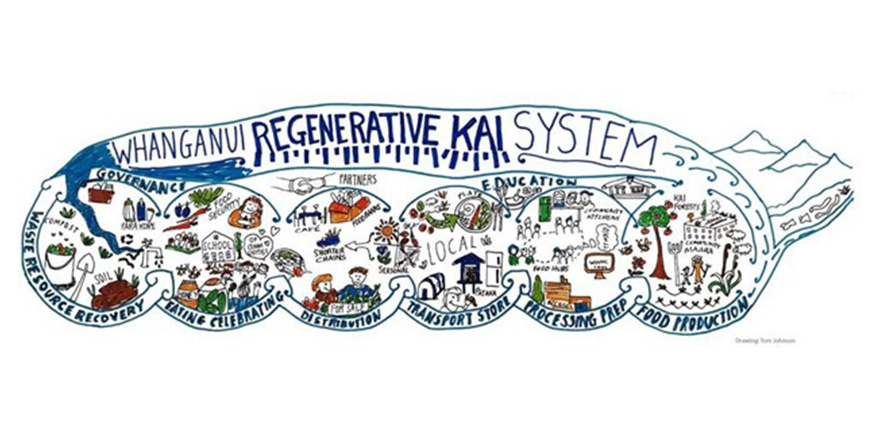
Ka Tipu Ka Ora – A Whanganui Regenerative and Resilient Sustainable Food System.

Executive summary

Te Tiriti o Waitangi as a Founding document

The research report is committed to being responsive to Māori as Tangata Whenua and recognises the Tiriti o Waitangi as Aotearoa New Zealand’s founding document. The principles of Te Tiriti o Waitangi as articulated by the Waitangi Tribunal, and the New Zealand Courts provides a framework for how we are to fulfil our obligations under the Te Tiriti daily.

More recently as outlined by the Ministry of Health, in 2019, “The Hauora Report” 1articulated five principles for primary care that are applicable to not only the wider health care system, but also to any person, organisation or Crown Agency working with Māori in our communities.

These principles are articulated as:

  • Tino Rangatiratanga: The guarantee of tino rangatiratanga, which provides for Māori self-determination and mana Motuhake in the design, deliver and monitoring of community services.

  • Equity: The principle of equity, which requires the Crown to commit to achieving equitable outcomes for Māori. This is achieved though breaking down barriers and enabling equity of access to ensure quality of outcomes.

  • Active protection: The principle of active protection, which requires the Crown to act, to the fullest extent practicable to achieve equitable outcomes for Māori. This includes that it, its agents, and its Treaty partner are well informed on the extent and nature of both Māori wellbeing outcomes and efforts to achieve Māori wellbeing equity.

  • Options: The principle of options which requires the Crown to provide for and properly resource kaupapa Māori services such as Ka Tipu Ka Ora. Also, the Crown is obliged to ensure that all services are provided in a culturally appropriate manner that recognises and supports the expression of Te Ao Māori models of service delivery.

  • Partnership: The principle of Partnership which requires the Crown and Māori to work in partnership in the governance, design, delivery, and monitoring of community services. This includes enabling Māori to express tino rangatiratanga over participation in governance, design, delivery, and monitoring of community services.

For this research project and to understand the importance for Māori, it was important for me as the writer to enable the principles to guide my mahi.

It was also important to provide community level and grassroots level insights and intelligence to enable communities to partner on the development of services to create positive impacts for people throughout the community.

These services should focus on addressing equity of access to services in a manner that is consistent with tino rangatiratanga, active protection in the co-design, provide options to ensure culturally appropriate services and developed through a solutions focussed community led partnership approach with the Treaty always at the forefront.

Executive Summary

Everyone should have access to affordable, healthy food. However, across Aotearoa New Zealand a rapidly growing number of people are experiencing severe food insecurity – which means that they don’t know where their next meal is coming from, or if it will be nutritious enough to lead a healthy, active life.

This research report will focus on answering the question of; How everyone, through a kaupapa Māori lens can move toward Sustainable Food Systems which are regenerative and resilient; prioritise locally grown and affordable kai; and uphold mātauranga (indigenous knowledge), kaitiakitanga (guardianship) and rangatiratanga (leadership) within this system.

This research also aims to help develop and establish sustainable local food systems, so all individuals and whānau have access to good food to improve community health and wellbeing; where “sustainable local food system” is a collaborative network that integrates sustainable food production, processing, distribution, consumption, and waste management to enhance the environmental, economic, and social health of a place, ensuring food security and nutrition.

This research supports the vision that everyone in Aotearoa New Zealand should be able to access good food at all times; where “good food” is food and beverages that are affordable, nourishing, appetising, sustainable, locally produced and culturally appropriate.

Key Findings

  • Kai (food) is all about whakapapa (genealogy). It is the great connector that joins us to our tupuna (ancestors), our mokopuna (descendants), our whānau (families), te taiao (environment), and each other. Through kai we are connected to the plants, the animals, the waterways, the oceans, the forests, and the atua (deities). The recipes of our ancestors get pulled out in modern kitchens, linking us across time and bringing us together around the table to love and learn.

  • Kai is central to Māori concepts of wellness and for generations it has brought whānau, hapū and iwi together. Kai is medicinal. When it is nutritionally dense and healthy, it feeds and heals our body and mind. When it is grown by our people, in our place, it feeds and heals our spirit. When it is prepared and eaten together, full of love, it feeds and heals our families and communities.

  • Kai is the glue that holds so many of our communities together, and it is the sustenance that keeps our people well in body, mind, and spirit. However, for most people today our food system is not medicinal. Our current food system negatively affects our physical wellbeing, mental health, and community resilience. At the same time, the food system is causing environmental damage and degrading mana atua (spiritual integrity).

  • Māori have solutions to regenerative and resilient food systems based on Mātauranga Māori.

  • Many suburbs in Whanganui are food swamps and/or food deserts. This means residents and their population have good access to bad food and bad access to good food.

  • Individuals and whānau in Whanganui are suffering from diet-related chronic diseases.

  • One in five deaths can be associated with a bad diet. The leading diseases associated with diet-related deaths in New Zealand are coronary heart disease, stroke, colon, and rectum cancer.

  • Those who live with diet-related diseases are more likely to experience poorer mental, social, and educational outcomes.

  • Community, non-governmental, and non-profit organisations deliver several initiatives tackling the food system, particularly around urban production, and food environments. However, many of these initiatives face obstacles including policy constraints, funding constraints and lack of influence or access to decision-makers.

  • There are also significant and complex underlying systemic issues that cannot be addressed by the community alone e.g., loss of productive land, unsustainable business practices, waste reduction, regulations that can lead to commercial interests favoured over community wellbeing, fragmented approaches to addressing the food system e.g., multiple stakeholders with shared interests working independently.

  • The COVID-19 pandemic has seen growing discussion around the critical resource of food. And while New Zealand has an abundance of food produced from its land and seas, like many nations it still struggles with food security within its communities. The lockdown period had highlighted the need for resilient local food systems that can deliver food security and food sovereignty back to our communities.

Partial land use diversification for long term sustainability and resilience of sheep and beef farms.

Lucy Murray Kellogg Report image

Executive summary

This project was completed to understand if sheep and beef farmers in NZ can use partial land use diversification to improve environmental sustainability and farm business resilience.

The reason this was studied is because farmers in New Zealand are facing environmental, social, institutional, and financial pressures.

Many sheep and beef farmers will likely need to make adaptions to their farm systems to remain profitable, improve environmental sustainability and to create more resilient farm systems for the future. One way of adapting the farm systems is through land use diversification.

A literature review was completed, and a series of farmers and industry professionals were interviewed. This data was then assessed through thematic analysis.

Diversification for agriculture is defined as the addition of another source of farm-based income to the existing income stream and it includes the introduction of additional farming enterprises.

Land use diversification can have numerous benefits in sheep and beef farms including, enhanced environmental outcomes, improved profitability and cash flow, enhanced farm resilience, more succession opportunities and a better integrated farm system.

The downfalls highlighted were increased risk to the farm system during development and early stages of land use change, and the initial financial outlay for development and increased complexity.

To reduce the risks of land use change, a comprehensive planning process is required. Some key steps include business planning and goal setting, understanding the biophysical resources, farm planning, matching the land use to land use capacity, climate and soil conditions, farm system modelling and evaluation and trialling.

If farmers in New Zealand can successfully transition their sheep and beef farms to diversified land use systems, it will likely transform the sheep and beef industry throughout the country to overcome environmental challenges and create long term sustainable and resilient farm systems.

Some recommendations to farmers assess the farm as if it is a blank canvas and understand different land use opportunities within the farm system. More research needs to be done on land use options available for different regions.

There is the opportunity to better understand and develop how farmers could use collaboration and catchment groups to aid in the success of land use diversification.

Conclusions

This study proved that partial land use diversification is a real option, one which sheep and beef farmers should consider for overcoming social, environmental, regulatory and financial pressures.

To de-risk the process of land use diversification, research and planning are crucial. Matching the land use to the capability of the biophysical resources is important for ensuring that there are no negative consequences to the environment.

If land use change is well planned and researched it will likely transform farm systems through improved long term financial performance, improved environmental outcomes and increased farm business resilience. 

There is potential to collaborate with other likeminded farmers and create cooperative models for the sharing of infrastructure, resources, and expertise, however more research needs to be done on this. Overall land use diversification is very important for the agricultural sector in New Zealand.

Recommendations

  • Landowners should assess their farm as if it is a blank canvas, identify production and profitability and limitations of different land management units. This will aid in realising the opportunities and inefficiencies within the farm system. Plus, it might help the farmer to realise that land use diversification is a real opportunity.
  • Research the different land use options you are considering, understand the requirements of the crop and the biophysical resources of your land to ensure you match the land use to the capability of the land. Plan for diversification thoroughly.
  • Develop tools which outline land use options and suit the local climate. These could be developed and maintained by regional councils with the use of local climate data and research into land use options. The tools should be accessible to farmers, this would likely de-risk the process of land use change for farmers and provide them with a starting point when considering land use change.
  • Collaboration could be considered with like-minded farmers to build scale and share resources when changes are made to land use. If they decide to do this investigation planning into corporate governance models is recommended.
  • Case studies should be produced on farmers who have been through the process of land use diversification, these could be done by the regional councils to aid farmers in making the change.