2026 Nuffield NZ Farming Scholarship. Apply by 17 August 2025. Read More...

Apply for 2026 Nuffield NZ Farming Scholarship by 17 August 2025. More details...

Water sharing in a water short catchment.

Executive Summary

In New Zealand (NZ) freshwater management has become a top political issue with most New Zealanders having an emotional attachment to freshwater and how it is managed. The question is, how do we manage freshwater and respect diverse interest and complex environmental interactions? The aim of this study was to gain an understanding of freshwater management, and identify successful policies and management structures that can meet the needs of rural communities. This project includes a review of the literature around environmental governance and unstructured interviews with regulators, industry individuals and those involved with water governance.

New Zealanders are unlikely to respond to authority unless they understand why. Catchment specific limits around water quality and quantity, empowers rural communities, allowing flexibility for methods to solve issues and giving ownership over solutions. This approach and other bottom up approaches such as Maniototo Pest Management have developed a high level of social capital in the Upper Taieri Catchment, meaning compliance limits set by the Otago Regional Council (ORC) are often bettered by local initiative.

The Resource Management Act 1991 (RMA) set NZ on a different path allowing meaningful recognition of environmental and social values. The RMA is based around sustainable management, principles with an integrated approach to environmental management. Agreed principles give the opportunity for groups to identify shared values. If groups agree in principle, this enhances the opportunity to build trust. If trust is not built between water users, stakeholder groups and regional authorities it increases the likelihood of resource consent applications ending up in the environment court. This adds significant time and cost, and the opportunity to create win-win scenarios is lost.

In California, ownership rights and a strict priority system of ‘first in first served’, means water is unevenly distributed between communities and can result in significant geographic differences in wealth. Ownership rights to water encourage competition between users and ‘Tragedy of the Commons’ where individuals are unlikely to preserve the resource because they expect another will take it. The user group structure being achieved in the upper Taieri reduces competition between users by giving top priority to the environment.

Efficiency of water use is the net value of outputs generated from inputs. Individual catchments around NZ, like the Upper Taieri are all unique so best use of a water resource is appropriately established at community level with an integrated catchment governing body such as the Upper Taieri Group. This gives opportunity to harness the valuable social capital and local knowledge.
In conclusion, good environmental policy will alter behaviour in a way that is appropriate to the needs of communities. While freshwater interests in NZ must always be respected, the implications of ownership rights or top down policies will likely have negative implications for rural communities. NZ has a chance to be world leaders in freshwater management by using social capital to reduce compliance costs and achieve policy goals. This is reliant on central and regional government recognising the value of community engagement. Transparency, face to face communication and compromise are needed and should be encouraged to achieve policy goals.

Trading Among Farmers (TAF):Why we need it, how well is it working and where to in the future.

Executive Summary

The decision by Fonterra to implement TAF (Trading Among Farmers) back in 2012 was a major decision in the history of the co-operative and was predominantly to address an issue know as Redemption risk. This redemption issue was something Fonterra conceded to in the process of forming Fonterra in 2001. Government at the time wouldn’t allow the mega co-operative to be formed without shareholders and their capital to leave freely.

The final vote to implement TAF saw some shareholders raise concerns the process becoming the first step towards a public share listing and loss of farmer control. There was a strong belief that retained earning could address Redemption risk.

The aim of this report is to look at the TAF model now that it has been in place for close to 6 years. The report aims to look at why did we need TAF, how well is the model working, where would we be without it and where does Fonterra’s capital structure need to head in the future.

My study process involved reading background information that Fonterra provided its shareholders during the capital restructure process to understand why we needed. Talking with and asking some set questions of people who were involved in the process. Gaining the opinion of respected industry people who have no strong links to Fonterra through a questionnaire to build some common theme’s or opinions. Putting together a table showing Fonterra’s capital expenditure over the past 10 years, along with some key metrics of milk supply change, pay-out and gearing ratios. Analysing this data set to make some assumptions of where Fonterra would be placed without TAF. The final section deals with the fact that capital structure is an ever evolving model in co-operatives and where does Fonterra need to head in the future.

The key findings from the report are that, Redemption risk was very real issue that Fonterra faced, and we were much better placed to deal with issue back in 2007-2012 from a position of strength. It would have been a much more challenging issue to deal with now as Fonterra continues to lose milk supply via cessations and to rival competitors. Certainly, doing nothing or having greater retained earnings were not viable solutions, it simply meant kicking the can down the road. TAF is complicated to fully understand but no other viable options were really put forward at the time. TAF has given Fonterra the confidence of permeance in the balance sheet to go out and continue making capital investments without having the concern of shareholders leaving the co-operative and taking their capital with them.

Heading to the future Fonterra needs to be talking with its shareholder base on a regular basis about what they want from their co-operative and how this aligns with strategy and capital structure. Capital structure is an ever-evolving process and everyone in the business needs to be brave and open enough to good strong discussions on all options. Most outside commentators believe a two-business model one where the processing assets are separate from the value add/brands part of the business would serve the co-operative best. This would drive better performance from each unit and allow farmer shareholders to have greater choice over the level of capital they invest in their co-operative. At the end of the day there is no right or wrong answer, but it is important that discussion is strong and robust. Shareholders needs and wants from their co-operative will change over time and they are the ones who control its future direction of travel.

How to earn your social licence to operate.

Executive Summary

The topic of social licence has become more mainstream in New Zealand in the past five years as our primary sector has grappled with what appears to be a public discontent with its environmental, health and safety, animal welfare and employment performance. The public discontent appears as if it is driving a wedge between the primary sector and urban communities (rural urban divide), however a recent report by the Ministry for Primary Industries on New Zealander’s views of the sector shows declining views of the sector from both urban and rural communities.

A Business NZ meeting, hosted at the request of Ministers English and Carter in 2012, (Muller & Garey, n.d.), was unanimous that social licence to operate issues are not only relevant to the agribusiness sector, but that further efforts from businesses in general were required to clarify and meet public expectations surrounding  the social licence to operate. It was agreed that future national and regional governments are likely to regulate more and existing property rights had the potential to be affected.

In five years, positive perceptions of New Zealand dairy farming have slipped from 78% to 47% for urban respondents as have rural respondent’s views, though slightly higher, going from 83% to 50% (UMR Research, 2017). Dairy is used as an example here because this particular industry has been the main point of focus to date in public criticism. While these results tell us the industry is not yet at complete ‘withdrawal’ of its Social Licence to Operate (SLO), it is heading in that direction. Therefore the importance of not only understanding what a SLO is, but what can cause an industry or organisation to lose it and earn it back is paramount to New Zealand’s primary sector if it wants to maintain its access to natural resources and remain profitable.

The Potential of Blockchain.

Executive Summary

Blockchain is a digital platform that stores and verifies transactions between users. It is different from other digital databases in the following ways; it allows peer-to-peer transactions rather than relying on an intermediary to facilitate the transaction; the information is distributed throughout the network rather than being held in one central database; data is encrypted so that it is unable to be changed in any way; and any changes to the network require consensus among all participants in the network.

The potential for blockchain is huge, with it now having hundreds of uses across the financial, manufacturing, health, and education sectors. It has created a secure, immutable way to store information on all kinds of assets. This report will focus on the use of blockchain within supply chains. Supply chains are a perfect use case for blockchain technology as they require multiple parties having access to the same information.

This report will cover the fundamentals of how blockchain technology works, it will investigate how blockchain could change supply chains, and it will identify and understand the global trends that are driving the need for this technology. New Zealand is in a great position as a producer of premium food and fibre to capitalise on blockchain technology. We aim to feed the top 40 million consumers, these consumers want more safety and security around their food, they want to know where it has come from, how it was produced; they care about a healthy environment and the sustainability of the planet. For New Zealand businesses, they are looking for ways to protect their reputation, fending off imitation products and maintaining a premium position for products. The transparency offered by blockchain provides this information to every entity in the supply chain.

Transparency is one of the key drivers of blockchain technology, but the other outcome for the New Zealand primary sector is greater supply chain efficiency. With more stream-lined supply chains, there will be a faster turnaround of goods and finance, fewer transaction costs, and ultimately more money back to the people who grow the product.

As an agricultural exporting nation, New Zealand has huge opportunity to lead the world in developing agricultural supply chains that connect, shorten, and sharpen global supply chains. Blockchain has the potential to reshape the way New Zealand agricultural companies market, sell and record the provenance of our products to the globe. If we are to lead the world, then we must invest in understanding this technology now.

Public perception of the crop protection Industry and how this could be improved.

Executive Summary

By the utter fact food for human consumption is generally farmed by way of established monocultures, it is never a choice not to use crop protection, but rather what approach is employed, i.e. is it by way of physics, chemistry, biology or ecology?

Public perception of the New Zealand crop protection industry is not that of an exemplifier (at least not from an anecdotal perspective). Improvement is required. What is also clear is the fact that the general public’s understanding of the crop protection industry is limited, with a high level of uncertainty when it comes to what constitutes the practice of crop protection.

For a small country like New Zealand, only producing enough food to feed circa 40 million people (six million being local plus annual visitors), quality of product needs to be our leading competitive X– factor. For this reason, all that is involved in the food production cycle (and how aspects such as crop protection are perceived by the public) needs to be known and appropriately addressed by the industry. Perception is an individual’s “world view” – right or wrong and matters to the individual (the ultimate end consumer).

Little research has been conducted analysing the public’s perception of the crop protection industry with respect to New Zealand. In a world of heightened societal concern regarding threats to human health, nutrition and the environment, such things as “people’s perceptions” can translate into real effects in the marketplace. Given the importance of both crop protection and the perceived quality of New Zealand produce both locally and internationally, it was important that a pilot study be conducted to ascertain where improvement could take place as far as people’s perceptions of the New Zealand crop protection industry is concerned, hence the research question of this report being:

Public Perception of the Crop Protection Industry and how this could be improved.

As far as the methodology employed for this study, a survey instrument was the chosen research strategy for this report. Following an extensive review of the literature and science based findings, it was deemed appropriate that the retailer (12) for the purpose of this project, be utilised as a suitable proxy for the general public. A non-parametric technique, namely descriptive analysis was chosen for the survey review. A qualitative construct as far as survey design was subsequently employed.

Key findings gathered through the results included such things as high levels of ambivalence regarding people’s attitudes with respect to the protection of food through the production cycle.

This phenomenon does not help with fostering a positive or even neutral attitude associated with all things crop protection.

Great progression as far as safer more targeted products have characterised the crop protection industry over recent decades. Due to an array of reasons we are now also seeing significant investment taking place in a new category of crop protection, namely biologics.

Pseudoscience, media sensationalism, pressure groups, naivety were all found to be causes giving rise to negative perceptions associated with the crop protection industry.

This report outlines a raft of recommendations taking into account a range of tactics that need to be better promoted, fast tracked or simply communicated by way of a more united industry voice.

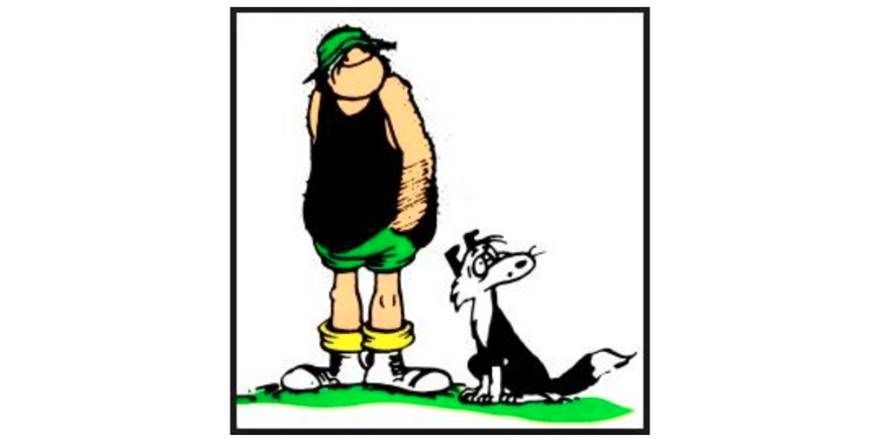
What should Wal Footrot do: An investigation into potential exit strategy for owners in the sheep and beef sector.

Executive Summary

  • The purpose of this study is to look at what options exist for owners of farm businesses in the sheep/beef sector to ‘exit’ either; their role or ownership in the business. This is not an investigation into the overall succession topic, more a look at one of the key parts of the process.
  • Where are we today
    • The ownership base of the farming businesses in the New Zealand Red Meat sector are getting older. They say with age comes experience, but in this case, it is not a good thing.
    • As the owners get older that are not planning any better , and making it harder for the next generation to get a step on the management and ownership rungs of the ladder.
    • At the same time, we are seeing only small improvements in profits when compared to value of the land that those profits are generated from.
  • Navigation is not easy The family business is complicated, especially as it gets larger and intergenerational. This does not include the increasing pressure that gets applied for the cost of compliance and larger variations in climate. Every business owner is in a different position, but they are getting older and need to act to drive our industry forward.
  • It is possible Families and owners have navigated, and are navigating their ways through this exit and succession road. It can be done, there are options . Everyone is different and often big decisions must be made.
  • The options exist , whether it be: Change the existing model , or Lease out , or Sell or Equity partnerships . There are options that are all better than Status Quo. Follow the suggestions and take some advice.
  • There are people to help – it may cost, but what is the cost of doing no thing ? Use the family, friends, mentors, professionals like valuers, advisors, lawyers and accountants to help by discussing the issues and determining the best way forward.
  • Use a ‘Mantra’ or guidelines to assist in the journey. OODA may be suit – Observe, Orient, Decide , Act. Or the

3 questions –

  1. Where are you and how did you get here?
  2. Where are you heading, do you want to go there? If not, then where?
  3. What must you do different or better and learn, to get there?

When milk engineering meets consumer demands and how this could affect the NZ dairy industry.

Executive summary

“If anybody anywhere in the world can use small amounts of energy, water and nutrients to create the same quality food as we can here then why would anyone buy from New Zealand?” That’s the question that Lance Wiggs director of several New Zealand high-growth companies (www.lancewiggs.com) asked to his readers back in February 2016. Health, lifestyles, animal welfare, sustainability and environmental concerns are motivating consumers to lean towards milk alternatives. Today, there are many startups (new entrants) from Silicon Valley and from all around the world, creating food innovations every day. New companies are producing traditional agri-food locally, in non-conventional ways using less energy, water, nutrients and pesticides; and are animal-free.

New Zealand dairy companies are focused on producing high quality food and value-added products to keep, and gain more, competitive advantage in an increasingly tough global market. The truth is that without leading edge: agritech, biotechnology, environmentally friendly practices and well supported innovative businesses, it will be very challenging to stay competitive in the decades to come.

The aim of this report is to create awareness around new milk alternatives and to better understand how they could affect the New Zealand dairy industry.

“We can’t afford not to be part of the food revolution, if we are not aware of what other people are doing we can’t be an effective competitor in any market.”

This report is based on literature review, conversations with people working in the dairy sector and a survey created to assess the general knowledge around new milk alternatives.

Leading the change or being forced to change, that will be a key decision that New Zealand dairy is going to face in the years to come. The dairy industry in New Zealand must embrace new food technology so it could be prepared to take advantage of the new opportunities presented.

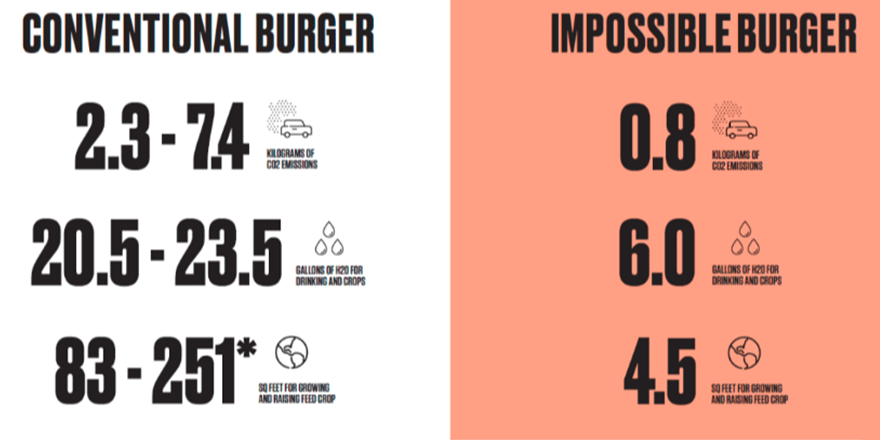
The findings and observation of this report are: animal’s milk substitutes like soy, almond, rice, coconut milk, etc. have steadily grown in popularity, although none of these alternatives has been disruptive to the dairy industry. Now, there are game changing new options, improved alternatives to cow’s milk making their way to the markets. Bioengineered milk, plant-based milk manufactured using Artificial Intelligence and milk made from yellow peas are all rapidly rising on the horizon (intriguingly, Silicon Valley’s horizon always seems to be brighter than others). Food-tech startups are attracting a lot of attention nowadays, money is not an issue for most of them, they could potentially disrupt dairy markets globally and change the New Zealand dairy industry as we know it.


New Zealand’s future role in the global protein market.

Executive Summary

Change is constant and the change of pace for the global supply of protein and its make up is going to alter considerable over the next 20 years. Alternative protein sources such as through the rise of plant based and synthetic meat products will take place of the current traditional commodity meat market across the globe. The methods have been developed and the only current restriction is scalability of production and market acceptance. As technology advances, this scalability will improve and eventually become at least cost neutral to traditional sources pf protein production. As and when this occurs is somewhat academic and will be up for debate but nevertheless it will happen and eventually significantly undercut these prominent markets resulting in significant deterioration in the manufacturing beef market such as bull beef and cull cows. Market acceptance of course is also a major challenge currently but through advanced marketing campaigns, increased urbanization and skepticism of the traditional methods of protein production, this too won’t be major issue in years to come.

This report attempts to briefly summarize the existing companies which are in the alternative protein or synthetic protein markets and identify timing when they expect to be selling their products into the global market. Currently, they tend to be targeting premium consumers themselves but as supply issues are lessened with improved scalability, their market objectives will change to suit. There are wide ranging calls for the New Zealand animal protein production industry to improve its marketing campaign to tell the New Zealand story. This is a story of clean, green production – one where animal welfare and environmental considerations are paramount. This story will be important for the discerning premium consumer – one whom understands the role of pastoral agriculture and looks to consume premium products, at will at their social and family gatherings. In addition to this, this report tries to ascertain other premiere market opportunities; these are areas of production of nutraceutical and medicinal food products which are nutritionally wholesome for people on the go, foods which supply 100% of an individual’s protein, mineral or vitamin requirements . As health and science continues to improve, people will continue to live to older ages resulting in a need to supply medicinal food groups – food which makes a person healthier thereby in time largely eliminating ‘ambulance at the bottom of the cliff’ health services until later and later life. Another significant market opportunity is the supply of easy to consume snack food groups, our lives continue to get busier therefore eating three times a day can be considered as a chore and minimized so to spend more time doing activities we want to do. There is a requirement to coerce elements of the New Zealand supply chain to agree to a consensus in terms of this story and market to the globe as a New Zealand brand initiative. This is a necessary step in order to make connections with the premium consumers of the future – primarily millennials and Generation X’s as well as pediatric care and infant specialties. Our future as an industry will be in the production of high end consumable products which attain a premium for the discerning consumer, this is especially as these alternative protein production companies increase supply and progressively take market share of the commodity supply chains.

Collaboration through the Cervena appellation.

Executive Summary

An industry founded by entrepreneurs and innovators, the deer industry is relatively young. Farming the most recently domesticated animals, deer farmers have experienced all of the highs and lows that markets can deliver. With boom and bust cycles a regular occurrence, industry leaders developed a strategy to create an appellation for premium New Zealand Venison – Cervena. These leaders were visionary in many respects with both a sound structure and an intense focus on quality, Cervena has emerged as a model to admire and aspire to.

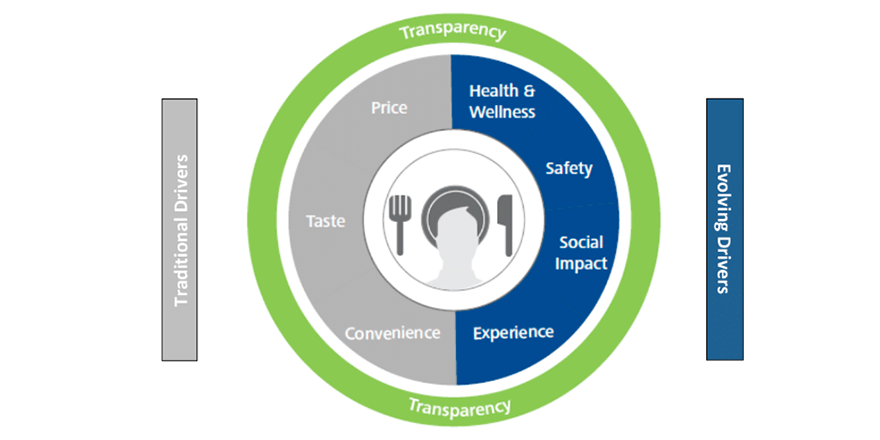
Collaboration is at the core of the appellation which extends both vertically and horizontally within the value chain. Cervena provides the platform for the consistent brand message, collaborative behavior and loyalty that ultimately generates a premium for farmer suppliers inside the farm gate. Cervena is not a whole of industry appellation and has very strict guidelines as to specifications that a product must meet to be branded. In this way it varies from other NZ industries which exhibit this marketing strategy such as Zespri with Kiwifruit. Appellations have been used through history and the designers of Cervena drew inspiration from the European guilds which successfully created localized monopolies which could set and maintained standards for the quality of goods and the integrity of trading practices in that industry, the guilds worked to maintain stable prices for their goods and commodities; and they sought to control town or city governments in order to further the interests of the guild members and achieve their economic objectives. All of which was developed and utilized through the 11th – 16th century in Europe. Further inspiration was drawn from the sparkling wine appellation – Champagne. Delivering value to the farmers who invest levies into the appellation is the ultimate goal by way of developing and growing new and existing markets for premium NZ venison. Drivers of the consumer decision have seen a change from taste, value and price to a real focus on quality, food safety, social impact and experience. The provenance of our food is paramount to the consumer and can only be delivered by a robust quality assurance and traceability program. Cervena delivers that assurance of a consistent premium product that can be eaten the world over at any time of the year. Cervena has a natural fit with the broader NZInc market strategies and messaging to the world.

Cervena sales into the US have recently become the largest export market by both value and volume, replacing Germany as the top export market for NZ venison. Cervena is certainly delivering on its core goals and we are entering into a golden era of venison pricing driven in part by limited supply but predominantly because of an appellation and collaboration throughout the industry.

New Zealand land tenure is holding back the success of agriculture

Executive Summary

It is naïve and self-centered to even consider our selves the owners of land. Land has existed for millennia before we “own” it, and will continue to exist for millennia after we no longer “own” it. We are simply occupiers, users and stewards of it for a fleeting time. Current land stewards should undertake succession planning, rather than attempt to leave a legacy on the land.

There is a fundamental flaw in the tenure of land in New Zealand, with the current model of farm ownership resulting in land ownership becoming concentrated in fewer hands, and increasing barriers to new entrants wanting to enter the industry

. Land tenure in New Zealand is largely based on United Kingdom freehold principles. There is a strong bias towards land tenure by people that inhabit and use the land, whether it be farming on their own account, or making it available as leasehold to others to farm it.

Our desire to own land is related to our fundamental desire to own where we live. For typical New Zealand farmers land tenure means solely the ownership or rental of land. This simple view of land tenure has become outdated. It is interesting to note that New Zealand already embraces a novel form of land tenure, being the global exemplar of share farming through the variable order share milking system.

We need to develop land tenure models to include various forms of joint ventures to enable new entrants and young farmers to climb onto the farming ladder. Using these different models will encourage innovation, entrepreneurship, expansion and acceptable succession within the industry, ensuring a sustainable future for the farmer and the next generation. New entrants and first-generation farmers are vital to the success of any country’s agricultural industry.

Māori entering farming in New Zealand also have the challenges of raising working capital on collectively owned Māori land; the need to rebuild sustainable Māori rural communities; and managing small blocks of land scattered throughout a region. New Zealand farmers need to stop family land being sold from one generation to the next, continuously loading debt on the next generation and resulting in continual profit for off shore banks. As New Zeal and matures, land sales will become less common, with families leasing land across generations, and tenant farming of this land will become more common.

State owned Landcorp farms are marginally profitable, and should be transferred to a land trust to be made available to new entrants to the industry. New Zealand should allow sales of farmland to overseas purchasers, providing there are strong controls around the management of the farmland after the sale.

A well-structured Capital Gains Tax should be implemented to attempt and reduce the continual trading of land, and encourage land to be valued on its productive capacity. This will help stop the situation facing South Island dairy farmers where they are attempting to be profitable on $80,000 per hectare land while facing increasing environmental pressures.

By embracing change in New Zealand farmland tenure, the industry will future proof itself and make farming more accessible for new entrants to engage in, driving greater innovation and early adoption of techniques but also through providing a dynamism by an intensive striving for efficiency.