2026 Nuffield NZ Farming Scholarship. Apply by 17 August 2025. Read More...

Apply for 2026 Nuffield NZ Farming Scholarship by 17 August 2025. More details...

What’s the beef? Opportunities for beef on dairy in New Zealand.

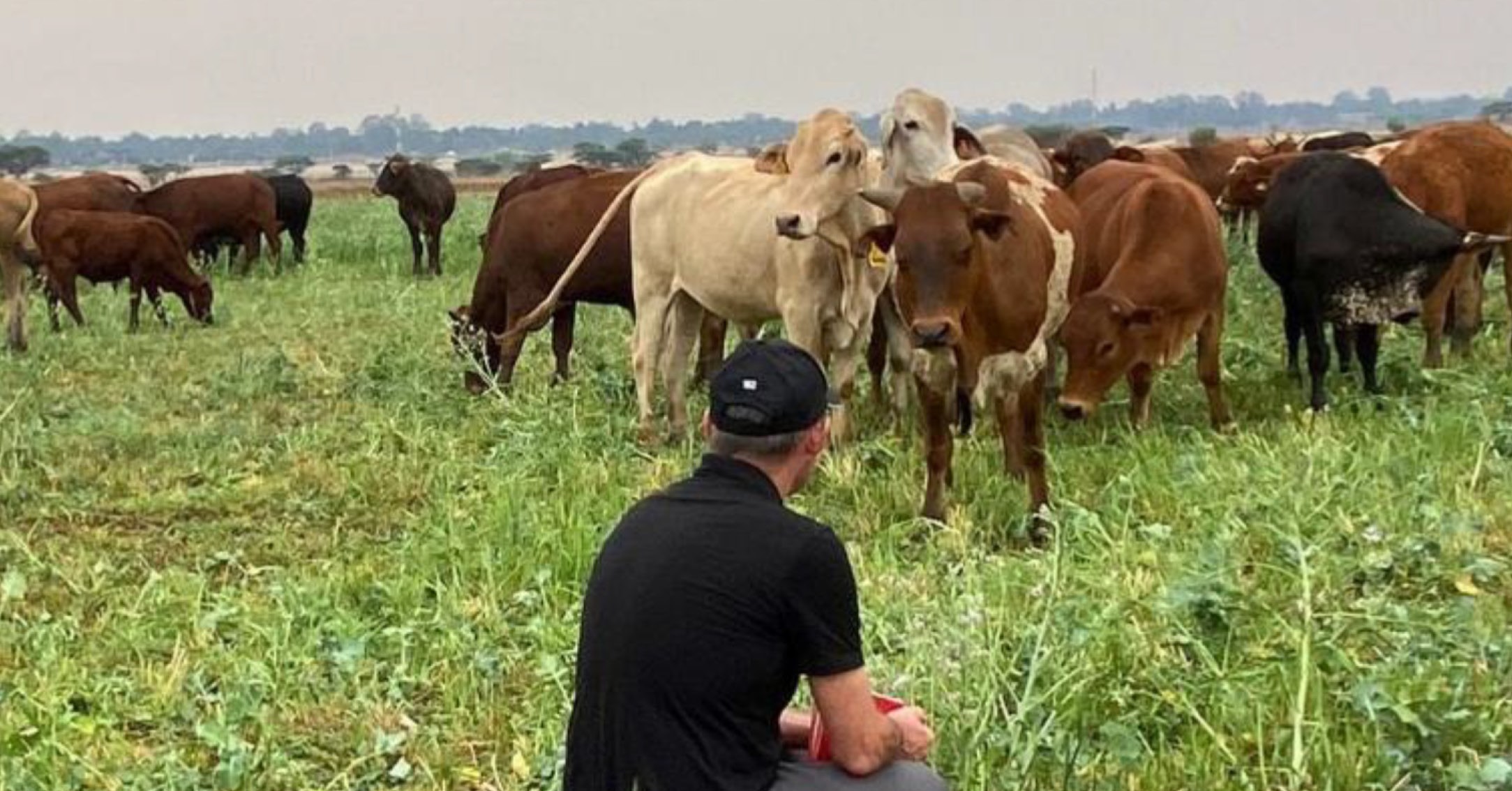
Over 2 million calves are produced from the dairy herd in NZ every year, some are either retained for herd replacements, or are raised and finished on dry stock farms. However, approximately 1.8 million non-replacement or bobby calves are slaughtered annually at 4-7 days of age.

The opportunity for beef on dairy is to shift the value chain from dysfunctional to functional. If the end product has a greater value, then financial participation and therefore functionality increases for all activities involved in creating, rearing, growing, processing, marketing, and delivering a beef product to the end consumer from the dairy industry.

Financial effectiveness is the fundamental aspect throughout any value chain, facilitating the flow of resources, transactions, and incentives at each stage.

Unless there is more money for the end product of non-replacement calves, the value chain will continue to focus on cost minimisation of the calf as a by-product of milk production.

Money saves the bobby calf, but to realise more value with the consumer a successful beef on dairy value chain requires several key changes that contribute to delivering a product that has a higher value to the consumer, and increased effectiveness and efficiency.

  1. Understand the Customer Needs: Grain fed is often a customer preference, especially in Asia markets. Short fed grain finished beef could be an opportunity to align the value chain activities with customer requirements. Grain fed also creates products that deliver value and meet customer demands of product consistency and reliable supply effectively.
  2. Improve Integration and Coordination of Farming Systems: This involves seamless communication, collaboration, and synchronization of activities to ensure smooth flow and timely delivery of products or services, dairy farms, rearers growers and finishers.
  3. Efficiency and Cost Optimisation: Using genetics designed to minimize costs and maximize efficiency at every stage of beef production optimises resource utilisation to achieve production cost advantages.
  4. Sustainability: The opportunity to communicate and validate existing environmental, social, and governance (ESG) factors of a low carbon beef sales platform to deliver value to the consumer.
  5. Technology: Meat grading is critical to improve value, give visibility and confidence of product quality and consistency of eating experience for the consumer.
  6. Continuous Improvement and Innovation: marketing and branding of beef on dairy needs to continuously seek ways to introduce new digital transaction functions, and data analysis to optimise processes, and innovate across all stages of the value chain.

By shifting from a production driven to a consumer demanded beef on dairy value chain there is a prospect to enhance value and provide an opportunity for beef on dairy and the non-replacement dairy calf.

Keywords for Search: Matt Iremonger
Boots on the ground are part of the solution. Transitioning agriculture towards sustainability together.

A reduction of Greenhouse gases is being demanded through our value chains. Farmers need to be at the table of change, not on the menu. The boots on the ground are part of the solution and need to be part of discussions and decisions. Farmers must remain profitable to enable change.

In the aftermath of the World Wars, nations prioritised food security and production, leading to increased international trade. Post-COVID, global discussions now revolve around food and fuel security, climate improvements, and sustainability. Agriculture is recognised as crucial in finding solutions to these challenges, with responsibility extending throughout the entire value chain, not just to farmers. Trade plays a pivotal role in resource sharing and environmental sustainability, exemplified by New Zealand’s dairy industry, which exports 95% of its products.

However, the dairy industry faces environmental pressures, both domestically and internationally. Successful mitigation programs emphasise voluntary, trusted, and measurable approaches, such as those seen in the Catskills Watershed and Arla’s 80-point programme.

To avoid dairy becoming the new coal and instead be part of the climate solution, financial solutions driven by Environmental, Social, and Governance (ESG) targets are crucial. Companies setting ESG targets are viewed as more successful and profitable, leading to increased access to capital. Green loan funds globally highlight the growing importance of sustainability in business.

Consumers’ demands for greenhouse gas reductions are not met with a willingness to pay, but rather through pressure from ESG stakeholders, investors, and employees. Market and capital access is now contingent on meeting social expectations, such as sustainability plans.

Transition payments through the value chain offer a solution, alleviating the burden falling solely on farmers and ensuring their economic viability during the transition to more sustainable practices that reduce greenhouse gases. Brands and customers, such as Nestle and Mars, are recognising the need to support farmers through this transition. However, structuring payments is complex, with brands currently willing to pay for greenhouse gas reductions but not yet for other nature-positive outcomes.

A reverse auction model or transition payment system could provide a platform for change, enabling farmers to choose their level of participation and providing compensation for their efforts in adopting sustainable practices. New Zealand’s unique farming system, facilitated by cooperatives like Fonterra, presents opportunities for collective action and innovative solutions.

By embracing ESG principles and transitioning towards sustainability, agriculture can ensure continued access to markets and capital while addressing environmental challenges. Early adopters stand to eliminate their risks and become experts in sustainable farming practices, shaping the future of agriculture for generations to come.

Keywords for Search: Kylie Leonard

The mountain we need to climb. Designing agricultural policy for a future in farming.

“People love innovation almost as much as they hate change.” Jack A Bobo

This report primarily addresses those in leadership, and to a lesser extent agricultural policy makers and others with an interest in how we move forward in delivering better outcomes for those on the land and the land itself. The findings and conclusions are also relevant for the wider agricultural sector as the issues at the heart of our policy landscape are not confined to Government.

New Zealand has a legacy of leadership, pioneering and innovating in the face of challenges, and culturally we are often eager to ‘lead the way’. However, we are less accomplished at reviewing ourselves objectively and understanding what about our leadership or innovations have proven effective, or where we have gone astray. This means that our perspective regarding what we do, how, and why we do it sometimes lacks clarity.

This report hopes to bring into focus some of what we must clearly comprehend about ourselves and our operating environment if we are to navigate agricultural policy more successfully going forward.

New Zealand is a unique nation amongst food producers globally, operating almost entirely without subsidies and relying on volatile variables (weather, input costs, international markets, currency movements) to underpin the national economy. We have relied heavily on market forces to guide investment decisions since deregulation in the 1980’s and this responsiveness has fostered a vigorous drive for efficiency and profitability within the primary sector, to the extent that we lead the world by many measures of primary sector success.

This leadership has not come without cost and increasingly regulators are seeking to address public concerns regarding the unintended impacts of our highly responsive primary sector, in light of the markets failure to do so. However the New Zealand approach has been to add cost via regulation, essentially undermining the on farm efficiencies which enabled the primary sector to operate in the absence of subsidies in the first place. Naturally, in the face of perceived threats to their viability, there is strong farmer resistance to such a shift.

At the heart of this issue lies the conflict between what society desires in theory and what it desires in practice. The first is advocated publicly via public narratives, media, social networks, advocacy, activism and electoral choices, while the second is advocated privately via the everyday actions of individuals making purchasing decisions on a daily basis.

Policy makers in democratic systems are bound to respond to what people say, while producers in New Zealand (more so than anywhere else) have little choice but to respond to what people pay.

This difference is currently breeding cynicism in primary producers all around the world as many grapple with how to produce food more sustainably, while facing strong resistance to higher prices and receiving immaterial incentives from corporate customers who continue to compete in the retail environment primarily on the basis of constraining price.

In Europe, subsidies are increasingly masking this discrepancy, applying farm and environmental payments for those attributes which fall into the ‘intention gap’ between what consumers want and what they will pay for. New Zealand is largely

alone in continuing to lean on regulation to deliver ‘good’ in the absence of market rewards, and this represents a massive challenge, and perhaps an opportunity.

The opportunity lies in designing a future where policy is created in service of those who will use it, working with, rather than against those whose hands will bring it to fruition. We need to better acknowledge that our growers, unlike others, are being asked to raise the bar under their own steam, from pre-existing resources.

This shift in narrative, and a determined effort to develop the best stable of agricultural policies in the world could deliver something that no one else in the world has done: Deliver world class food with increasingly higher environmental integrity from unsubsidised food systems.

New Zealand is small and innovative enough to achieve this, but it requires a shift in mindset and a commitment to delivering policy which prioritises people. This report highlights the potentially powerful possibilities that emerge if people are put at the heart of policy making, and if organisations, tools and values are designed to facilitate this.

Distinguishing between real insights with regards to what should change within the farmed environment and how change can happen, can only be achieved by investing heavily in the capacity of policy makers and the primary sector to understand one another again. This requires investment in drawing closer together, developing common language and deeper relationships based on trust and a shared long-term view of the future.

The New Zealand public service is not currently oriented in a way that would enable policy making which is capable of grappling with the myriad of complex issues across multiple portfolios with deeply social and cultural implications. However, the need for such capacity has been recognised by the previous Government and enabling features given legitimacy via the Public Service Act 2020.

Whether or not the promise of this new direction comes to fruition will depend on the final point in this report, that of political will, and its role in defending the space for change. For those in leadership, this is your batten to take up and carry. Create and then defend the space for a system wide shift from a public service which prioritises processes and outputs, toward one that prioritises people and outcomes.

The evidence is there, the benefits outweigh the risks.

Keywords for Search: Kerry Worsnop

Redefining excellence in agribusiness advisory. The role of the rural advisor in the modern world.

The farming world is striving to feed an ever-increasing population from a declining land area whilst at the same time reducing its environmental footprint. As farmers evolve their practices to meet these challenges, the rural advisor working alongside the farmer must also evolve to meet the needs of the industry and the wider community – or run the risk of becoming obsolete.

This Nuffield report explores the trends and issues facing the rural advisor and provides guidance for the future roles and necessary skillsets of the advisor so they can continue to add value to the primary sector.

The objectives of this Nuffield research report were:

1. To understand the trends in the use of technology in the agricultural sector, and how these trends will affect the role of the agricultural advisor.

2. To provide recommendations on the future role of the agricultural advisor, and to investigate optimal business models for the agricultural advisory sector.

The desired outcomes from this research are to redefine what excellence looks like in agribusiness consultancy, and as a result increasing productivity in the agricultural sector, whilst at the same time reducing the environmental footprint of the primary sector.

A rural advisor, also known as a farm advisor, farm consultant or rural professional, works within the agricultural sector to support farmers in the theory and practice of farming. The intention is to add value to the farming business, recognising that the definition of value will vary between clients.

To anticipate the future role of the rural advisor it was necessary to understand some of the key trends facing farmers:

i) Scale and complexity: Farms continue to increase in size, and as a result complexity. The amount of information available to each farming business is increasing each year at a rapid rate, and this makes it more challenging to analyse and interpret the data.

ii) The commodity cost-price squeeze. Farmers who are producing a commodity face the continual challenge of increasing input costs and a decreasing margin, whilst at the same time being scrutinised more closely.

iii) A declining (farm) labour force is forcing farmers to adopt new technology that will reduce labour requirements, as well as altering the skill set requirements of farmers.

iv) Social licence to farm: Farmers around the world are facing an increased level of scrutiny by the public and the consumer. This scrutiny includes the areas of animal welfare, environmental impacts and labour treatment.

v) Increasing use of technology on farm. As farmers adopt new technologies, so too must the rural advisor become proficient with the technology in order to stay relevant.

vi) Land ownership versus management. There is a worldwide trend towards a separation between the ownership of land and the management of land.

Developments in Agri-tech are impacting on both how farmers manage their farms, how rural advisors are interacting with their clients, and how they are managing their own businesses. However, for Agri-tech to have maximum impact, there are two fundamental issues that continually frustrate those working in the New Zealand primary sector:

a) Lack of internet connectivity.
b) Lack of data sharing and interoperability.

These issues are not new, but until they are resolved the ability for Agri-tech to influence farming in New Zealand will be constrained.

From an agri-tech perspective, the increasing of artificial intelligence (AI) in agriculture has the potential to have a significant impact on the role of an advisor. Around the world there are already many instances where AI is replacing the traditional knowledge transfer role of the advisor. For example, Climate FieldView is auto-scripting corn sowing rates and fertiliser recommendations for US crop farmers. Farmer. Chat is an AI system providing agronomy advice for small scale cropping farmers in Ethiopia, Kenya and India. Closer to home, wearable technologies for cattle such as Halter are providing detailed farm management insights directly to the farmer.

The role of a farm advisor or rural professional varies widely throughout the world, between sectors and between organisations. For those advisors whose role is purely focused on providing only technical advice, the impact of technology may be rapid and profound, to the point that their role may not exist in the future.

Keywords for Search: James Allen