2026 Nuffield NZ Farming Scholarship. Apply by 17 August 2025. Read More...

Apply for 2026 Nuffield NZ Farming Scholarship by 17 August 2025. More details...

Coding for Change: Navigating adoption of gene editing in the New Zealand primary sector

Gene editing is poised to reshape the New Zealand primary sector by enabling adaptation to climate change, enhancing environmental sustainability, and boosting productivity.

Advancements in faster, safer, and more precise gene editing techniques have prompted proposals for new legislation to align New Zealand’s gene technology regulations with those of key trading partners. A balanced approach is needed, harnessing scientific innovation while maintaining public trust and market access.

Gene editing can transform parts of the agricultural value chain, especially scientific research, the biotech sector, and plant breeding. In other areas, its impact may be incremental and take time to reach meaningful scale. Therefore, managing expectations is critical so stakeholders maintain realistic views of both its benefits and limitations. Independent government and primary sector research will be important for ongoing monitoring and transparent reporting.

As New Zealand develops a regulatory framework, it has the chance to embed Environmental, Social, and Governance (ESG) principles. This would broaden assessment criteria beyond standard safety and risk to include economic, societal, and environmental impacts. Though this approach would require more intensive, case-by-case evaluations from regulators and applicants, it could increase trust among the public, the sector, and international trade partners.

Leadership from the primary sector is necessary to ensure agricultural impacts and opportunities are prioritised in regulation. Coordinated strategy frameworks for gene technology will help map innovation pipelines, risks, opportunities, and commercialisation timelines.

Early engagement with stakeholders, including government, sector bodies, farmers, growers, Māori, and the public is essential. These discussions should be grounded in relatable examples to support informed public opinion, rather than dictated by a top-down expert model. It is also important to acknowledge and respect those who oppose regulatory changes.

Driving innovation will require significant investment, supported by public-private partnerships and international collaboration. A key challenge lies in enhancing scientific capability and confidence, especially during uncertain times for the science sector.

New Zealand is encouraged to adopt a ‘fast follower’ approach to gene technology legislation, allowing it to benefit from scientific advancements while preserving public and trading partner trust. By navigating the adoption of gene editing carefully and inclusively, New Zealand can boost the primary sector’s productivity, sustainability, and global competitiveness.

Keywords for Search: Rachel Baker, Rachael

Changing the Bog-Standard; repeatable solutions for Aotearoa’s Peatlands

Peatlands might look like the scruffy margins of New Zealand’s landscape, yet these water-logged soils are anything but marginal. Although they cover barely one percent of Aotearoa, they warehouse roughly 20 percent of the nation’s total biomass carbon – part of a global system that stores more carbon than all the world’s forests combined. Drain them, however, and the peat shrinks and oxidises, emitting CO₂ and nitrous oxide. Recent estimates suggest that drained peat already contributes up to seven percent of New Zealand’s greenhouse-gas inventory. Put simply, landscapes that should be carbon vaults are leaking fast – and some of our biggest customers have noticed, with companies like Nestlé now asking suppliers to avoid peat-related emissions.

With more than 90 percent of our original wetlands already drained or degraded, the challenge is clear: how do we stop the loss without undermining farm profitability or rural livelihoods?

One answer is paludiculture – production systems purpose-built for permanently wet soils. By cultivating raupō, harakeke, sphagnum moss and other water-tolerant species, landholders can keep peat saturated while generating fibre, construction materials, substrates and, potentially, carbon-credit income. International evidence is compelling: rewetted dairy pastures in northern Germany and wet-farming pilots in England’s Cambridgeshire Fens are just a few examples showing that, with supportive policy and market signals, “peat-positive” enterprises can be both profitable and resilient.

This report also underscores that peatlands – repo – are taonga for Māori. For generations they have provided kai, rongoā and weaving fibre, and their cultural narratives are embedded in the whenua. Successful restoration therefore hinges on genuine co-design with mana whenua, blending mātauranga Māori with ecological science.

Restoring peatlands under paludiculture offers a practical pathway to reduce agricultural emissions while keeping land productive. By scaling up sustainable

management practices, New Zealand can balance economic growth with its climate commitments.

Momentum is building – stronger wetland rules under the National Policy Statement for Freshwater Management and dozens of pilot projects are already under way. Yet this report calls for a further step-change. It urges decision-makers to treat peatlands as critical national infrastructure – carbon banks, biodiversity reservoirs and cultural landscapes worthy of sustained investment.

The bottom line is clear: the science, tools and precedents already exist; the missing ingredient is collective will. Reframing peatlands as essential ecosystems is vital to cutting emissions, improving freshwater quality and protecting native species. This report concludes with a challenge: keep the ground wet on purpose and transform the future of peatland management.

Keywords for Search: Jenna Smith, Genna

Putting the Success back into Succession

Peter Templeton's report

Farm succession in New Zealand is a critical issue, with an aging farmer demographic and rising land prices making it increasingly difficult for younger generations to enter agriculture. This report explores the barriers to farm succession and potential pathways for ensuring the long-term sustainability of New Zealand’s agricultural sector.

The report examines the challenges of family farm succession, the growing influence of corporate farming, the affordability crisis in farmland, and alternative succession models.

Historically, farm ownership has depended on intergenerational succession, but rising land values and tighter financial conditions complicate this process.

Succession typically involves three key phases: physical contribution (working on the farm), financial decision-making (taking on financial responsibilities), and equity transition (the formal transfer of farm ownership). However, many succession processes fail due to poor planning, lack of communication, and financial challenges. Key barriers include the reluctance of older farmers to relinquish control, challenges in fairly compensating multiple siblings, and the high financial burden placed on successors.

Successful succession requires early planning, clear communication, and often the involvement of external advisors.

This report highlights the dramatic shift in farmland affordability, with land values rising so quickly that it now takes up to 60 years of savings to afford a farm deposit. As a result, corporate farming structures, which have access to capital and economies of scale, are becoming more common. While these models can improve efficiency, they risk concentrating land ownership and reducing local community decision-making. Key concerns include the loss of family-owned farms, reduced reinvestment in local communities, and a focus on short-term profits over long-term land stewardship.

Alternative succession models, such as share-farming agreements, equity partnerships, lease-to-buy agreements, profit-sharing models, and crowdfunding, offer ways for younger farmers to enter the industry without the capital constraints of traditional ownership. These models enable gradual equity building, risk-sharing, and community support for funding.

To facilitate these models, this report suggests several policy changes, including incentivising banks to accept livestock and plant assets as loan security, government-backed loan programmes, tax incentives for succession planning, and support for financial education. Industry leaders should also encourage a cultural shift toward treating farm succession as a strategic business process.

In conclusion, ensuring the sustainability of New Zealand’s agricultural sector requires fostering diverse, innovative pathways to farm ownership, supported by government, financial institutions, and industry bodies. Collaboration is essential to preserving New Zealand’s farming heritage.

Keywords for Search: Peter Templeton, Tempelton

Beyond the Farm Gate: Rethinking New Zealand’s Economic Future

New Zealand’s economy has long relied on agriculture and tourism, industries that have shaped national identity and driven export earnings. However, both sectors face growth limitations: agriculture contends with land constraints, environmental regulations, and changing trade dynamics, while tourism is volatile and constrained by infrastructure and environmental capacity. If these industries are nearing their natural limits, the country must consider its long-term economic strategy.

As a small, trade-dependent nation reliant on imports for manufacturing, energy, and technology, New Zealand must prioritise strong export earnings over GDP. Historically, agriculture and tourism have underpinned this, but their uncertain future growth poses challenges.

Lessons from Global Agriculture
This report examines global agriculture for lessons. In Brazil, agriculture is seen as limitless, driven by vast land expansion and investment. In contrast, the UK and Netherlands deliberately constrain farming. The UK pays farmers not to farm under ESG policies, while the Netherlands focuses on high-value niches and supply chain dominance, rather than sheer production. Despite its small size, the Netherlands exports more food than Brazil by controlling logistics, processing, and distribution.

New Zealand aligns more with the UK and Netherlands than Brazil. It lacks vast arable land, and environmental policies limit production expansion. The country is losing farmland: since 2017, over 260,000 hectares of pastoral land have shifted to forestry. Sheep numbers are at historic lows, and processing facilities like Alliance Smithfield have closed due to declining supply. Simultaneously, global trade dynamics are shifting. The EU’s Farm to Fork Strategy tightens environmental standards on imports, and UK trade deals with Australia and South America undermine New Zealand’s competitiveness. Heavy reliance on China, buying 40% of dairy and 30% of red meat, also poses risks.

The Path Forward: A National Conversation
New Zealand’s agricultural growth is likely to be linear, not exponential. This report calls for a national conversation about the next 25–50 years. Should the country emulate Ireland by using tax incentives to attract high-value industries? Should it invest in processing and logistics to retain more export value domestically? Could it lead in renewable energy, digital innovation, or advanced manufacturing?

New Zealand must proactively shape its future. The UK’s experience warns of deprioritising food production without alternatives, while the Netherlands shows that controlling the supply chain can be as valuable as production.

It’s time to ask: What comes next?

Keywords for Search: Carlos Bagrie, Karlos, Bagree

What’s the beef? Opportunities for beef on dairy in New Zealand.

Over 2 million calves are produced from the dairy herd in NZ every year, some are either retained for herd replacements, or are raised and finished on dry stock farms. However, approximately 1.8 million non-replacement or bobby calves are slaughtered annually at 4-7 days of age.

The opportunity for beef on dairy is to shift the value chain from dysfunctional to functional. If the end product has a greater value, then financial participation and therefore functionality increases for all activities involved in creating, rearing, growing, processing, marketing, and delivering a beef product to the end consumer from the dairy industry.

Financial effectiveness is the fundamental aspect throughout any value chain, facilitating the flow of resources, transactions, and incentives at each stage.

Unless there is more money for the end product of non-replacement calves, the value chain will continue to focus on cost minimisation of the calf as a by-product of milk production.

Money saves the bobby calf, but to realise more value with the consumer a successful beef on dairy value chain requires several key changes that contribute to delivering a product that has a higher value to the consumer, and increased effectiveness and efficiency.

  1. Understand the Customer Needs: Grain fed is often a customer preference, especially in Asia markets. Short fed grain finished beef could be an opportunity to align the value chain activities with customer requirements. Grain fed also creates products that deliver value and meet customer demands of product consistency and reliable supply effectively.
  2. Improve Integration and Coordination of Farming Systems: This involves seamless communication, collaboration, and synchronization of activities to ensure smooth flow and timely delivery of products or services, dairy farms, rearers growers and finishers.
  3. Efficiency and Cost Optimisation: Using genetics designed to minimize costs and maximize efficiency at every stage of beef production optimises resource utilisation to achieve production cost advantages.
  4. Sustainability: The opportunity to communicate and validate existing environmental, social, and governance (ESG) factors of a low carbon beef sales platform to deliver value to the consumer.
  5. Technology: Meat grading is critical to improve value, give visibility and confidence of product quality and consistency of eating experience for the consumer.
  6. Continuous Improvement and Innovation: marketing and branding of beef on dairy needs to continuously seek ways to introduce new digital transaction functions, and data analysis to optimise processes, and innovate across all stages of the value chain.

By shifting from a production driven to a consumer demanded beef on dairy value chain there is a prospect to enhance value and provide an opportunity for beef on dairy and the non-replacement dairy calf.

Keywords for Search: Matt Iremonger

Boots on the ground are part of the solution. Transitioning agriculture towards sustainability together.

A reduction of Greenhouse gases is being demanded through our value chains. Farmers need to be at the table of change, not on the menu. The boots on the ground are part of the solution and need to be part of discussions and decisions. Farmers must remain profitable to enable change.

In the aftermath of the World Wars, nations prioritised food security and production, leading to increased international trade. Post-COVID, global discussions now revolve around food and fuel security, climate improvements, and sustainability. Agriculture is recognised as crucial in finding solutions to these challenges, with responsibility extending throughout the entire value chain, not just to farmers. Trade plays a pivotal role in resource sharing and environmental sustainability, exemplified by New Zealand’s dairy industry, which exports 95% of its products.

However, the dairy industry faces environmental pressures, both domestically and internationally. Successful mitigation programs emphasise voluntary, trusted, and measurable approaches, such as those seen in the Catskills Watershed and Arla’s 80-point programme.

To avoid dairy becoming the new coal and instead be part of the climate solution, financial solutions driven by Environmental, Social, and Governance (ESG) targets are crucial. Companies setting ESG targets are viewed as more successful and profitable, leading to increased access to capital. Green loan funds globally highlight the growing importance of sustainability in business.

Consumers’ demands for greenhouse gas reductions are not met with a willingness to pay, but rather through pressure from ESG stakeholders, investors, and employees. Market and capital access is now contingent on meeting social expectations, such as sustainability plans.

Transition payments through the value chain offer a solution, alleviating the burden falling solely on farmers and ensuring their economic viability during the transition to more sustainable practices that reduce greenhouse gases. Brands and customers, such as Nestle and Mars, are recognising the need to support farmers through this transition. However, structuring payments is complex, with brands currently willing to pay for greenhouse gas reductions but not yet for other nature-positive outcomes.

A reverse auction model or transition payment system could provide a platform for change, enabling farmers to choose their level of participation and providing compensation for their efforts in adopting sustainable practices. New Zealand’s unique farming system, facilitated by cooperatives like Fonterra, presents opportunities for collective action and innovative solutions.

By embracing ESG principles and transitioning towards sustainability, agriculture can ensure continued access to markets and capital while addressing environmental challenges. Early adopters stand to eliminate their risks and become experts in sustainable farming practices, shaping the future of agriculture for generations to come.

Keywords for Search: Kylie Leonard

The mountain we need to climb. Designing agricultural policy for a future in farming.

“People love innovation almost as much as they hate change.” Jack A Bobo

This report primarily addresses those in leadership, and to a lesser extent agricultural policy makers and others with an interest in how we move forward in delivering better outcomes for those on the land and the land itself. The findings and conclusions are also relevant for the wider agricultural sector as the issues at the heart of our policy landscape are not confined to Government.

New Zealand has a legacy of leadership, pioneering and innovating in the face of challenges, and culturally we are often eager to ‘lead the way’. However, we are less accomplished at reviewing ourselves objectively and understanding what about our leadership or innovations have proven effective, or where we have gone astray. This means that our perspective regarding what we do, how, and why we do it sometimes lacks clarity.

This report hopes to bring into focus some of what we must clearly comprehend about ourselves and our operating environment if we are to navigate agricultural policy more successfully going forward.

New Zealand is a unique nation amongst food producers globally, operating almost entirely without subsidies and relying on volatile variables (weather, input costs, international markets, currency movements) to underpin the national economy. We have relied heavily on market forces to guide investment decisions since deregulation in the 1980’s and this responsiveness has fostered a vigorous drive for efficiency and profitability within the primary sector, to the extent that we lead the world by many measures of primary sector success.

This leadership has not come without cost and increasingly regulators are seeking to address public concerns regarding the unintended impacts of our highly responsive primary sector, in light of the markets failure to do so. However the New Zealand approach has been to add cost via regulation, essentially undermining the on farm efficiencies which enabled the primary sector to operate in the absence of subsidies in the first place. Naturally, in the face of perceived threats to their viability, there is strong farmer resistance to such a shift.

At the heart of this issue lies the conflict between what society desires in theory and what it desires in practice. The first is advocated publicly via public narratives, media, social networks, advocacy, activism and electoral choices, while the second is advocated privately via the everyday actions of individuals making purchasing decisions on a daily basis.

Policy makers in democratic systems are bound to respond to what people say, while producers in New Zealand (more so than anywhere else) have little choice but to respond to what people pay.

This difference is currently breeding cynicism in primary producers all around the world as many grapple with how to produce food more sustainably, while facing strong resistance to higher prices and receiving immaterial incentives from corporate customers who continue to compete in the retail environment primarily on the basis of constraining price.

In Europe, subsidies are increasingly masking this discrepancy, applying farm and environmental payments for those attributes which fall into the ‘intention gap’ between what consumers want and what they will pay for. New Zealand is largely

alone in continuing to lean on regulation to deliver ‘good’ in the absence of market rewards, and this represents a massive challenge, and perhaps an opportunity.

The opportunity lies in designing a future where policy is created in service of those who will use it, working with, rather than against those whose hands will bring it to fruition. We need to better acknowledge that our growers, unlike others, are being asked to raise the bar under their own steam, from pre-existing resources.

This shift in narrative, and a determined effort to develop the best stable of agricultural policies in the world could deliver something that no one else in the world has done: Deliver world class food with increasingly higher environmental integrity from unsubsidised food systems.

New Zealand is small and innovative enough to achieve this, but it requires a shift in mindset and a commitment to delivering policy which prioritises people. This report highlights the potentially powerful possibilities that emerge if people are put at the heart of policy making, and if organisations, tools and values are designed to facilitate this.

Distinguishing between real insights with regards to what should change within the farmed environment and how change can happen, can only be achieved by investing heavily in the capacity of policy makers and the primary sector to understand one another again. This requires investment in drawing closer together, developing common language and deeper relationships based on trust and a shared long-term view of the future.

The New Zealand public service is not currently oriented in a way that would enable policy making which is capable of grappling with the myriad of complex issues across multiple portfolios with deeply social and cultural implications. However, the need for such capacity has been recognised by the previous Government and enabling features given legitimacy via the Public Service Act 2020.

Whether or not the promise of this new direction comes to fruition will depend on the final point in this report, that of political will, and its role in defending the space for change. For those in leadership, this is your batten to take up and carry. Create and then defend the space for a system wide shift from a public service which prioritises processes and outputs, toward one that prioritises people and outcomes.

The evidence is there, the benefits outweigh the risks.

Keywords for Search: Kerry Worsnop

Redefining excellence in agribusiness advisory. The role of the rural advisor in the modern world.

The farming world is striving to feed an ever-increasing population from a declining land area whilst at the same time reducing its environmental footprint. As farmers evolve their practices to meet these challenges, the rural advisor working alongside the farmer must also evolve to meet the needs of the industry and the wider community – or run the risk of becoming obsolete.

This Nuffield report explores the trends and issues facing the rural advisor and provides guidance for the future roles and necessary skillsets of the advisor so they can continue to add value to the primary sector.

The objectives of this Nuffield research report were:

1. To understand the trends in the use of technology in the agricultural sector, and how these trends will affect the role of the agricultural advisor.

2. To provide recommendations on the future role of the agricultural advisor, and to investigate optimal business models for the agricultural advisory sector.

The desired outcomes from this research are to redefine what excellence looks like in agribusiness consultancy, and as a result increasing productivity in the agricultural sector, whilst at the same time reducing the environmental footprint of the primary sector.

A rural advisor, also known as a farm advisor, farm consultant or rural professional, works within the agricultural sector to support farmers in the theory and practice of farming. The intention is to add value to the farming business, recognising that the definition of value will vary between clients.

To anticipate the future role of the rural advisor it was necessary to understand some of the key trends facing farmers:

i) Scale and complexity: Farms continue to increase in size, and as a result complexity. The amount of information available to each farming business is increasing each year at a rapid rate, and this makes it more challenging to analyse and interpret the data.

ii) The commodity cost-price squeeze. Farmers who are producing a commodity face the continual challenge of increasing input costs and a decreasing margin, whilst at the same time being scrutinised more closely.

iii) A declining (farm) labour force is forcing farmers to adopt new technology that will reduce labour requirements, as well as altering the skill set requirements of farmers.

iv) Social licence to farm: Farmers around the world are facing an increased level of scrutiny by the public and the consumer. This scrutiny includes the areas of animal welfare, environmental impacts and labour treatment.

v) Increasing use of technology on farm. As farmers adopt new technologies, so too must the rural advisor become proficient with the technology in order to stay relevant.

vi) Land ownership versus management. There is a worldwide trend towards a separation between the ownership of land and the management of land.

Developments in Agri-tech are impacting on both how farmers manage their farms, how rural advisors are interacting with their clients, and how they are managing their own businesses. However, for Agri-tech to have maximum impact, there are two fundamental issues that continually frustrate those working in the New Zealand primary sector:

a) Lack of internet connectivity.
b) Lack of data sharing and interoperability.

These issues are not new, but until they are resolved the ability for Agri-tech to influence farming in New Zealand will be constrained.

From an agri-tech perspective, the increasing of artificial intelligence (AI) in agriculture has the potential to have a significant impact on the role of an advisor. Around the world there are already many instances where AI is replacing the traditional knowledge transfer role of the advisor. For example, Climate FieldView is auto-scripting corn sowing rates and fertiliser recommendations for US crop farmers. Farmer. Chat is an AI system providing agronomy advice for small scale cropping farmers in Ethiopia, Kenya and India. Closer to home, wearable technologies for cattle such as Halter are providing detailed farm management insights directly to the farmer.

The role of a farm advisor or rural professional varies widely throughout the world, between sectors and between organisations. For those advisors whose role is purely focused on providing only technical advice, the impact of technology may be rapid and profound, to the point that their role may not exist in the future.

Keywords for Search: James Allen

Data sharing to achieve data interoperability

New Zealand is a country of entrepreneurs and leaders in the creation of new systems and apps that can capture on farm data. A significant opportunity to automate data collection to match the systems together and see the data holistically still remains. Each company is creative and innovative in their own right, but farmers and growers want to see the data consolidated. This is how they can make robust, science-based decisions on farm.

This is becoming increasingly important as we move into a digital world where information is accessible at consumers’ fingertips – we need farm data to be in this same realm. With the new generation coming through, it is no longer enough to have values and show what farmers stand for, we also need to prove it.

During my Nuffield year I spent four months overseas visiting different agriculture companies, farmers, and governments. I came back with a strong understanding of the risks of not integrating our data. Covid-19 has changed our world faster than ever before. There are new standards and requirements to be met that are being imposed by consumers. No longer can we afford to look at siloed data systems.

We should not be afraid of transparency because the world is demanding it. Our consumers are demanding it. If we do not do it the effect will be that we will be told how to farm because we haven’t proved we are better than 10 years ago. I believe we do farm better. But belief does not cut it anymore. For the next generation coming through we need the data and the evidence of our farms to back up our claims.

No country or system I came across has a fully integrated farm data system. In New Zealand we are well placed to try something new around data interoperability because many of our companies are co­operatives and farmer owned. We are in the premium space and need to hold our premium position. We also need to have all the information available to make the best decisions on farm and enable scenario planning and modelling. We should be able to answer questions such as:

• What happens if I put 40 kilograms less fertiliser on per hectare? What does that do to my beef production and revenue line?
• What happens if I invest in cow monitoring technology and then catch mastitis and disease earlier? What does this do to production and revenue?

Consider the emerging discipline of a farm data manager. The farm data manager will work directly with farmers and growers to determine their drivers for farming and to create a data strategy. Every farmer and grower has different needs, drivers, and reasons for being. Different data points interest different farmers. Each farm and farmer or grower require a solution that matches their driver and strategy.

Farmers and growers need a bespoke solution for them – a data manager can assist with this. It is not practicable for every farm to employ a data manager. Instead, a data manager will have a portfolio of farmers and growers they work with to give them a solution that best works for them. We need to try something different to move forward on on-farm data interoperability.

This report proposes establishing a new discipline of the farm data manager. Farmers and growers are not expected to be finance experts instead they outsource this to an accountant to support them. So why are we asking them to be data experts? Instead, a farm data manager can support them.

Keywords for Search: Lucie Douma, Lucy Duma

Team Building in a Seasonal Workforce.

Dustin Rothstein Kellogg report image

Executive summary

“The stubborn fact is that all great human achievement is the result of team efforts…The degree to which this fact is overlooked is alarming and is a consequence of the individualistic bias of our culture”

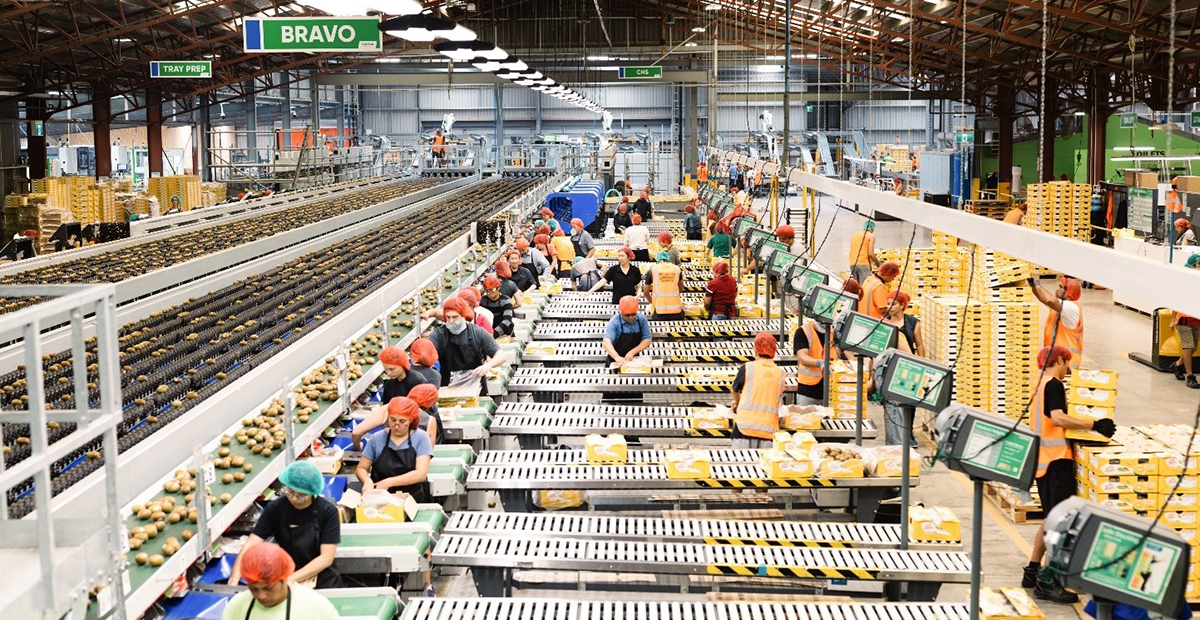
Seasonal horticulture work requires a group of individuals from diverse cultures, work experiences, and employment motivations to form a team in a short period of time. Often in the span of a few days, these workers are recruited, divided into teams, trained, and put to work. Their success in quickly forming a high performing
team is directly linked to the success of the harvest season.

There is no shortage of research on how to build a high performing team, but seasonal horticulture work presents a few unique challenges that makes it difficult to blindly apply these methods:

    1. Time Constraints – The entire season lasts only a few months
    2. New Employees – Most seasonal workers are new to the company and to the industry
    3. Demographics – Seasonal horticulture workers come from incredibly diverse backgrounds.

This report aims to provide recommendations on how leadership and team building models can best be adapted o suit these unique challenges.

To achieve this, a deep understanding of the demographics and cultural norms of New Zealand’s seasonal horticulture workforce was a primary research focus. This cultural understanding was then overlaid with current best practice team building, leadership, and engagement models.

Recommendations

  1. Understand Your Seasonal Workforce – The first step to building a high performing team from a collection of seasonal workers needs to be understanding who those workers are. Any process for building a high performing team with members of various cultures should acknowledge and
    respect the cultural differences amongst the team.

  2. Tailor Your Leadership Approach – Tailor your leadership style to the needs of your team. Communication is key. With a seasonal, culturally diverse work team, the leader needs to take this a step further, helping the individuals find common ground and bond as a team before they align to a common purpose. Facilitate effective communication within the team to build these personal bonds. Follow this up with clear, consistent communication to the team.

  3. Develop a Structured Team Building Plan – Understand the Forming-Storming-Norming-Performing-Adjourning model of team development. A guide to applying this for seasonal work is found in the Appendix. This should be a starting point and adapted to the unique norms of your own work team.