
The protection of New Zealand’s indigenous biodiversity of New Zealand is a significant national issue. Central Hawke’s Bay (CHB) has not escaped comments about the continuing loss and degradation of native bush, and apparently slow rate of protection. At the same time there is an increasing awareness within farming circles of the value of these remaining bush areas and an enthusiasm for voluntary protection work. Continual pressure from livestock and pests threatens the remaining bush. Rules have been proposed to maintain this status quo, in many cases as a backstop to prevent an unknown number of landowners from hastening this decline by more deliberate means. The administration and enforcement of rules involves consents, bureaucracy and money. To date, the CHB District Council has placed its faith in voluntary protection, rather than rules which don’t offer any protection against gradual degradation. Can this fear for the future be allayed by focusing on what is being gained? Regeneration can and does repair past damage and losses. To answer the question of whether rules are needed in CHB, I have: • Estimated the native bush areas remaining, • Quantified what native bush areas have been voluntarily protected using legal covenants, • Looked for any trends in the rate of protection, and • Costed protection work and on-going commitments.


 2025
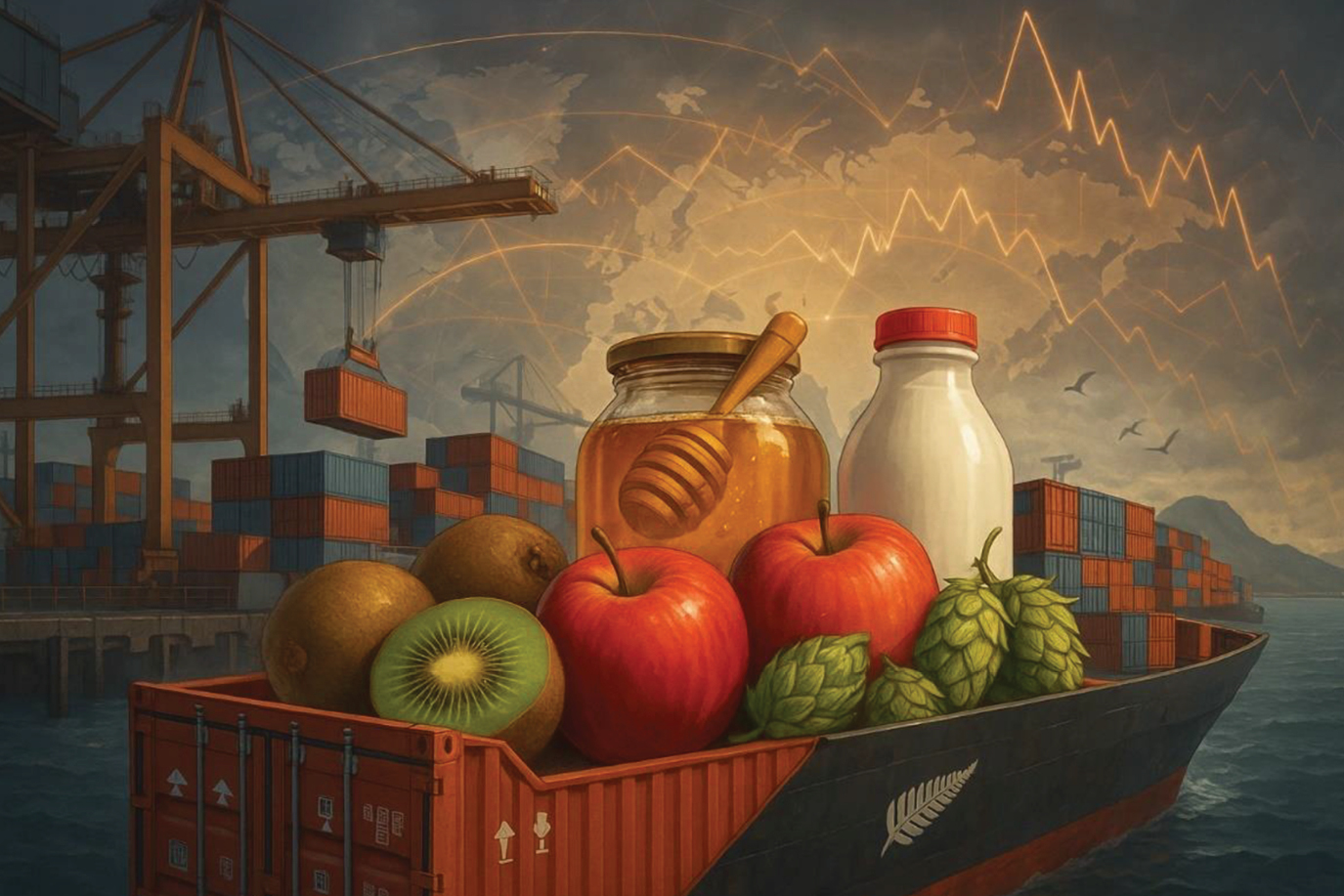
2025 Trading in Turbulent Times: Positioning New Zealand’s Global Food Trade, in a Shifting Global Order
NZ’s food exports depend on strong global partnerships and market trust. This report by Olivia Smith explores how innovation, integrity, and strategic investment, not volume ...
 2025
2025 A New Fleece on Life
Tara Dwyer reports the New Zealand sheep sector stands at a critical juncture, requiring courage, collaboration, and leadership, with recommendations for genuine product differentiation and ...
 2024
2024 Is the grass greener under irrigation?
With a changing New Zealand climate causing more frequent and more severe dry spells, including in regions previously seen as less vulnerable, the reliability of ...