
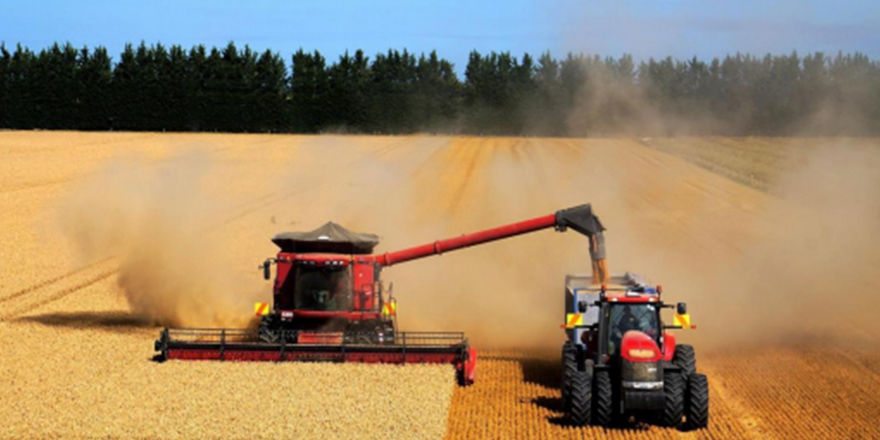

“The nation must grow its people who are working across the food and fibre value chain.” (Grimmond et al., 2014). The human capability required to meet the primary industry’s strategy for 2025 is a forecasted 4,700 increase in jobs associated with the arable industry (2012 to 2025). It is therefore critical that as an arable industry we are prepared to grow, and our people are trained and skilled to meet our primary industry strategy.
The aim of this report is to research the development of a grain trading course for field reps, specifically targeting field reps in their first two years out on the road with the objective that it is used by agribusiness organisations. Industry could use this research document to inspire further discussion and development on upskilling our people in arable.
The methodology included an exploratory literature review which concluded that there is a gap in arable training and development in New Zealand. I looked at overseas grain trading courses: two that stood out were the Grain Trade Australia (GTA) courses and the Kansas State University – International Grains Programme (IGP). These courses are based in Australia and the midwestern State of Kansas in the USA where grain production is key to their economies.
I created a semi-structured questionnaire, and targeted grain traders from the arable industry with field rep staff and arable growers from the various cropping areas throughout the country.
As a result of the information gathered from the literature review and the grower and industry surveys, it is my recommendation that a grain trading course should be developed in New Zealand, with the following guidelines.
- A course template is created that is operated from the industry body, NZGSTA, with the intention of the course operating biennially or as required. I would recommend NZGSTA act as the facilitator alongside an education provider such as Lincoln University, to run the course.
- The suggested course outline is for a 3-day grain trading course for field reps. Day 1, a full day, Day 2, a ½ day. Both days are done consecutively. Day 3, a ½ day, six months later. Speakers with relevant experience would be brought in to present on each of the topics.
- An elected member of the NZGSTA executive committee is appointed to oversee training and development. Personnel training and development needs to be at the forefront of our industry and any course offered, should continue to evolve and remain relevant.
- A customised in-house training option should be available, as we have seen with Ravensdown and their cropping course. This would potentially suit some of the larger companies with rep teams, as businesses can take on the base course content and adapt it to suit their individual company culture. As with the above course template a service provider such as Lincoln University could run the course.
- From the feedback from the grower survey, “that the link the field rep holds between the firm and the farmer is most important,” my recommendation would be that the course provider identifies good growers, that are willing to be mentors, to new field reps. One farmer assigned to one rep. The course provider communicates with the growers before Day 3, to provide constructive feedback, that can help assist individual field reps. This is a similar concept that Primary ITO adopts, where it gets the employer to verify on-farm training.
- Further work needs to be done on the funding for the course. Perhaps, opportunities for industry sponsorship. The intention is however, that the course is funded by the attendees or their employers.
Sarah Watson