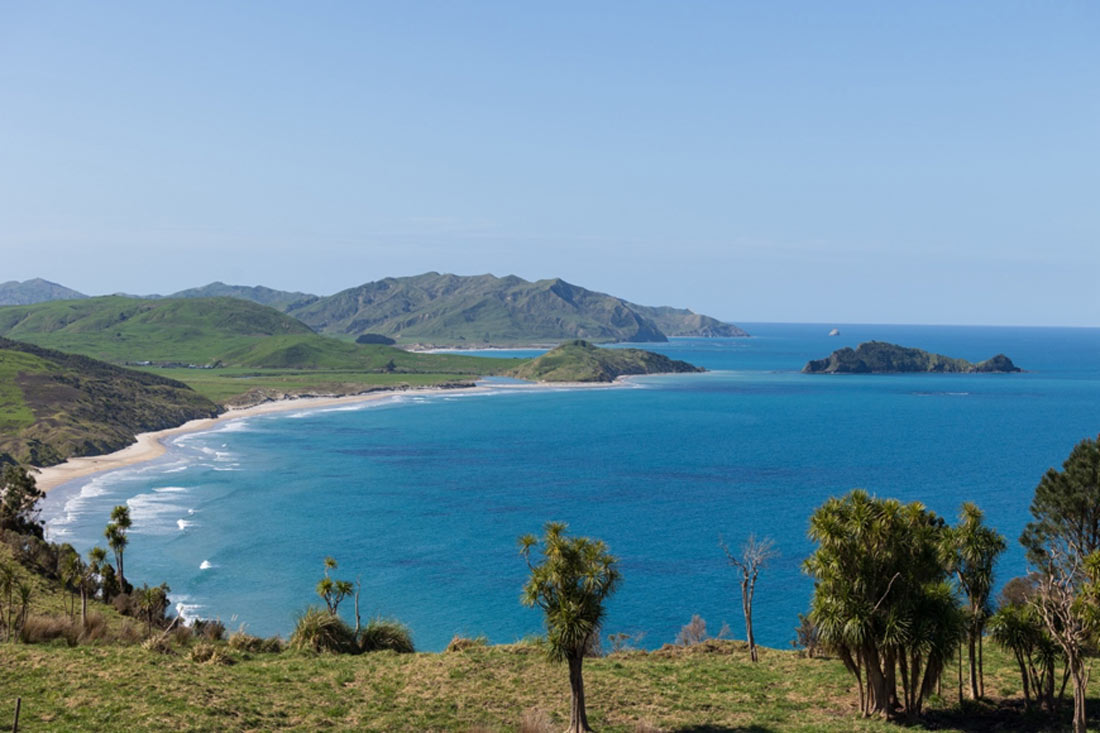
Te toto o te tangata, he kai; te oranga o te tangata, he whenua. Food sustains people, but the land sustains wellbeing. This whakataukī frames this Kellogg project with He Rau Ake Ake, (the name given to the 100-year whenua optimisation plan for Whāngārā Farms) as the central theme and case study. The research question is: How do long-term goals and decision-making processes benefit an East Coast sheep and beef farm? The question is designed to be practical, strategic and cultural in its intent. It is practical because Whāngārā Farms operates across steep East Coast hill country where erosion, waterway health, drought, intense rainfall, infrastructure, production and market volatility all sit together in the same management system. It is strategic because a decision made for one season can influence whenua condition, farm productivity and financial resilience for decades. It is cultural because Whāngārā is not simply a production asset. It is whenua connected to descendants of Paikea, Ngāti Konohi hapu, Incorporation shareholders, whānau, kaimahi and mokopuna who will inherit the consequences of decisions made today.
The central argument of this report is that the 100-year plan benefits Whāngārā Farms by improving the quality, discipline and transparency of decision-making. Long-term planning does not remove trade-offs. Instead, it makes trade-offs visible. It creates a structured way to ask whether a proposed action strengthens or weakens the whenua, the people, the business and future generations. In that sense, He Rau Ake Ake is more than a strategic plan. It is a governance and management process that connects whakapapa, mātauranga Māori, land-use capability, science, farm system performance, financial discipline and community aspirations.
My Kellogg project used Whāngārā Farms as a central case study to analyse, create findings and make recommendations for this report. Whāngārā Farms has grown from the 2006 partnership between Pakarae A and Other Blocks and Whāngārā B5 into a large Māori-owned sheep and beef agribusiness with around 9,000 hectares, approximately 2,500 joint shareholders, a governance structure involving representatives from the incorporations and independent directors, and a significant permanent and casual workforce. The business runs 2500 Angus cattle, 5000 finishing cattle and 60,000 Romney sheep, and has a history of investment in water, fertiliser, genetics, infrastructure, environmental protection and high-performing team culture. The He Rau Ake Ake 100 year whenua optimisation plan now asks a deeper question: how should the whole whenua be used over the next century so that production, biodiversity, cultural identity, climate resilience, people and financial security are advanced together?
This project examines the benefits of the process in He Rau Ake Ake: wānanga, values-based decision-making, specialist assessment, choice modelling, land-use capability analysis, staged implementation, monitoring and annual review.
The evidence points to five main findings. First, long-term goals create a decision-making compass. East Coast sheep and beef farms operate in conditions where short-term pressures are constant. A long-term directional compass helps governors and managers resist decisions that appear useful today but create erosion, ecological debt, cultural loss or financial exposure later. Second, whenua optimisation is stronger than production maximisation. The best use of land is not always the highest short-term stocking rate. In the Whāngārā context, optimisation means the right land use and the right living creature in the right place, guided by the right values and measured over time. Third, values-based decision-making improves the quality of trade-offs. The four pou – Manaakitanga-Whānaungatanga, Kaitiakitanga, Rangatiratanga and Whai Rawa/Mana Pūmau – ensure that decisions are not judged by profit alone. Profit remains important, but it is treated as an enabler of people, whenua and cultural outcomes. Fourth, measurement turns vision into accountability. The Holistic Measurement Index (HMI) connects 2025 baselines with 5-, 10-, 20-, 50- and 100-year targets across pastoral performance, land capability, biodiversity, forestry, emissions, people and governance. Fifth, the process itself builds capability. A 100-year planning process requires collaboration between governance, management, whānau, advisors and technical experts. The benefit is not only a document. It is a stronger decision-making culture.
This project report recommends that Whāngārā Farms formalise the four values pou as a standing decision lens for Board, management and operational decisions; align the report to the Holistic Measurement Index timeframes of 5, 10, 20, 50 and 100 years; create a simple Board and management dashboard from the HMI; repeat choice modelling at agreed intervals; maintain regular whānau engagement through hui, pānui and practical reporting; link every major land-use decision to land capability, climate risk and cultural site protocols; treat Whai Rawa and Mana Pūmau (Profit) as enabling values rather than isolated financial targets; and invest in governance succession, kaimahi development and practical implementation roles such as land management, biodiversity, forestry and project coordination.
Although this report is grounded in the East Coast, North Island on Whāngārā Farms, its wider value is in the decision-making approach it documents. Other farm businesses, Māori agribusinesses, Iwi organisations and land-based entities are facing similar tensions: climate pressure, erosion-prone land, capital limits, regulatory expectations, shareholder or member aspirations, environmental responsibilities, cultural obligations and the need to remain financially resilient. The work completed at Whāngārā Farms shows one way of holding those tensions together without reducing decisions to a single measure such as profit, production, compliance or cost.
The recommendations are transferable as a set of processes and structures: a kaupapa-led vision; clear pou to guide decisions; technical assessment of land capability; engagement that tests what people value; choice modelling to reveal trade-offs; staged implementation; a Holistic Measurement Index and dashboard to track progress; and governance succession so future leaders understand why decisions were made. Other organisations do not need to copy Whāngārā Farms’ exact land-use choices. The value for others is the discipline of connecting values, evidence, people and accountability before major decisions are made. In that sense, He Rau Ake Ake offers a practical example of values-led, evidence-based and intergenerational decision-making that could support other farms and Iwi organisations seeking to strengthen whenua, people, resilience and long-term prosperity.
The conclusion is that long-term goals and decision-making processes benefit an East Coast sheep and beef farm by turning uncertainty into disciplined choices. They help a farm identify what must be protected, what can be changed, what should be measured and who must be involved. For Whāngārā Farms, the greatest benefit of He Rau Ake Ake is not simply stronger financial performance or better environmental outcomes, although both are essential. The transferable lesson for others is the method: begin with kaupapa, build a shared long-term vision, gather the right expertise, engage people, assess land capability, identify options, make trade-offs explicit, set indicators, sequence implementation and review annually. The greatest benefit is a way of deciding that protects the mana of the whenua, strengthens whānau connection, builds resilience and asks a question based on the notion of Mana Ki Mua – for each generation to act as good ancestors for those yet to come.
Hayden Swann