2026 Nuffield NZ Farming Scholarship. Apply by 17 August 2025. Read More...

Apply for 2026 Nuffield NZ Farming Scholarship by 17 August 2025. More details...

Richard Green – time to think differently about our food and fibre value chains.

In this episode ofIdeas That Grow, Bryan Gibson, Farmers Weekly Managing Editor, talks to Richard Green, farmer, director and 2025 Value Chain Innovation Programme alum. 

Richard discusses his background and his Value Chain Innovation Programme experience.

Richard offers keen insight into why understanding value chains and value chain models is so important for anyone wanting to take advantage of the opportunities New Zealand Inc. and farming have to integrate our value chains and think globally.

Listen to this episode of Ideas that Grow, or click on one of the platform icons below to listen on your favourite player:

Episode Transcript

You’ve joined the Ideas That Grow podcast, brought to you by Rural Leaders. In this series, we’ll be drawing on insights from innovative rural leaders to help plant ideas that grow so our regions can flourish. Ideas That Grow is presented in Association with Farmers Weekly.

Bryan Gibson, Managing Editor of Farmers Weekly:
You’ve probably heard of the Nuffield and the Kellogg Programmes, but Rural Leaders has some other programmes it administers as well. One of those is the Value Chain Innovation Programme, which is open for applications until 23 November. The programme runs in early February (2026).

With me to talk about the programme today is Richard Green, who did it earlier this year. Richard, how’s it going?

Richard Green, 2025 Value Chain Innovation Programme.
Cool, thanks, Bryan.

BG: Tell me a little bit about yourself. What do you do for a crust? Where do you live? 

A diverse background in and out of food and fibre.

RG: I live just out of Christchurch, actually, in a little place called Ladbrooks, which is just on the edge of the town boundary on a few acres. But I’ve had a really interesting career to date Bryan. I’ve done lots of things, but I spent the first 10 years of my career as a farm consultant, working in the farm gate, helping businesses achieve their objectives and family farming businesses, generally.

Then the next 10 years of my career was pretty much involved beyond the farm gate, and I was involved quite deeply in the seed industry. We owned a company called Agricom, a couple of us, and we ended up selling that into PGG Wrightson Seeds. Then I ran the international business for PGG Wrightson Seeds for about five years.

Then the next The next 10 years, a bit longer actually, if I’m honest, perhaps the next 15 years, I’ve stepped out of day to day, been involved in businesses, and ended up doing a lot of governance and working across a large number of businesses. Those mainly in the agri and food sector, but a few not-for-profits and a few outside agriculture.

We’ve been deeply involved in retirement villages and commercial property and honey businesses as well, my wife and I.

BG: Yeah, so quite a diverse background. One of those governance roles you had was with Rural Leaders.

RG: Yeah, correct. When I left PGG Wrightson Seeds to stay connected with a lot of networks, I actually applied for a role. Nuffield at the time were advertising for a CE, and I applied for that role for a day a week. I did that for three years and then was involved with the trustees and pulling Kellogg into the Rural Leaders’ framework and setting up Rural Leaders. And then I was on the board for a few years after that with Rural Leaders.

I was also involved in AGMARDT and in FAR, as trustee in AGMARDT and then director on FAR, Foundation Arable Research. And both those are quite involved in Kellogg, particularly. And to speak with a lot of Kelloggers doing their projects, I think it’s absolutely fascinating, they have such good insights they get as to how the industry operates and where the opportunities are for them to add value to.

BG: The Value Chain Programme, a lot of people might not know a lot about it. That obviously offers in-depth insights into how our food and fibre sector operates, doesn’t it?

Why do the Value Chain Innovation Programme?

RG: Yes, and probably, Bryan, the more time I spend in the industry, the more I realise that we can do so much within the farmgate, and I still believe there’s lots of opportunities to improve there with technology. But a lot of the growth and the value that we can create will actually be beyond the farm gate.

The way we set an industry up to succeed, and then the way we get market signals back and align behind behaviour through the whole industry. For me, that’s why the Value Chain course, I decided this time last year, I guess, that it was something I wanted it to do.

I chair the joint venture between Headwaters and Alliance Meats, which forms the Lumina Land Programme. I’m deeply involved in that value chain. I was really looking for insights as to how do other industries operate, what’s best in class look like, even those industries that we are going really well, what would they like to change if they could wave a magic wand? I wanted to learn from everyone else that was going on the same journey as me, and so that’s why I applied.

BG: What’s actually involved when you signed up to the course? What actually happens?

What happens on the Value Chain Innovation Programme?

RG: Well, it was actually even signing up was quite an interesting process, and I assume it’s still the same, but you had to explain yourself, talk about yourself, and what you wanted to achieve out of doing the course. I probably should go back and read that again.

The process started, for us it was slightly earlier, I think this programme’s in February ’26, whereas ours was late January ’25. It involved a week of immersion in businesses and visiting businesses. I think the programme’s basically the same. We met in Hawke’s Bay on a Sunday morning, and we spent the Sunday with Professor Hamish Gow, facilitating a process talking about almost the academic view on value chains and also grounding that with his experience globally.

Those frameworks, and particularly one called the value discipline framework, that has been so helpful for me in the 10 months since then. I’ve used it so frequently as a way of thinking about value chains. Then during the week, we referred back to those models we talked about on that Sunday all the way through.

I think there’s circa 12 or 14 people on the course, all from different parts of New Zealand, all from different industries, all different ages and stages. So, actually learning their story is always a big key part of that.

And then we spent a full-on day looking in Hawke’s Bay at three different Apple businesses operating within the Apple industry, all operating slightly differently. One being TNG Global, one being Rockit, and one being Mr. Apple.

Then we drove all the way through to Rotorua that night on the bus, plus had a diversion or had an accident on the Napier Taupo Road, so we had to sit there for a couple of hours, so, we had plenty of time to talk on the bus. That’s where you really unpick the day and get everyone’s different views.

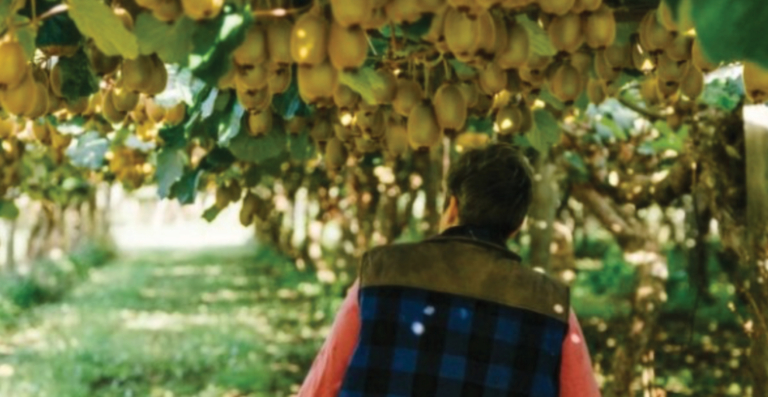
Then we spent a day and a half looking at the whole kiwifruit industry, right from R&D and new varieties, right on farm, right through the industry issues, biosecurity issues, and then deep into Zespri, or sorry, pack houses before Zespri, and then Zespri as to where their growth opportunities are, where their challenges are, and actually looking at this hugely successful industry, looking at understanding where it came from. It was a deregulated industry in the ’80s, and it was failing.

And then we went over the hill to Waikato, looked at the dairy industry, a deep-dive, the same way we did with kiwifruit, right from R&D, the milk testing station, on-farm, factories, and then where Fonterra is going. It was the Fonterra value chain we studied.

Then we also looked at the meat industry with Greenlea (Premier) Meats, and that was fascinating insight. Then we also talked about technology and how technology could disrupt value chains going forward. Then we had some case study learnings at the end of it. By the time we left on the Saturday, we were inspired, had new ways of thinking, but we were also pretty buggered!

Understanding value chains.

BG: You mentioned it earlier, as you say, lots of farmers or people in food and fibre know a lot about how to produce food on farm, how to grow grass or how to grow kiwifruit or apples, that sort of thing. But once someone comes and picks it up, a lot happens. And understanding how that works and the challenges that those who are processing and marketing our produce face, that’s really good to have a good understanding of that across the It’s a small sector, isn’t it?

RG: Yeah, and I actually now understand better also, Bryan, as a farmer sitting within the farmgate, you also need to understand who you partner with. Because how your partner is setting themselves up to win, and I use this word sitting in yourself up to win quite often because you’ve actually got to work out where your niche is right through the value chain and how you can leverage that niche to be successful. Because the profits can’t flow back to the farm unless your partner in the value chain is successful. There’s different ways of being successful. There’s no one way.

The thing we learned is some are successful because they innovate around products, and Zespri is one of them, and they have unique products, controlled by IP and they’re champions at bringing on new products to solve customer problems.

Some innovate around customers and work back from customers to solve their problems. It might be through consistency of a product or timing of delivery or something. They work back the whole value chain to solve customers’ challenges. Some, which is historically what we’ve been really good at in New Zealand, has been the lowest cost producers and providing value with a certain quality standard for the customer.

And so they are the only three areas you can win in. And the insight was you can be successful in two, but never in three. And so as a farmer, you have to know what’s your partner in the value chain, how they’re aligned themselves to win, and whether that meets what you see as you want to do, because you have to be aligned to a similar value discipline as them. So we don’t do a lot of discussion about that and talking about that because we only look at our part of the value chain.

So I think that’s what I found invaluable, and everyone on the course found invaluable, just that ability to look up and down the whole value chain and actually think about how does everyone win and how could we win far greater together if we actually work together different or better.

BG: It is so important to have that alignment of ideology, I guess. Everyone needs to know where you’re going and what your goals are. Otherwise, if you don’t get that aligned, then the chain breaks.

RG: We find that very much within our Lumina Land Programme. We’re a customer-intimacy type value chain – I worked out. I didn’t actually know that beforehand, but I probably did, but then you have a model to wrap it around. So transparency and alignment around everyone’s goals and financial incentives to align everyone around, that’s pretty important, too.

So I got considerable value and as a side note, Bryan, I always believe, and I absolutely believe, I’ve done a lot of personal development over my career, and I always tell people that there’s a 10 times return on investment. So whatever I invest, I can get 10X on that, I believe, within the next two or three years. I absolutely believe they are this Value Chain (Innovation) Programme.

I got so inspired by it I’ve committed to doing one this next January at Harvard, actually, which is a lot more expensive than the Value Chain programme, but it just has made me realise that the opportunities we’ve got as New Zealand Inc. and farming to actually integrate our value chains better and think a lot more globally.

BG: I actually never thought myself about those three ways to win, but you know it subconsciously. Giving it names and putting models and theory around it is something else again.

Think differently. Get inspired.

RG: The interesting thing is, Bryan, that all our training, my training through Lincoln, and I assume still now, and all our teachings, actually, we’re taught how to perform and operate in the operational excellence space. But it’s actually jumping that chasm and actually working back from customers and thinking of it quite differently, about marketing, about branding and around IP. We lack skills in those areas, and we lack ways to finance some of that, too. So that’s been a limitation to growing some of those business models.

I think we actually need to think a lot more like that and actually work out how we build skills in each of these. To me, there’s no right or wrong value discipline. It’s just whatever you do, you’ve got to do exceptionally well, and you’ve got to be able to carve out a niche and a point of difference from all your competitors by doing it well.

BG: In terms In terms of value chains, we quite often, in our thinking, focus on the food producer and the marketer or last seller at the end of the chain. But those things like processing the packhouses, the packaging, the transport, all that stuff, it’s not very sexy, I guess, but it’s so important.

RG: It’s absolutely critical. I can talk from experience around our Lumina Lamb, which is a partnership between the farmers with their genetics and their farming system, which is a codified farming system and the unique feed we put. Then the processor, which is Alliance Meats, and they’re processing and timely processing, where it’s all forecasted.

Also their ability to process the cuts that were required, to collect the offal when we’re trying to add value on offal and pelts, and then the transportation issues, which are huge on a global basis to get, whether it’s a container or a carton in the market. Then right through to how you partner with, in our case, chefs in food service, and how you get access to that. And yet in a big long chain, one breakdown can absolutely kill the whole chain. And so everyone’s just as important as each other, or it doesn’t work.

BG: It sounds like this programme would suit anyone in food and fibre. Everyone works in their own little space in the chain. But if you want to know about the rest of the links, then this is the course for you, I guess.

RG: What would make it really excellent, cost a lot more. But if you could get offshore and follow right back from the customer, that’s the only missing bit in that. But that’s just another level in terms of cost and time. But I think for everyone producing food, it ends up in a value chain.

Anyone who’s considering how their value chain could be optimised and having the ability to think and talk at those levels with directors, whether it’s co-ops or the companies they supply.

But even comparing and contrasting across industries. I mean, why do we see the kiwifruit industry as being successful and potentially the dairy industry versus sheep and beef? Versus the apples industry? What could we learn out of that?

Why is Rockit? What’s their target market in their niche versus Mr. Apple? How are they carving out different business models? If Anyone interested in business is really valuable. Anyone interested in sitting there saying, How do I develop skills to work out who I partner with in the future from my farm business? I think it’s very valuable.

BG: Yeah, and it has that in the field, practical, Here’s what we’re doing as a business aspect to it, but also, Hamish gives you the theory to look at it critically.

RG: Yeah, and the majority of the people in the course, when I did it last year, were practical farmers. All of us came from within the farm gate way of thinking, and we were trying to stretch ourselves beyond. That was the beauty. We’re actually all very similar from our backgrounds, although we’re from all different industries.

BG: Excellent. As I said earlier, the next value chain programme, applications are open until the 23rd of November, and the programme runs from the 8th to the 14th of February next year.

Thanks for listening to Ideas That Grow, a Rural Leaders podcast presented in Association with Farmers Weekly. For more information on Rural Leaders, the Nuffield New Zealand Farming Scholarship, the Kellogg Rural Leadership Programme, and the Value Chain Innovation Programme, please visit Ruralleaders.co.nz

FMG and Rural Leaders renew Strategic Partnership.

The New Zealand Rural Leadership Trust (Rural Leaders) is pleased to announce the renewal of their Strategic Partnership agreement with FMG.

Rural Leaders and Strategic Partner FMG, have renewed their partnership agreement, reinforcing a shared commitment to lifting leadership capability and to building stronger rural communities.

The new agreement formalises the continued alignment of values and support for Rural Leaders’ mission to develop capable industry leaders who, in turn, strengthen the communities they represent.

As a Mutual, FMG takes a long-term view – building long-term connections with rural New Zealand and reinvesting to help build strong and prosperous rural communities. FMG sponsors over 700 local events each year, from smaller lamb and calf days right up to National Field Days, and the FMG Young Farmer of the Year contest.

The renewal of the FMG-Rural Leaders partnership, alongside a long-standing relationship with Rural Leaders’ Programme Partner Farmlands, exemplifies this focus.

”FMG has been supporting farmers and growers for over 120 years now, and we’re committed to supporting the generations to come. It is a privilege to partner with Rural Leaders and support the future of farming in New Zealand Aotearoa. No doubt, our rural leaders will continue to challenge the status quo, team up to pool resources, share knowledge and capability as they have throughout our country’s history,” said Pete Frizzell, Chief Marketing Officer, FMG.

With FMG’s support, Rural Leaders’ programmes will continue to develop confident, skilled leaders equipped to tackle the challenges and opportunities facing their communities, industries, and the Food and Fibre sector.

“The partnership’s impact is evident in the transformative growth of our programme alumni, who consistently demonstrate enhanced leadership ability, show great resilience, and are better equipped to drive change”, said Lisa Rogers, CEO, Rural Leaders.

FMG also fosters leadership development internally, with employees regularly attending the Kellogg Rural Leadership Programme.

FMG has been a Strategic Partner of Rural Leaders since the Trust’s formation in 2017.

(Pictured – Pete Frizzell, Chief Marketing Officer at FMG, and Lisa Rogers, CEO Rural Leaders).

Alumni in the Spotlight – Tracy Brown, Shannon Harnett, Steve Sterne, Simon Cook, Phil Weir

Here are just a few of the media pieces covering the impact of Rural Leaders’ Programme Alumni in industries and communities across the sector. 

Shannon Harnett, 2020 Nuffield Scholar

Shannon Harnett shares her recent AI learning experience exclusively with Rural Leaders.

Read Shannon’s article here.

Tracy Brown, 2020 Nuffield Scholar, 1997 Kellogg Scholar

Tracy Brown has been re-appointed unopposed as a director to the DairyNZ Board.

Read the article here.

Phil Weir, 2020 Nuffield Scholar, 2016 Kellogg Scholar

Phil Weir has an opinion piece published on Farmers Weekly about whether it’s time to consider feedlots as ‘batteries’ for the meat supply chain.

Read the article here.

Steve Sterne, 2007 Nuffield Scholar

Steve Sterne was recently honoured with NZPork’s Outstanding Contribution Award.

Read the article here.

Simon Cook, 2018 Nuffield Scholar

Simon Cook has been elected to the Horticulture New Zealand board.

Read the article here.

Shannon Harnett – Making AI work for you

Shannon is a 2020 Nuffield Scholar, Director and Co-Owner of Rural Accountants and has investments in agriculture, horticulture and aquaculture businesses. In this article Shannon shares her insights into how to make AI work well for you.

Making AI Work for You
The first time I saw ChatGPT in action was in the summer of 2023, at a friend’s house. We asked it to write a poem about accountants. It was hilarious — but underneath the humour, I realised the potential.

Very quickly, AI became my assistant. At first, it fixed grammar and spelling in emails and reports. My writing became sharper, more concise, and easier to read with far less grammar and spelling mistakes! Mark Twain once said, “If I had more time, I would have written less.”  With AI, that constraint no longer applies.

The real turning point, though, was when I used AI to turn something messy into something structured and useful. Not “robots taking over the world.” Just getting the AI to ask me questions, one by one, about a project I was working on, then pulling my answers into a clean, usable format.

That’s when it clicked: AI isn’t just a word-smithing assistant. It’s a strategic tool. Used well, it takes work off your plate, sharpens your thinking, and creates scale without the hours of refining.

It Starts with the Question
The biggest lesson? It’s not about having the right answer. It’s about asking the right question.

I now frame prompts like I’m briefing a new hire: clear role, clear context, clear task. For example, as a CEO, I don’t just type, “Help me with strategy.” That’s far too broad. Instead, I say:

“You are my Scaling Up Strategy Assistant. Ask me one question at a time. Start with People, then Strategy, then Execution, then Cash, then Risks & Opportunities. Only show me the full summary once we’ve covered all five areas.”

The result is an interactive interview where AI does the admin while I do the thinking. That’s the power of a good prompt: it forces clarity, and the output is miles better than a vague question ever delivers. And, in truth, learning to prompt AI has made me a better leader — clearer, more structured, and more intentional in what I ask of others.

Small Steps, Big Wins
You don’t need to overhaul your whole business to start. Try it on something small, try it on something creative.

Don’t know what to have for dinner? Take a photo of what’s in the fridge, upload it to AI, and it’ll generate recipes with step-by-step instructions.

It sounds trivial, but it proves the point: AI can sift through messy inputs, structure them, and give you something useful in seconds. In business, the same applies — pulling data from multiple reports, tidying client communications, or drafting meeting notes. These aren’t tasks we can’t do. They’re tasks that chew through time — and AI gives that time back.

The Power of Projects
The real magic happens when you start treating AI as a project partner. I’ve been experimenting with GPT-powered projects that run like structured workflows — guiding me step by step, capturing the right inputs, and producing a clear, consistent output.

Here’s what that looks like:

  • A marketing project where AI builds a content calendar in my brand voice.
  • A reporting project where AI pulls numbers from my files and formats them into a tidy monthly pack.
  • A strategy project where AI interviews me (or my team) and distils the answers into a one-page plan.

You define the outcome, give AI the right resources (files, data, context), set simple rules, and let it guide the process. The result is structure, quality, and momentum — without false starts or bottlenecks.

And once a project is set up, anyone in the team can run it. That means clarity and consistency, whether I’m leading it or handing it over.

AI in the Tools You Already Use
AI isn’t just in chat windows. It’s already creeping into the software you use every day.

Take Microsoft Copilot. It can scan emails and Teams chats, spot an approval request (“Can I go ahead with this?”), and track it. If three days go by without a reply, it nudges the approver and updates the requester.

That alone kills the “lost in the inbox” problem that slows teams down. But it also shines at surfacing related documents inside Microsoft 365 — I’ve saved hours finding what I need.

A New Way of Leading
Here’s the mindset shift: AI isn’t just tactical. It’s strategic.

The sticky note on my desk simply says:
“How can AI help me do this?”

Whether I’m writing a report, mapping a process, or planning strategy, I pause and ask where AI could take the load. Most of the time, it’s not about replacing me. It’s about clearing space so I can show up where it really matters — with clients, with strategy, with people.

How to Start Today
If you’re ready to dip your toe in, here’s a simple path:

  • Pick one task you repeat often (emails, stakeholder lists, client notes).
  • Write a clear prompt that sets role, context, and task.
  • Let AI break it into questions and interview you.
  • Use the output, tweak it, and save the prompt for next time.

Once you’ve got one win, build a small “AI toolkit” for yourself and your team — a set of prompts or projects that anyone can use.

Final Thought
AI won’t magically run your business or your life. But it will tidy the messy bits, speed up the slow bits, and track the bits you’d usually forget.

And when you start treating AI less like a novelty and more like a colleague — one that never gets tired of chasing approvals or formatting tables — you’ll see what I’ve seen: the power to do more, without burning yourself or your team out.

I completed the Spark-funded AI Mini MBA course, and it was one of the best investments of time I’ve made. If you get the opportunity, take it.

Shannon’s 2020 Nuffield report on Kiwifruit PVR’s ‘Getting Plant Varieties Right’ can be viewed here.


Kellogg Rural Scholars Series. Leadership issue.

Supported by our investing partners, the New Zealand Rural Leadership Trust is privileged to help grow many of our sector’s capable and purpose-driven leaders.

A key aspect of the Kellogg Programme (and the Nuffield Scholarship) is research based learning. The clarity of thought and confidence the research component of Kellogg promotes can be hugely transformative.

The Kellogg Rural Scholars Series booklets are distillations of this research – each focussing on a selection of reports covering one industry or topic.

Currently, there are five booklets in the series, with this latest issue being ‘Leadership Insights’.

Leadership Insights contains twelve reports spanning the last 7 years.

The reports in ‘Leadership Insights’ cover such topics as: Leadership During a Crisis, Emotional Intelligence, the Qualities and Characteristics of Good Leadership, and the Effect of Good Leadership on Staff Engagement and Retention.

These reports were written by scholars: Jack Dwyer, Jordi Hoult, Cheyenne Wilson, Louis Batley, Brian Henderson, Melisssa King, Henry MacIntosh, Jason Halford, Sophie Malone, Joanna Greaves, Hayden Dunne, Nick de Ridder.

You can view Leadership Insights here.

If you would like to grow as a leader; exploring research into a food and fibre topic of your choosing, apply for 2026 Kellogg Programme One by 19 October.

To learn more head here.

Kerry Worsnop shares Scholarship experience at Nuffield 75th.

Nuffield Farming Scholarships celebrated 75 years in New Zealand last Thursday.

100+ Scholars and their partners gathered for dinner, to hear from an excellent line-up of speakers and of course, chat.

Kate Scott, NZRLT Board Chair (2018 Scholar) opened and spoke on the impact of Nuffield Scholars before introducing host Hon Todd McClay. 

Julian Raine (1997 Scholar) and Kerry Worsnop (2023 Scholar), spoke about their Nuffield experiences including some of the challenges overcome and unique opportunities encountered.

You can read Kerry’s speech below.

One of the most important moments of the night was an announcement by the Hopkins family.

John Hopkins,1979 Nuffield Scholar, passed in 2022. John and wife Elaine, gave generously to the Nuffield Programme over the years. This generosity included providing a Scholarship for Ben Anderson, 2021 Nuffield Scholar.

John and Elaine’s son and granddaughter, Andrew and Chelsea Hopkins, attended the dinner. Chelsea announced they would again support a Scholar onto Nuffield.

Here’s an excerpt from Chelsea’s LinkedIn post that echoes her excellent speech on the night:

“… My grandfather, John Hopkins was a 1979 Nuffield Scholar. I have fond memories of him telling me how the scholarship transformed him and the lasting impact it had on his life. I was lucky enough to share his story with the attendees last night and for this I am truly grateful.

To give back to the programme that gave us so much, we are providing a scholarship for 2026 Nuffield Scholars to support the next generation of agricultural leaders.

Being a part of last night’s celebration was super special for Dad and I. It was a reminder that life’s moments, although sometimes small, can have big impacts. This is a night I won’t forget.

A big thank you to Lisa Rogers, Rural Leaders and Kate Scott for the invite and making us feel so welcome.”

Andrew and Chelsea Hopkins are pictured below (image 4).

Images are: 1 – Hon Todd McClay. 2 – Owen Jennings (1980), Craige Mackenzie (2008). Lucy Griffiths (2014) Ben Hancock (2019). 3 – Gavan Herlihy (1985), Nick Tripe (1967), Richard Davison (1986). 4. Andrew and Chelsea Hopkins. 5 – Ian Mackenzie (1993). 6 – Marise James (1998), Don McFarlane (1981). 7 – Hon Damien O’Connor, Allan Richardson (1998). 8 – Don McFarlane, Ronny Percy, Nick Tripe, Elizabeth Davison, Richard Davison. 9 – Hon Denis Marshall (1983), Martin Nelson (1983). Bryn James, Brian Smith.

You can read Kerry Worsnop’s speech from the 75th Dinner below. It was an excellent speech that may be useful for those considering a Nuffield NZ farming Scholarship in 2026.

Take a read, it gives some great insight into what to expect.

Scholarships are open until 17 August.

Kerry Worsnop, 75th Nuffield dinner speech, Parliament.

I applied for a Nuffield scholarship at one minute to midnight on the night that applications closed in 2022, having pitched it to my husband at about 9.30 that night.

Now because he’s used to me doing random things, Marcus just rolled his eyes, sort of shrugged, told me to do what I wanted and said he was going to bed.

On reflection, had my application not been so last minute, I would likely never have submitted it. The fact that I did set in chain a sequence of events that will forever make 2023 a pivotal year in my life. And that is without accounting for the two cyclones.

That’s another story.

Now for you poor souls who have had two- or maybe five doses of my research, you’ll be pleased to know that I’m not going to ram it down your throats again. But what I am going to do, is give you a little bit of my journey and in it, hopefully you recall some of your own.

I left New Zealand like many of you will have, wondering what in the hell I was doing, feeling overwhelmed with the magnitude of what I was attempting, and amazing that anyone was crazy enough to fund it.

I had no idea how to hustle meetings with foreign dignitaries, executives, scholars and all the others whose knowledge I would need to augment my own.

But like all of you – I would learn.

I learned that every no, was one step closer to a yes. That every connection can yield three more and most remarkably, that my own knowledge would become a form of currency, the medium of exchange valued by those whose own curiosity would draw them into a room with me.

I learned the value of being able to trade in ideas, to appreciate something I can only describe as intellectual alchemy.

My questions took me to Washington, Pennsylvania, Canada, the UK, the Netherlands and others. 11 countries in all.

I stayed in basements, slept in hostels – had one very dodgy experienced accidentally being the only female in a sardine can room with 7 men from all corners of the world.

I missed flights, misplaced luggage and got lost on numerous occasions – but only once did I end up in the wrong city attempting to board the wrong ferry. Naturally – another Nuffielder put me up for night on half-an-hours’ notice, and on I went.

I met people like Guy Peters, the godfather of public policy research who himself had no real reason to meet me – beyond the fact that New Zealand was fascinating to him.

I found myself in incredible situations, an exclusive cocktail party with US senators, meeting the UK’s agriculture minister, in rooms with countless officials, public servants and farmer organisations and farmers themselves.

I marvelled at how many people made time for me and the generosity of spirit that every Nuffielder I met seemed to share.

For the rest of my life I will never forget the two days I spent with Dorothy Fairburn in Yorkshire, or the lengths that Katlyn Cruiskburg went to, to host me in Canada.

Of course no Nuffield would be complete without someone being sick in a suitcase after too many vodka shots (it wasn’t me) and the painful test of everyone’s social endurance that is the GFP program.

It doesn’t matter if you visited Argentina, Ireland, Poland and France as I did, or India, China and Zimbabwe as others have, the universal truth is that our humanity and the land itself connects us.

I applaud Nuffield NZ for ensuring the GFP’s are an integral part of the journey and I maintain the ultimate test of your capacity – is can you still be talking some kind of sense at midnight when your host is still in fine form but you’re on day 26 of your GFP and it’s your turn to be leader, so you can’t go to bed.

And this is where the rubber hits the road. As New Zealand scholars, we have a clear expectation set for us and we understand our role as ambassadors for our country and for this organisation.

I expect that of all the scholars world wide, New Zealanders are the least likely to go to bed when the host still wants to talk, and we are the most likely to ask questions when someone needs to show an interest, even if it’s the 500th dairy farm visit.

New Zealand Rural Leaders Trust sets the standard and it’s Nuffield program stands alone in offering a truly life changing experience. Much like the Greek myth of Odysseus, once we have wondered the word in search of answers we can not help but return changed.

In accepting a New Zealand Nuffield scholarship you agree to explore parts of the word, and parts of yourself that you may never have reached alone.

In return Nuffield in this country defends the space for your conclusions. They did this for me, and likely, for most of you.

I can not emphasise enough the value in this.

Not every country offers this. I spent time with scholars agonising over the fact that their conclusion were increasingly at odds with the business model of their sponsor, I spent time with others for whom getting the sponsorship itself predetermined their research topic.

In New Zealand our most curious minds are entirely free to search the world for answers and when they return, they are free to speak whatever truth they find.

This is exceptionally rare in a world where research funding is thin and increasingly political and where commercial interests often guard the doors.

Our sponsors deserve great recognition and immense gratitude for their willingness to support such impartiality, which no doubt at times may have been at odds their own interests.

So my message to all those who deliver this program and to those who support it, you have created something precious and rare, and this country is ultimately the better for it.

Thank you.


Alumni in the Spotlight – Marise James, Amber Carpenter, Iain Inglis, and more.

Here are just a few of the media pieces covering the impact of Rural Leaders’ Programme Alumni in industries and communities across the sector. 

Marise James, 1998 Nuffield Scholar

This is one we missed. Former Fonterra director Marise James told Dairy News that the future of the dairy industry depends upon the direction of travel with respect to climate change.

Marise says, “Farming has always been the backbone of the New Zealand economy, seeing us through really tough times and creating a place in the world that recognises the value of high-quality food, fibre and health production.”

Read the article here.

Carlos Bagrie, 2024 Nuffield Scholar

Carlos was in Farmers Weekly a couple of weeks ago encouraging a national conversation on what other options NZ’s economy may have to enjoy stronger economic growth.

Talking to Farmers Weekly, Carlos said, “Our growth in agriculture is pretty much looking to be more linear than exponential heading into the future. It is not that there are not gains still to be made, it’s just those gains are more seconds than minutes in terms of performance lift.”

Read the article here.

Iain Inglis, 2024 Kellogg Scholar

CountryWide spoke to Iain Inglis, about his Kellogg research report ‘Better cattle handling: For people, product and perception’.

Iain covers off three opportunities that come from Low stress handling – improved operational efficiency, enhanced meat quality, and a safer working environment for handlers.

Read the article here.

Sarah How, 2019 Kellogg Scholar

Sarah How was featured recently in Alumni in the Spotlight, but we missed this article in Sheperdess. Sarah is the co-founder of Landify, a platform which connects farmers with potential partners and investors to explore collaborative opportunities in farming.

The April article talks about her background, the Landify story, and on being a finalist for the 2025 Zanda McDonald Award.

Read the article here.

Amber Carpenter, 2018 Kellogg Scholar

Amber featured on page 92 of the latest NZ dairy magazine. Amber and her husband Fraser, have recently purchased a digital marketing business to sit alongside Grass Roots Media, also owned by the couple.

Take a read of Amber’s story here.

Kellogg Programme One 2025 (K53) graduate.

Congratulations Programme One 2025. 18-inperson days in Lincoln and in Wellington, one research report, one presentation of said research report, tens of insights sessions from industry leaders, workshops, reflections, at least 22 new friendships, and much more.

This graduation marked the completion of the research component of Kellogg. Scholars presented their work to the cohort throughout their phase three. Their reports will be made available on the Rural Leaders’ site in the next two weeks.

The graduation ceremony was held in Lincoln University’s Memorial Hall. Thank you to Lincoln University (NZ) for the use of this incredible space.

Lisa Rogers, Rural Leaders CEO got the graduation ceremony started, introducing new Rural Leaders Associate Trustee, Katie Rodwell (2019 Scholar).

Katie spoke to the graduates about the transformation the programme had created for her. Katie discussed the critical thinking skills, networks and connection that are developed on Kellogg, and encouraged the group to stay connected and to lean into any opportunities for growth.

This cohort’s reports will be shared with investing partners for a first preview, then more widely soon after.

As a heads-up, scholars and their report topics (under broad theme headings) are as follows:

Environmental management in agriculture.

Adam Williamson
Water quality in the Amuri basin – where are we at?

Jodie Goudswaard
Balancing profit and environment: Insights from New Zealand’s leading dairy farms.

Cameron Walker
Enhancing on-farm carbon stocks.

Jess Ross
Softer Crop Protection, The Way of The Future?

The business of agriculture and horticulture.

Michele Cranefield
From Seed to Success – Transitioning Farm Ownership in New Zealand – The Ownership Equation: Exiting with Value, Entering with Vision.

Emma Harvey
Opportunities within New Zealand agri-tourism.

Kurt Harmer
Dairy diversification into raw and pasteurised milk sales.

Pare Taikato
The opportunity cost to New Zealand of under-developed whenua Māori.

Malinda Wynyard
Building diversity in New Zealand dairy export markets for independent manufacturers.

Grant Kay
Dairy farmers love sharing data…but there is a ‘but’.

Sam Connor
Partnerships within the food and fibre sector: do they return value to the farm gate?

Kaitlin Bates
Smart Nutrition, Stronger Herds: A Holistic Approach to NZ Dairy Excellence.

Matt Ward
How can we maximise profitability in our decreasing ewe flock?

Daniel Judd
The soils gap: Interactions between culture, research and fertiliser.

Developing our people and communities.

Emma Weston
Career satisfaction and job retention for front line vets in government roles.

Katrina Roberts
Dairy farmer-female veterinary advisor relationships in New Zealand: Identifying the key attributes of a flourishing partnership.

Morgan Jones
How do we develop financial literacy in rural New Zealand?

Michele Findaly
What factors enable trusted, high value relationships between rural managers and clients in New Zealand’s food and fibre sector?

Jack Dwyer
Leadership qualities needed for first time managers.

Richie Cameron
How can the sheep and beef industry retain farm managers without ownership opportunities?

Anthea Yule
Does the decline in school bus services highlight more significant issues affecting rural primary education?

Phil Holland
Guardians or executioners: Navigating the ethics of deer control.

Jack Cocks signs off on a year as the NZRLT Associate Trustee.

Jack Cocks has just finished a one year term as Associate Trustee for the New Zealand Rural Leadership Trust (Rural Leaders).

Jack is a high country farmer who holds a bachelor’s degree in farm management from Lincoln University and a masters in agricultural economics from the University of Illinois. He is as much at home in the city as he is in the Otago high country running Mt. Nicholas Station with his wife and children.

Jack suffered a life-threatening brain aneurysm twelve years ago which saw him spend eight months in hospital over six years and undergo fifteen major surgeries.

Following this experience he researched how ‘Resilient Farmers Thrive in the Face of Adversity’ through the Kellogg Rural Leadership Programme. He is now a well-respected speaker on farmer resilience.

Early in 2024 Jack joined the New Zealand Rural Leadership Trust (Rural Leaders) as an Associate Trustee to learn more about governance from the Trust’s experienced board.

“I enjoyed learning from the other trustees. They all had different skill areas and very smart perspectives too. Being part of a team was also an appealing thing to me. The frequent events, such as the Kellogg networking event in Wellington, were great too.”

Mt. Nicholas is remote, so Jack cites the board interactions, both online and in-person, as being another important draw. “You’re not in an immediate community here at Mt. Nicholas. You’re not going to the local field days, meetings or functions that often. So, keeping involved with board matters was enjoyable,” says Jack.

Jack’s plan is to now shift his focus closer to home, on family and the business.

“Our kids are going through high school, they’re both week-day boarding in Invercargill, two and a half hours away. It’s a reasonable commitment to head up and down the road every week.

I’m still doing one or two speaker engagements a month. I’m able to give back a bit to the sector and the community, and a lot of that has spun out of my Kellogg,” adds Jack.

Jack plans to continue his governance journey once his children leave school. He acknowledges the strong foundation the year as an Associate Trustee has given him and he mentions some advice he was given before he went into the role.

“Some advice I got from a wise director before joining Rural Leaders as Associate Trustee, was to look at the one year term in three parts. The first part is asking plenty of questions. The second part is establishing credentials. The final part is adding some value.

I didn’t throw any ideas around for a start, but tried to understand the business. Then I established myself in that second part and looked for ways to add value in that last part. Some of the work that Lisa Rogers and I were doing towards the end with the Value Chain Innovation Programme; like looking at an offshore component for it, fits into that.

That’s how I approached the one year, and I found that advice really useful. It reassured me that I didn’t need to go in guns blazing,” says Jack.

Kate Scott, Rural Leaders Board Chair, spoke of Jack’s measured and intelligent approach to his time as Associate Trustee, “The knowledge Jack has passed on, especially around farmer resilience, has been invaluable. Jack’s calm, clear and curious nature make him a standout as he continues his governance journey.”

Katie Rodwell recently joined as the new Associate Trustee, marking the end of Jack’s year.

“It was a tremendous opportunity. I thank the board and the Rural Leaders’ team for their openness and inclusiveness. I really felt comfortable and that I could contribute to make a difference,” concludes Jack.

FMG Young Farmer of the Year winner to attend the Kellogg Rural Leadership Programme.

Hugh Jackson, a Waikato Bay of Plenty Young Farmer, has won the title of New Zealand’s top young farmer. 

Hugh is a 26-year-old sheep and beef farmer and was crowned the 57th FMG Young Farmer of the year at the Grand Final event in Invercargill on 5 July.

Working on his family’s farm north of Raglan, Jackson also has an interest in technology, and a passion for mental health.

Jackson believes technology will play a big role in shaping in the future of farming, as well as in the lives of the young people who will be using it. 

The New Zealand Rural Leadership Trust (Rural Leaders), in partnership with Lincoln University, sponsor the FMG Young Farmer of the Year winner on a place to attend the Kellogg Rural Leadership Programme. Rural Leaders and the University have been doing this for several years.

Rural Leaders CEO, Lisa Rogers said it was a close finish but Hugh’s determination shone through, and added, “We look forward to seeing Hugh on the Kellogg Programme soon. It was a privilege to attend the Grand Final and see first-hand, the depth of talent we have coming through New Zealand Young Farmers.”

New Zealand Young Farmers chief executive Cheyne Gillooly in a Young Farmers article said Jackson impressed everyone with his talent. “…It’s inspiring to see the recognition go to someone who will not only be a strong ambassador for the next generation of young farmers, but across the agricultural industry.” 

Source: https://www.youngfarmers.co.nz/news/hugh-jackson-crowned-2025-fmg-young-farmer-of-the-year