2026 Nuffield NZ Farming Scholarship. Apply by 17 August 2025. Read More...

Apply for 2026 Nuffield NZ Farming Scholarship by 17 August 2025. More details...

Wahine toa, Wahine ahu matua.

Sharleen Temara Kellogg report image

Executive summary

“ Whaia te iti kahurangi ki te tuohu koe me he maunga teitei, ki nga whetu rawa”

__

“Seek the treasure that you value most dearly, if you bow your head, let it be to a lofty mountain, let it be beyond the stars”.

This whakataukī is about perseverance and endurance. Refusing to let obstacles get in your way while striving to reach your goals.

This research paper looks at the need for women in leadership, the need for te ao Maori and tikanga Maori in the workplace, the current resistance to change and posits how this might change.

Traditionally and historically the leadership role has been the domain of men in Maori and mainstream organisations. Progress is happening, glacial as it feels at times.

Although there has been little research into gender bias in New Zealand, overseas studies have concluded it is prevalent at all levels.

 In 1993, Dr Sheilah Martin, Dean of the University of Calgary, “identified five commonly alleged sources of gender bias. While conceding that bias can arise in many situations and can assume a number of forms, she maintained that it typically occurs where decision makers:

  • fail to be sensitive to the differing perspectives of men and women;
  • apply double standards or rely on gender stereotypes in making decisions;
  • fail to recognise harms that are done to one group only;
  • apply laws or make decisions that exclude people on grounds of gender;
  • are gender-blind to gender-specific realities;
  • rely on gender-defined norms;
  • make sexist comments.” (New Zealand Law Commission, 2003).

AAUW (2016) report Barriers to women leadership that occurs due to the qualities of leaders are based on male models; (stereotypes) that the traits associated with leadership are viewed as masculine; men surpass women in networking to find mentors and sponsors; bias and discrimination and the lack of flexibility balancing family and work as women are viewed as the primary carer.

The purpose of this research paper is to identify potential pathways, for wahine and business, to enable Maori women with the potential to move into leadership positions.

The research has sought to understand the experiences and perspectives of successful wahine leaders and the barriers they faced.

The objectives of the research are set out in section 4.1, the methodology used in section 4.2, the findings in section 6 and the conclusions in section 8. The research provides a snapshot into the relationship Maori business and primary sectors have with the Maori economy; Explains the importance of kaupapa Maori in business and leadership; Provides an insight on the status of women and Maori women; Maori leadership, Maori women leadership and governance. Section 4.2: Research Methodology, focus on research method. Section 6 offers a brief and the voices of the Maori women who are the focus of this research. Section 7 weaves together the research by providing a discussion and interpretation of the overall findings. Section 8 presents the conclusions. Section 9 presents the recommendations.

Retaining Rangatahi in the Red Meat Sector.

Executive summary

The red meat sector is rooted deeply in New Zealand’s culture and epitomises a true testament of resilience. Navigating annual environmental disasters, political tension, disruptive technologies, economic crises, disease outbreaks, changing land use and consumer demands – this durable industry has adapted with rigour over the past century. Generation Z (born 1995-2010) is an ambitious, empathetic, knowledge-hungry generation flooding the workplace with their creativity, curiosity and tech-savvy skills.

The aim of this report is to understand what motivates Generation Z in the workplace, identify their workplace expectations within an on-farm, processing/supply chain context and discover how to bridge the gap between their expectations, and the reality of a workplace within the red meat sector.

The methodology includes a literature review on Generation Z, retention strategies, followed by semi structured interviews with twelve Gen Z employees and eleven industry leaders working in the red meat sector, to gain insights on their experiences and expectations.

Key findings:

Lifestyle, opportunities for learning, career progression, variety and open/transparent businesses are key drivers for Gen Z wanting to pursue a career in the red meat sector. Low pay, long hours, poor culture/management, and lack of career progression are the top reasons causing young people to leave jobs in the red meat sector. All Gen Z participants who had a goal of farm ownership planned to leave the red meat sector, change careers, or find other creative ways of building capital to achieve farm ownership.

Within a processing context, Gen Z want opportunities to work on their own project throughout the duration of their rotation around different departments. Employers’ experience with Gen Z in the workplace found this generation requires a high level of feedback, they want to be involved in the business and progress quickly. Poor leadership, cost and lack of support were perceived as the greatest barriers for retaining young talent by employers.

Recommendations:

  • Close the gap between employer and employee expectations: employers in the red meat industry need to be clear about what opportunities employees will have to learn, roles they can progress towards within their business and realistic about timeframes.
  • Foster open and transparent businesses; Gen Z wants to know how their work contributes to the bigger picture.
  • Invest in coaching and leadership development for red meat sector employers.
  • Provide more resources and education for young people to learn about pathways into farm ownership. Pathways into farm ownership are not linear.
  • Cultivate more structure for Gen Z employees in processors/rural support services. Rotating new employees around departments is valued by Gen Z however, giving them a tangible project to work on in the background will provide them with a greater sense of purpose that is needed to hook them in their first few months of employment.
  • Implement an accreditation system for employers that have good workplaces to incentivise them to improve living conditions for on farm employees.

Milk Without a Moo.

Executive summary

The NZ primary industry is no stranger to disruption and has adapted over the years to deal with changing market, environmental and economic conditions. There is a new threat on the horizon: alternative protein, sometimes called lab grown, cultured or synthetic food.

Alternative protein is not a new term and has not impacted the NZ primary industry in any major way so far. It would be easy to dismiss as a phenomenon that will happen elsewhere, that it won’t affect the pasture raised, free range, high quality products from New Zealand. Having researched this topic for a year, I do not believe this is the case – here’s why:

Dairy is the low hanging fruit for alternatives. Risk to the NZ primary industry from alternative protein is often considered in relation to the meat industry. Meat is a complex product, with many structural, textural, inconsistent aspects – different animals, cuts, types of protein etc. In contrast, milk is a homogenous product – it’s always a liquid consisting of 87% water and 13% solids. The complexity of meat will be very complicated to replicate successfully using alternative technologies, but this is not the case for milk. Dairy, and particularly dairy ingredients, are seen as the ‘low hanging fruit’ for disruption.

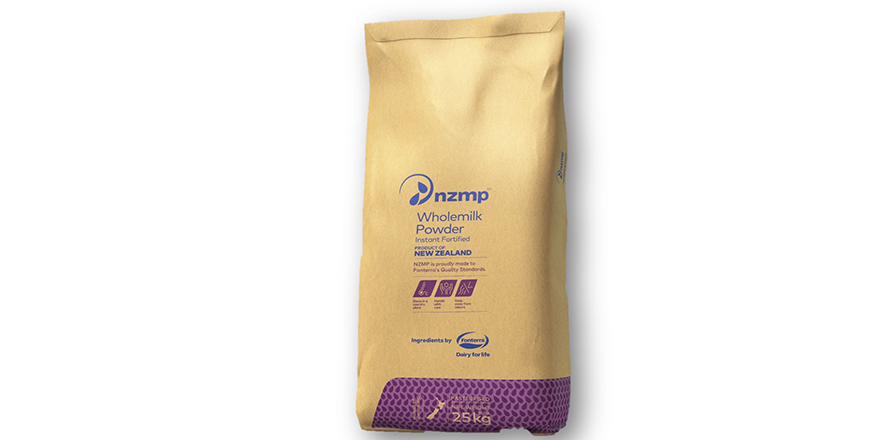
New Zealand dairy exports are mostly used as ingredients in other foods. New Zealand is the largest dairy exporter in the world, growing from $2 billion of exports to $20 billion in just thirty years. A large proportion of NZ dairy products are used as ingredients in processed food. In 2021, Fonterra made 74% of the milk they processed into ingredients. New Zealand provides 60% of the world’s whole milk powder exports, with a large proportion of this going to China to supplement their domestic milk production.

The retail market for milk powder pales in comparison to the demand for drinking yoghurt, shelf stable milk and flavoured milk drinks which are most likely what Chinese food manufacturers produce with NZ milk powder.

When dairy products become ingredients in processed food items, they are treated as commodities, comparable with the same product specification (i.e. milk powder) made all over the world and competing only on price. They lose their origin story which is what New Zealand prides itself on. Consumers don’t value the fact that the milk powder in their processed food such as a chocolate bar is made with NZ milk powder, so any competitive story associated with NZ production methods is lost.

Some of NZ’s highest earning exports are first in line for replacement. Plant-based liquid dairy alternatives such as oat and soy milk are not a threat – New Zealand only exports a small amount of liquid milk. Alternatives are aiming to disrupt the business to business ingredients industry, the very same market that NZ dairy currently thrives in.

Ingredients with the functional properties of animal ingredients are being reverse engineered from plants. Individual proteins (whey and casein) are the initial targets for precision fermentation technology. Perfect Day is producing whey commercially, and others are set to launch in the next two years. Protein exports account for 10% of New Zealand’s dairy export revenue – $2 billion in 2020. These are likely to be the first group of products which experience major disruption from alternatives. Cellular agriculture companies are developing technology to produce human breast milk for babies, could this replace infant formula made from cows?

There will be a tipping point. It’s a long, intensive process to produce a tonne of milk powder. You need to grow a cow, complete with head, bones, hooves, tail etc. You can’t milk her for the first two years until she’s had a calf. Once she’s in the milking herd, she needs enough food and water to stay alive, walk to the milking shed twice a day and produce milk. If there’s enough grass in the paddock this will form the majority of her diet, it’ll normally be topped up with supplementary feed such as hay or palm kernel expeller (PKE). The milk will be collected, driven to another location where the water (87% of milk) will be removed via spray drying, leaving just the 13% solids available to sell.

In contrast, precision fermentation technology bypasses the wasteful process above, using a tank of microbes consuming sugar to produce exactly the same molecules as milk – if they were assessed under a microscope, it would be impossible to tell whether they were from a cow or a fermentation tank. This technology has existed commercially for well over 40 years, producing components which used to be harvested from animals (insulin, rennet). It is now being leveraged at a far greater scale to produce components of milk, starting with protein.

Precision fermentation produced protein is predicted to reach price parity with traditional dairy within the next eight to ten years. The industry is not there yet though: the cost to produce insulin by precision fermentation is around $110,000/kg compared with a milk price of $9.90/kg, and precision fermentation start-up companies are signalling a bottleneck when it comes to manufacturing facilities to produce product at scale.

Large multinational companies are becoming involved to assist with scaling up – fermentation experts ADM and AB InBev are working on large scale fermentation capacity for food grade precision fermentation rather than pharmaceutical which will start to bring the cost down.
The cost and waste involved in milking cows is far greater than simply fermenting a sugar feedstock. Once price parity is reached, food manufacturers who currently value NZ dairy ingredients for their high quality, consistent, cost effective attributes will have another option. In applications where dairy is anonymously used as a functional ingredient, it’s highly likely these will move to the cheaper option which will have the additional benefit of helping meet sustainability goals and appealing to a wider variety of consumers (vegetarians and vegans). This will be the tipping point, where alternatives can displace traditional dairy.

New Zealand dairy needs to act now. This report identifies three key recommendations for the industry:

  1. Acknowledge the risk and react – Alternative dairy, especially precision fermentation, represents a significant risk to the New Zealand dairy industry due to the reliance on commodity ingredient products which will be easiest to replicate. The sooner this can be accepted and acted upon the better. Advanced economies that NZ tends to compare itself with are moving rapidly – investing in research via partnerships between government, research institutions and industry. New Zealand risks being left behind.

  2. Get involved – There’s an opportunity to play a part in this emerging industry – New Zealand has significant expertise in key areas required for alternatives to scale up. Leveraging this will ensure NZ dairy will continue to be profitable in the long term and provide capital to invest in the infrastructure required to make milk into money in different ways.

  3. Make milk into money differently – commodity ingredient products made without cows will become available at the same or better quality for the same or lower price within the next ten years. The NZ dairy industry is heavily reliant on spray drying of milk into powder; this will be one of the first products to experience disruption from alternatives. It’s imperative that dairy companies identify the elements of their product portfolio which are at risk of disruption and pivot milk towards future-proofed products.


From the Back Paddock to the Board Room

Executive Summary

New Zealand’s current protein production is dominated by meat and dairy. There are ongoing and increasingly growing challenges for sustainability, environmental limits, and pressure for greater efficiencies. Emergent and developing trends in plant-based proteins are creating movements and shifts in consumer demand and food production. Health and nutrition are influencing consumer demand more than ever, therefore the value proprositions in the food market have to meet this demand. The current alternative protein industry is still in its infancy in New Zealand with some sectors such as Hemp and Quinoa rapidly growing. However, in general, New Zealand is behind the main growth countries producing plant based protein like Canada and the Netherlands. This presents an opportunity to take learnings and develop potential collaborations, to advance New Zealand’s progression.

Throughout this study, a greater understanding was sought in the global positioning of alternative proteins and within the New Zealand context. This was then used to identify the considerations required to evaluate the importance of alternative proteins to the Agri-industry in New Zealand.
Key findings and discussion points raised are:

  • Food production needs to increase by 70% to feed the world population of 9.7 billion in 2050.
  • New Zealand has a natural bioeconomy as there is low fossil fuel use and more energy produced by renewable sources (80%) such as wind, geothermal, hydroand biomass, but New Zealand needs to move into a new bioeconomy charactarised by biotechnology and greater cross -sector thinking and actions.
  • The Fourth revolution is here and characterised by building on the Third, the digital revolution, that has been occurring since the middle of the last century. The fourth is combining human and machine where technology is embedded in our societies enabling artificial intelligence, renewable energy, 3D printing and autonomous vehicles.
  • Sustainability is key in all aspects of food production. Using the fourth revolution and utilising plant-based opportunities to create products that fill market gaps or outperforms the rest of the world will enable New Zealand to be a global leader in food production.
  • The steps that enable New Zelaand to be a global leader should concide with achieving goals in climate change (the Paris Agreement) and mitigating the affects of green house gases and the other pollution occurring like high nutrient loading in water bodies.
  • “Farmers are motivated by a diverse range of drivers  and constrained (and enabled) by a range of social, cultural, economic, and physical factors. Farmers will therefore react in different ways to external drivers of change and will respond differently to encouragement, incentives, and legislation aimed at influencing their farming practice.”

From the above findings and conclusions , the following recommendations have been suggested:

  • Keep monitoring consumer trends & food markets to increase awareness of markets and consumer change
  • Maintain and grow our reputation/ story of being food producers of high value and highly nutritious ingredients or wholefoods.
  • Leverage our competencies of current successful sectors especially as meat and dairy innovators
  • Seek expertise where knowledge or skills are low and empower people to become experts in new alternative proteins.
  • Encourage and develop coalitions with the government departments such as Ministry for Primary Industries, the Ministry for the Environment and farmers to provide incentives and/or support in areas where New Zealand can deliver the world’s best produce.
  • Reward and support leaders paving the way for the nation and their peers in agricultural and especially in new products or production that adds value to the New Zealand Agricultural Industry.
  • Develop a New Zealand plant-based food strategy for New Zealand agriculture
  • Create and develop a greater understanding and technical expertise in plant-based opportunities to enable greater diffusion of adoption to farmers.

What is the true cost of transience to the New Zealand dairy industry?

Executive Summary

This report investigates whether the dairy industry has an issue with labour transience and what it truly cost a business to lose and retrain a new employee. I needed to firstly find out If, when, where and how transience has become a problem in the dairy industry. Then what it truly cost a dairy farm to lose and replace an employee. Finally, I investigated the reasons people were leaving a job and was it preventable.

There were two parts to this research project 1) a literature review and 2) a survey of 23 dairy farmers to see what they thought about the cost of transience in the dairy industry.

The key findings of the literature review were:

  • New Zealand dairy farms have changed drastically throughout the last 29 years in size. They have increased in average area from 220ha to 372ha,herd size has over doubled from 170 cows to 440 cows, and production has increased from 250kgms/cow to 385kgms/cow. Resulting in more labour being required on farm.
  • The dairy industry has similar transience to all other industries in New Zealand. This means that transience is a big issue for the whole of New Zealand not just the dairy industry.
  • 21% of a dairy farms budget is from labour costs.
  • The average dairy business has quintupled its farm debt in the last 28 years.
  • Dairy farmers are working 11 hours/week longer on average than the country’s 2.7 million people work force.
  • It takes a lot of time and effort to replace an employee.
  • Inducting an employee is costly and time consuming. It takes up to 2 years to fully induct an employee to the same as where the previous person employed was, depending on the level of experience of the position. Costs involved are not only the cost of off farm training such as ITO, but also the cost of time taken from other employees/manager/owner’s day, to train/oversee the inductee until they are competent at the tasks at hand.
  • It varies on how much it costs to lose an employee depending on experience lost. 30% – 200%. There is big difference in losing an assistant position to losing a second in charge or manager. A more senior role can more easily fill in for an assistant role as they already know the job. But an assistant cannot help with 2ic role, because they have not learnt the knowledge of things like farm walks, feed budgeting etc.
  • Working on a baseline of the cost of transience. You are looking at least 30% of the persons annual salary cost to your business for one person’s turnover.
  • Not all the cost of transience is monetary. Working longer hours, the stress of filling the skill gap lost, loss of sleep worrying how to get through until a new team member can be found and trained. These do not cost the business directly monetarily, but they are very costly to the rest of a team, family and individual.
  • 7 out of 10 reasons people leaving a job could have been prevented. They are:
    • Career development – this has been the number one category for 10 straight years. Employees who are satisfied with their development are likely to stay.
    • Work-life balance – this was up 23% since 2013. Flexibility of the job, long shifts, and suitability of hours
    • Manager behaviour – General behaviour and communication have each increased (gotten worse) in the last year.
    • Job characteristics – this was the number one rising category of turnover, up 117% since 2013.
    • Well-being – to promote work-life balance consider flexitime and telecommuting, assistance with childcare/eldercare, financial counselling, and flexible leave options.
    • Compensation and benefits – many think compensation is the reason for turnover. Sometimes it is and sometimes it is not. Find out the real reasons for turnover in your organisation. 
    • Work environment – applicant selection assessments and interviewing must include person-environment and person-culture fit as company culture becomes increasingly important.
  • Preventable reasons for turnover equate to 78% of our transience if we could solve this it would change our turnover rates from 24.5% down to 5.5%. This would be an astonishing change to our businesses.

 The key findings from the survey were:

  • 96% of dairy farmers surveyed agree transience is a cost and there is a problem.
  • 70% surveyed believe it costs their business up to $20,000 to replace a staff member. Reasons stated were from loss of productivity, induction, and training costs to get the new employee up to the same level, advertising costs and the loss of time, selection and interviewing of potential candidates.
  • It takes a lot of time and effort to replace an employee.
  • That the respondents thought most of the costs for employing a new employee was in induction and training costs.
  • 5% of the respondents thought it takes at least a couple of months to induct a new employee.
  • There was no clear trend for transience from respondents.
  • 95% of the respondents indicated that they worked over 40 hours per week.
  • The reasons for people leaving a job were Lack of support, long hours, pay not good enough and management not treating them well.
  • There were three main themes for why people stayed on farm they were good culture, Good employer, progression, fair remuneration package.
  • The results from the survey did not vary to much from the position held. Be it owner, manager, share-milker, or employee.

The main conclusions of this research project were:

  • Transience has become worse because the dynamics of dairy farms have changed drastically throughout the years, with increased farm size, resulting in the need for more labour on the farm.
  • Dairy farm turnover rates on average are relativity the same as the national average.
  • That transience is costing a considerable amount both in the way of money and stress, fatigue and over work to a dairy farm business.
  • Three quarters of transience can be prevented. Which would result in considerable savings to a business turning over employees.

Recommendations:

Turning over employees is costing dairy farming business and most of the reasons they are leaving are preventable. To capture the benefits of retention each farm needs to understand why people are leaving their farming business. Each farm needs to analyse the environment they provide for their people. Is the farm inclusive, asking their people what they want in the workplace and driving it from their needs and wants? 

Next steps for the dairy farm employer:

  • Become clear why your people are leaving – remember that on an exit interview they may not give you a clear explanation.
  • Become clear on why your people are staying – what are some strengths?
  • Identify what you are doing to prevent people from leaving your business – ask yourself would you like the same working environment?
  • Look at the history of employment on farm, is there a pattern? Could some turnovers have been prevented? Was this in your control to prevent?

Next steps for industry:

  • Identify good employers in industry who have a high retention rate and showcase these.
  • What are they actively doing to prevent turnover? Can strategies be created and adopted?
  • Focus on the intangible as well as tangible drivers – people are human beings not doings.
  • Commitment five is far reaching and will need engagement at all levels to become real. It will only be driven by those employers who see the benefit in looking deeper into their own behaviour and environment they provide on farm.


When milk engineering meets consumer demands and how this could affect the NZ dairy industry.

Executive summary

“If anybody anywhere in the world can use small amounts of energy, water and nutrients to create the same quality food as we can here then why would anyone buy from New Zealand?” That’s the question that Lance Wiggs director of several New Zealand high-growth companies (www.lancewiggs.com) asked to his readers back in February 2016. Health, lifestyles, animal welfare, sustainability and environmental concerns are motivating consumers to lean towards milk alternatives. Today, there are many startups (new entrants) from Silicon Valley and from all around the world, creating food innovations every day. New companies are producing traditional agri-food locally, in non-conventional ways using less energy, water, nutrients and pesticides; and are animal-free.

New Zealand dairy companies are focused on producing high quality food and value-added products to keep, and gain more, competitive advantage in an increasingly tough global market. The truth is that without leading edge: agritech, biotechnology, environmentally friendly practices and well supported innovative businesses, it will be very challenging to stay competitive in the decades to come.

The aim of this report is to create awareness around new milk alternatives and to better understand how they could affect the New Zealand dairy industry.

“We can’t afford not to be part of the food revolution, if we are not aware of what other people are doing we can’t be an effective competitor in any market.”

This report is based on literature review, conversations with people working in the dairy sector and a survey created to assess the general knowledge around new milk alternatives.

Leading the change or being forced to change, that will be a key decision that New Zealand dairy is going to face in the years to come. The dairy industry in New Zealand must embrace new food technology so it could be prepared to take advantage of the new opportunities presented.

The findings and observation of this report are: animal’s milk substitutes like soy, almond, rice, coconut milk, etc. have steadily grown in popularity, although none of these alternatives has been disruptive to the dairy industry. Now, there are game changing new options, improved alternatives to cow’s milk making their way to the markets. Bioengineered milk, plant-based milk manufactured using Artificial Intelligence and milk made from yellow peas are all rapidly rising on the horizon (intriguingly, Silicon Valley’s horizon always seems to be brighter than others). Food-tech startups are attracting a lot of attention nowadays, money is not an issue for most of them, they could potentially disrupt dairy markets globally and change the New Zealand dairy industry as we know it.